- Place
- Biržai District Municipality
- Region
- Biržai District
- Type
- historic arched bridge-dam
- Address
- Astravo g. 17, Astravas, Biržai
- Coordinates
- 56.22193, 24.77009
- Visit duration
- 30-60 minutes for the bridge, water passage, and nearest part of the park
- Best time
- a bright day when the masonry and flowing water are clear; in spring and after rain the current is more expressive
Astravas Manor Estate Bridge-Dam, Astravas Dam
More than a route into Astravas Manor
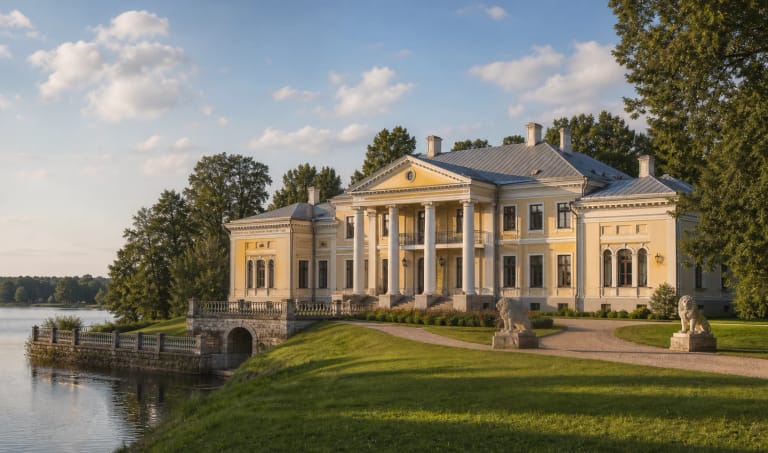
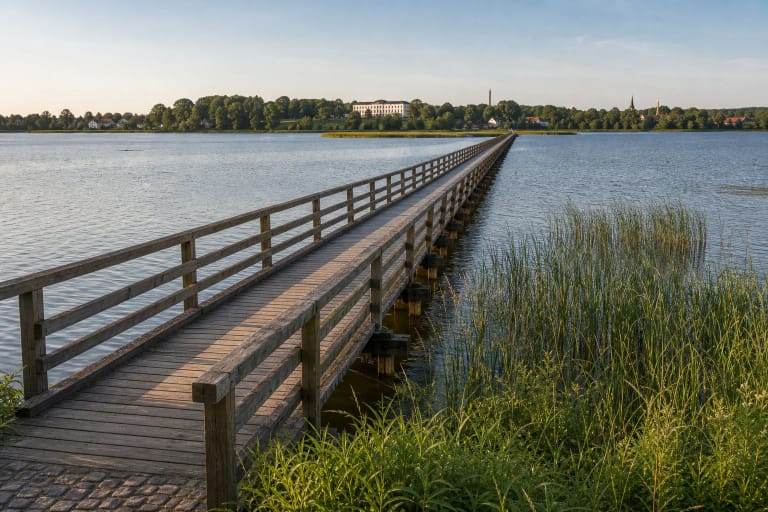
Astravas Manor Estate Bridge-Dam stands in Astravas, a part of Biržai city, beside the Apaščia watercourse and Lake Širvėna. Visitors do not see the long wooden footbridge that crosses the lake from Biržai to the manor, but a shorter masonry structure at the estate's water passage. This distinction matters because both are often called the Astravas bridge.
The bridge-dam had two jobs. Its upper part provided a crossing and connection with the estate, while the arched lower part controlled the flow of water. Biržai District Municipality notes that the structure is entered in the Cultural Heritage Register as part of Astravas Manor Estate (Cultural Heritage Register code 25944); the same estate separately lists Astravas Manor Estate Bridge under code 25942. This structure therefore deserves to be read as both architecture and industrial heritage.
1860 masonry and an arched structure
The bridge-dam was built in 1860, when Count Jonas Tiškevičius owned Astravas Manor. An academic study describes it as an approximately 51-metre red-brick and stone engineering work whose arched shape recalls a Roman aqueduct. Beside the water, look for the rhythm of the arches, brick edging, and masonry texture: this is not merely a decorative park feature.
The study describes ten red-brick arches and wooden water gates that could hold back or release Lake Širvėna water into a canal so the manor watermill could operate. Not every part of the structure is easy to see from the path today, so it is safer to observe it from the visitor side and avoid the technical elements.
Rosettes, initials, and the water route
The parapet above the arches is decorated with round rosettes. They were not only ornaments: earlier descriptions connect them with draining rainwater collected on the roadway. Dolomite stones in the masonry are also reported to bear Count Jonas Tiškevičius's initials and the construction date, although the inscriptions are not always easy to read from the public path.
The water flowing beneath the bridge explains why the estate needed such an unusual structure. The old water route connected the lake's hydrology with the mill economy, while the arches brought a passage, a gate, and a waterway together. It is a small but clear example of how beauty and practical engineering met in a nineteenth-century manor landscape.
Repairs and safe access
Biržai District Municipality reports that the bridge and dam were repaired with heritage-conservation funds. Masonry elements were renewed, a crumbling arch was rebuilt, wooden railings were replaced, and the dam slabs were updated. The openings by the dam steps were secured with chains so visitors would not fall to the foot of the structure.
When visiting, stay back from the edge of the water passages, do not cross the chains, and do not enter areas intended for the hydraulic structure rather than recreation. Masonry and the bank can be wet after rain or in spring, when the current may be stronger. A careful look usually takes 30-60 minutes and can continue along the park paths.
The Astravas bridge-dam on a Biržai route
The bridge is easy to combine with Astravas palace, its park, and the long footbridge across Lake Širvėna. They form one historic setting, but each tells a different story: the palace presents the Tiškevičiai residence, while the bridge-dam reveals the estate's water economy. To study the arches and current calmly, begin at this structure and then walk towards the park.
At Astravo g. 17, follow local signs and leave a car only where parking is permitted. The bridge-dam lies at the edge of the park and water infrastructure, so choose a careful route after rain.