- Place
- Klaipėda District Municipality
- Region
- Samogitia
- Type
- regional local-history museum
- Address
- Sodo g. 5, Gargždai
- Coordinates
- 55.71260, 21.40320
Gargždai Museum
Gargždai Area Museum on a Regional Border
Gargždai Area Museum tells the history of Gargždai and Klaipėda District. The town itself stands in a distinctive place: along the Minija River two ethnographic regions, Samogitia and Lithuania Minor, meet here, and for centuries a state border also ran nearby. The museum turns that borderland feeling into its main theme.
The museum holds about 15,000 exhibits and is a Klaipėda District municipal museum with a history department and four branches. It is best understood not only as one exhibition but as a network preserving the memory of the whole area.
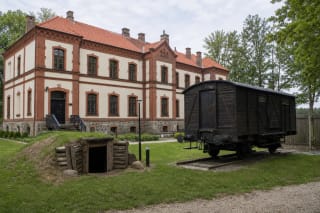
A 1938 House That Became a Museum
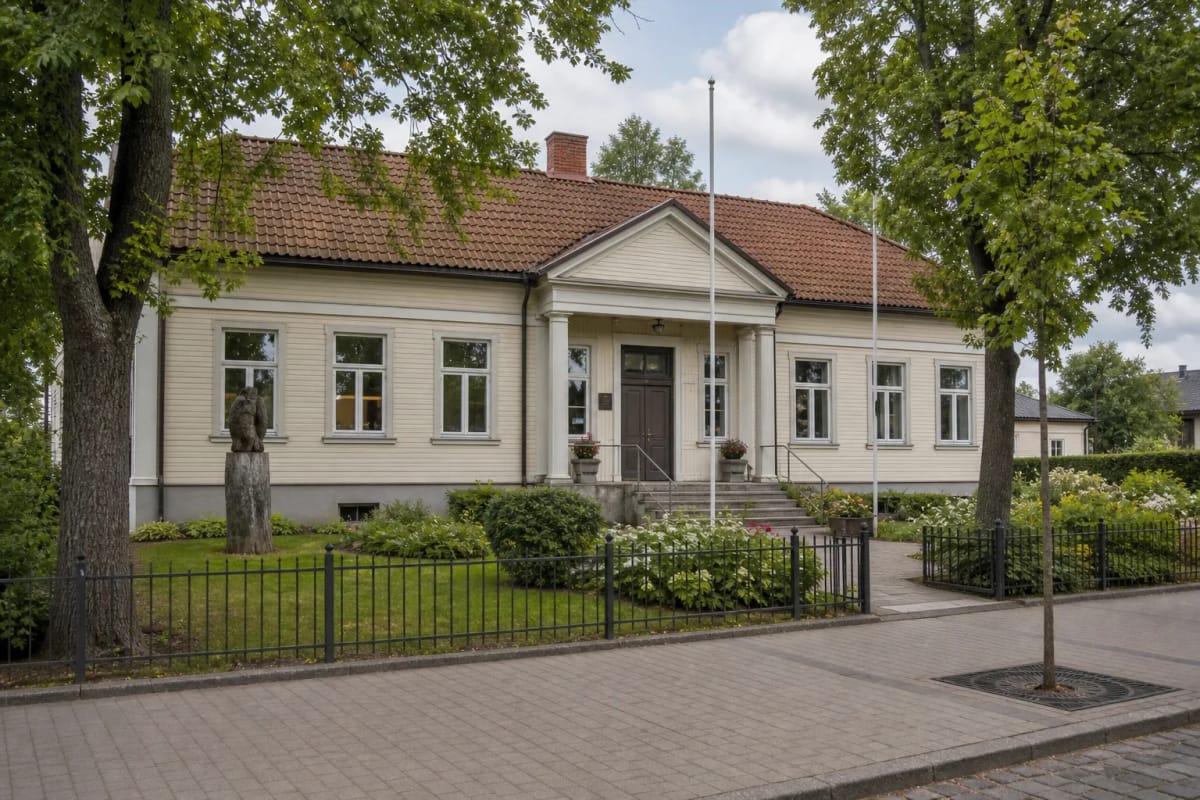
The museum building was begun in 1938 as a residential house. During the Soviet period it housed a kindergarten and later the Gargždai children's music school. It is therefore not an old manor but an interwar town house adapted for museum use.
The museum was established on 3 March 2005 and opened to visitors in December of the same year. From the start it has collected, preserved, and studied the history and culture of the Gargždai area.
Interwar Gargždai and Borderland History
The museum's best-known exhibition is the interactive Interwar Gargždai 1918-1939. It presents a border town beside a long-lived European frontier, the meeting of two ethnographic regions, and smuggling across the border. An ethnographic exhibition and a collection of old Gargždai views stand alongside archaeological finds, maps, documents, and photographs.
Gargždai was first mentioned in 1253 as the Curonian castle Garisda, one of the oldest documented Lithuanian place names. The town's history also includes a painful event: on 24-25 June 1941, 384 residents of Gargždai, mostly Jews, were murdered here. It was one of the first Holocaust massacres in Lithuania, a separate theme from the Soviet deportations told by one museum branch.
Four Branches
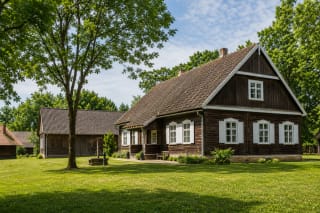
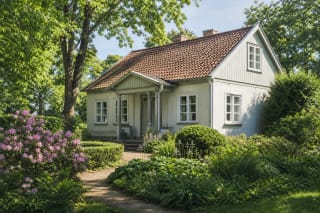
Gargždai Area Museum unites four branches. In Priekulė, the Museum of Freedom Fights and Exile History operates in a former Soviet security headquarters, and the Ieva Simonaitytė Memorial Museum preserves the writer's house. In Agluonėnai, the ethnographic homestead is one of the few examples of Lithuania Minor wooden architecture.
In Dreverna, the Jonas Gižas Ethnographic Homestead is Lithuania's only surviving boatbuilder's homestead, telling the story of Curonian Lagoon boatbuilding and fishing traditions. These branches are in separate localities, so plan their visits in advance.
Visiting
The museum operates from Tuesday to Saturday and is closed on Sundays and Mondays. At the time of research, an adult ticket cost 2 EUR and a reduced ticket 1 EUR; check the museum's official page for current hours and prices before travelling.
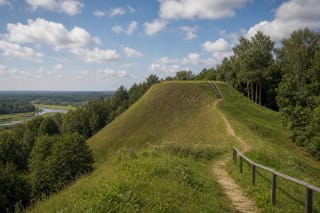
Allow about 45-75 minutes for the main exhibition. A wider Gargždai-area trip pairs well with the museum branches in Priekulė, Agluonėnai, or Dreverna, as well as the Minija old valley.