
Lithuanian traditional foods
Kibinai
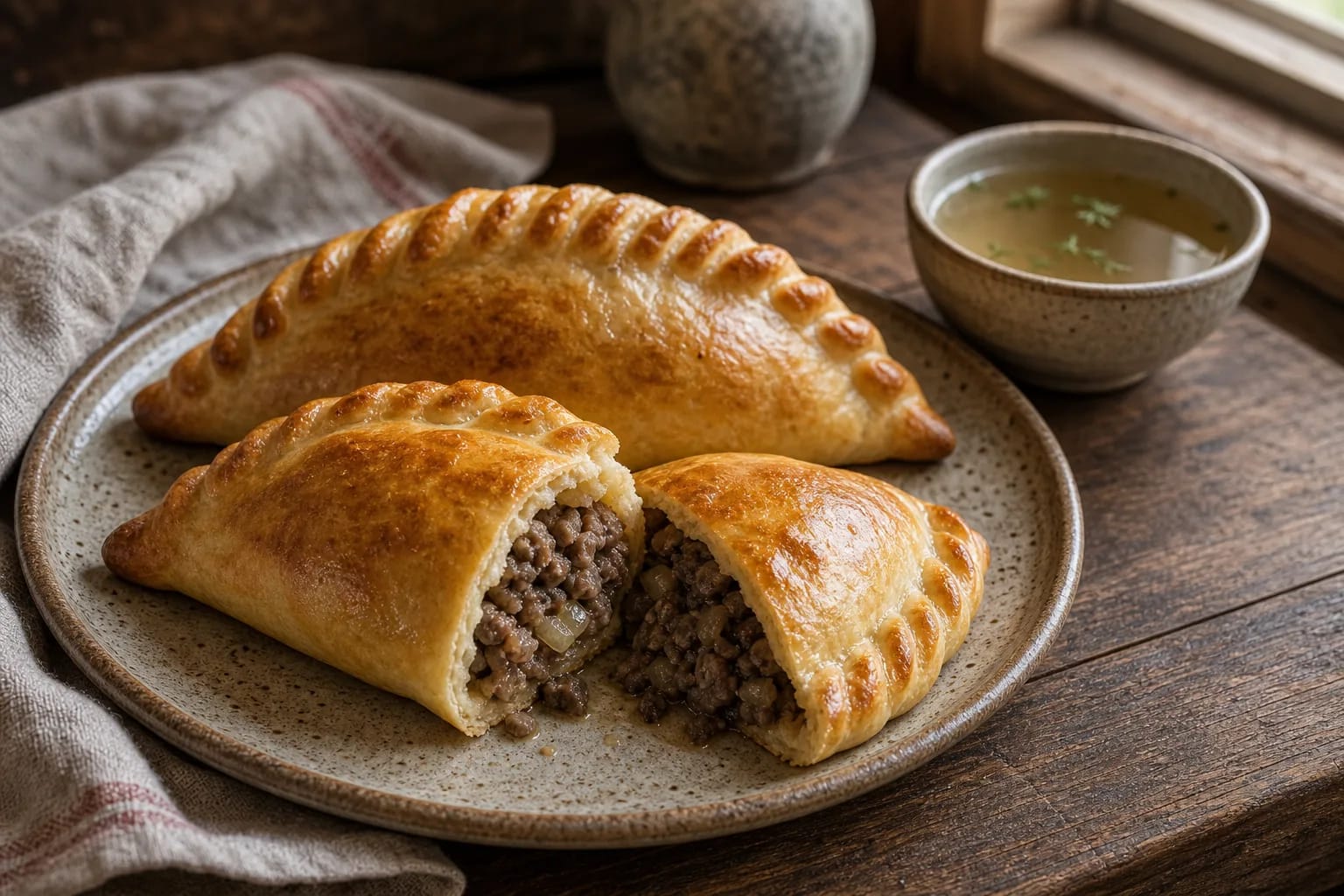
Kibinai are Karaim pastries, in Lithuania most strongly associated with Trakai. Traditionally they are baked from rich shortcrust-style dough with chopped mutton or other meat and onion filling, keeping the inside juicy.
Food and heritage context
- Category
- Dough dishes
- Type
- Karaim baked pastries with meat filling
- Heritage status
- regional and Karaim tradition
- Context
- Karaims, Trakai, chopped meat, onions, buttery dough, mutton, pastries
Names and variants
Karaim kibinai, Trakai kibinai
What are kibinai?
Kibinai are baked filled pastries whose identity in Lithuania is closely connected with the Karaim community and Trakai.

The outside should be crumbly and golden, while the inside should stay juicy. That balance separates a good kibinas from an ordinary meat pastry.
History of kibinai in Lithuania
Karaims have lived in Lithuania since the time of the Grand Duchy of Lithuania, and Trakai became one of their most important cultural places. Kibinai are now one of the best-known signs of Karaim culinary heritage. According to the Universal Lithuanian Encyclopedia, traditional kibinai, or kybyn, are crescent-shaped pastries with chopped mutton filling and belong to Karaim cuisine alongside tutmač noodle soup, kopta dumplings, and biok potato casserole.
The Lithuanian National Heritage catalogue presents kibinai as a traditional product, while modern Trakai food culture has turned them into a local symbol. This is a case where a small community's dish became a widely recognized culinary sign of Lithuania. Karaims are traditionally said to have been invited from Crimea by Vytautas around 1397; accounts mention about 380 families who settled in Trakai between the castles, in today's Karaimų Street, and have lived here for more than 600 years.
Although modern bakeries offer many fillings, the traditional story most often emphasizes mutton, onions, and the hand-formed twisted dough edge.
The filling
For the filling, the type of meat matters, but so does the cut. Chopped meat keeps texture, while onions and a small splash of liquid create juiciness.
Pork or chicken kibinai are popular, but they belong to broader Lithuanian use rather than the narrowest traditional Karaim version.
Serving
Kibinai are eaten hot, often with broth or tea. They work well as travel food, fair food, or a tavern dish.
In the Trakai context, a kibinas is not only food but part of the local experience.
Recipe
How are kibinai made?
Good kibinai depend on rich, crumbly dough and a juicy filling that is not minced too finely. Traditional accounts emphasize mutton, but pork, beef, chicken, and vegetarian versions are common in Lithuania today.
Ingredients
Method
- Rub the flour with cold butter, then mix in sour cream, one egg, and a pinch of salt. Knead quickly and chill the dough.
- Finely chop or coarsely grind the meat. Mix it with chopped onions, salt, pepper, and a splash of water or broth.
- Divide the dough into pieces, roll ovals, add the filling, fold over, and twist the edge into a rope-like seam.
- Leave a small steam hole on top and brush with beaten egg.
- Bake at 190 °C for 30-35 minutes, until the crust is nicely browned.
Notes
The filling should not be dry. A splash of broth helps keep the inside juicy.
Chopped meat gives better texture than very finely ground meat.
Kibinai: frequently asked questions
Are kibinai a Lithuanian dish?
In Lithuania they are an important part of Karaim culinary heritage, most strongly associated with Trakai. The most precise wording is: a dish of Lithuania's Karaim tradition.
What is the most traditional kibinai filling?
Chopped mutton with onions is most often named, although pork, beef, chicken, and vegetarian versions are common today.
Why is the meat chopped rather than minced?
Chopped meat gives better texture and juiciness. Very finely ground meat can become denser.
Why is there a small hole on top of a kibinas?
It lets steam escape, helps the filling bake evenly, and prevents the dough from bursting.
Can kibinai be frozen?
Yes. You can freeze shaped unbaked kibinai or baked kibinai. Baking from frozen takes longer.
What are kibinai served with?
They are often served with broth, tea, or eaten on their own. Broth pairs especially well with the hot meat filling.
How is a kibinas different from an ordinary pastry?
A kibinas is marked by rich crumbly dough, juicy chopped-meat filling, a twisted edge, and the context of Karaim tradition.