- Place
- Juodkrantė, Neringa Municipality
- Region
- Curonian Spit
- Type
- bird-colony observation site
- Coordinates
- 55.51570, 21.10390
Garnių and cormorant colony, Garnių Hill
Juodkrantė cormorant and grey heron colony: what you will see
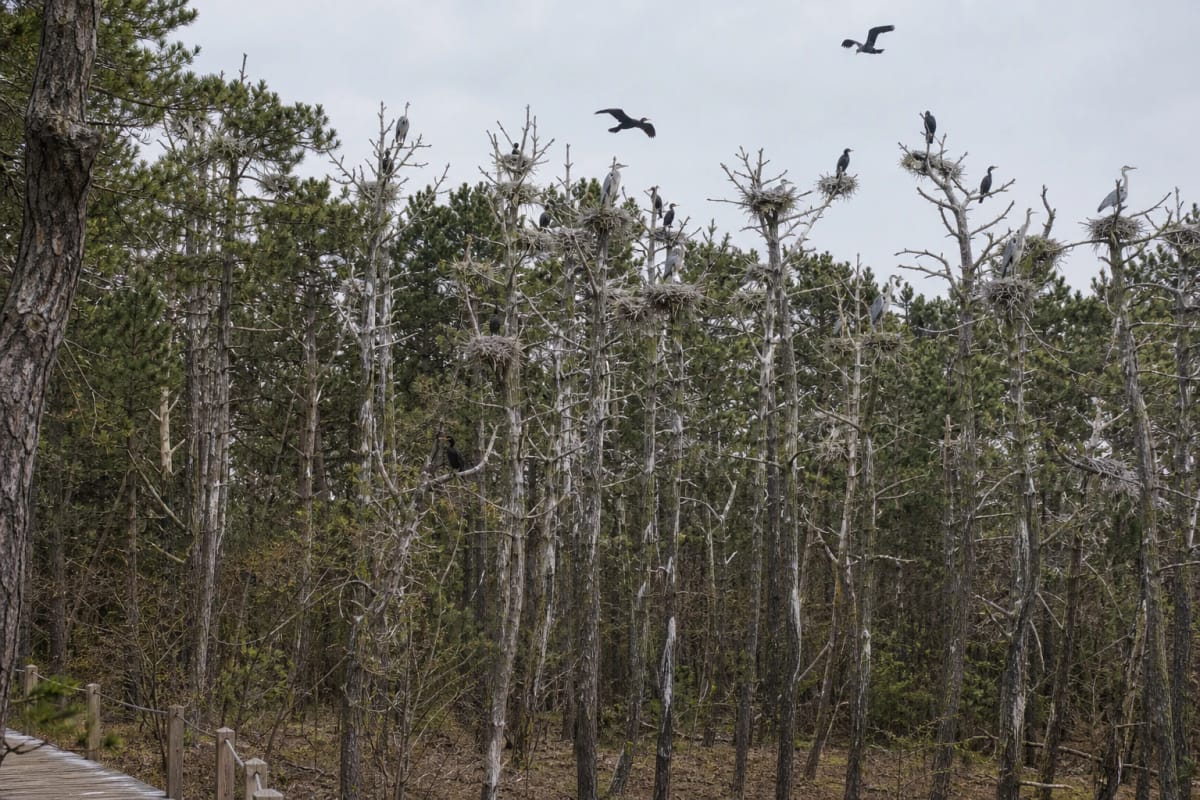
The Juodkrantė cormorant and grey heron colony lies around Garnių Hill, on the road from Juodkrantė toward Nida. This is not a conventional viewpoint with a tidy forest scene. The forest looks strange, even sharp: some trees are whitened by bird droppings, some trunks have dried, nests are visible in the crowns, and the air carries the noise of the colony.
That uncomfortable reality is exactly what makes the place interesting. It shows that a nature site does not need to be aesthetically clean: a bird colony is a living ecosystem where nesting, feeding, droppings, tree decline, and forest renewal happen at the same time.
The history of the Juodkrantė heron and cormorant colony
The Juodkrantė area has been associated with grey herons since the nineteenth century. Great cormorants later became a very visible part of the colony. The VLE article on the Curonian Spit states that near Juodkrantė there are colonies of grey herons, with more than 500 pairs, and cormorants, with about 2,000 pairs. It is one of the largest bird concentrations of this type on the Lithuanian coast. Because of their abundance and effect on the forest, the place often causes discussion: for some people it is an impressive bird world, for others an obvious sign of forest decline.
The VLE article on Juodkrantė also reminds readers that the colony lies in an area connected with the sand-buried villages of Nagliai and Karvaičiai, so the bird world overlaps with the history of the spit. Park sources present the colony as an important observation site, but also stress that birds should not be disturbed. The biggest mistake would be to approach nests too closely or make noise during the breeding season.
Why the trees look white in the Juodkrantė colony
The white marks on trunks and branches are traces of bird droppings, or guano. In a large colony, they accumulate enough to change the soil, vegetation, and even tree vitality. That is why some trees look dried or burnt, although the effect comes from the colony.
This scene is not a staged attraction. It is a good example of how one species, or a group of species, can strongly change a local environment. For that reason, the colony is worth more than a quick photo; it deserves a short ecological reading.
How to observe the Juodkrantė cormorant colony responsibly
Watch the birds from prepared places and from road or path zones where observation is allowed. During breeding, even a brief approach too close can frighten birds, while noise and drones are especially inappropriate here.
Expect a stronger smell, especially in warm weather. It is a normal part of the colony, but sensitive visitors may prefer a shorter stop. Binoculars are more useful here than trying to get closer.
What to see near the Juodkrantė cormorant colony
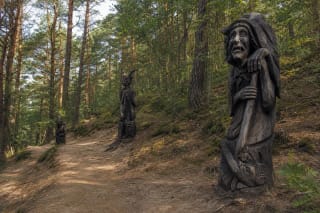
The colony is a short but memorable stop between Juodkrantė and other Neringa sites. It combines well with the Hill of Witches, the Juodkrantė lagoon shore, and, when travelling farther, the Nagliai trail or Preila area.
If you travel with children, this is a good chance to explain that nature is not only beautiful animals seen up close. Sometimes the most interesting thing is to observe from a distance and understand why boundaries protect both birds and people.