- Place
- Neringa Municipality
- Region
- Neringa
- Type
- neo-Gothic Evangelical Lutheran church on the Curonian Spit
- Address
- Pamario g. 43, Nida, Neringa
- Coordinates
- 55.30930, 21.00690
Nida Lutheran Church, Nidos liuteronų bažnyčia
Nida Evangelical Lutheran Church: neo-Gothic architecture on a dune
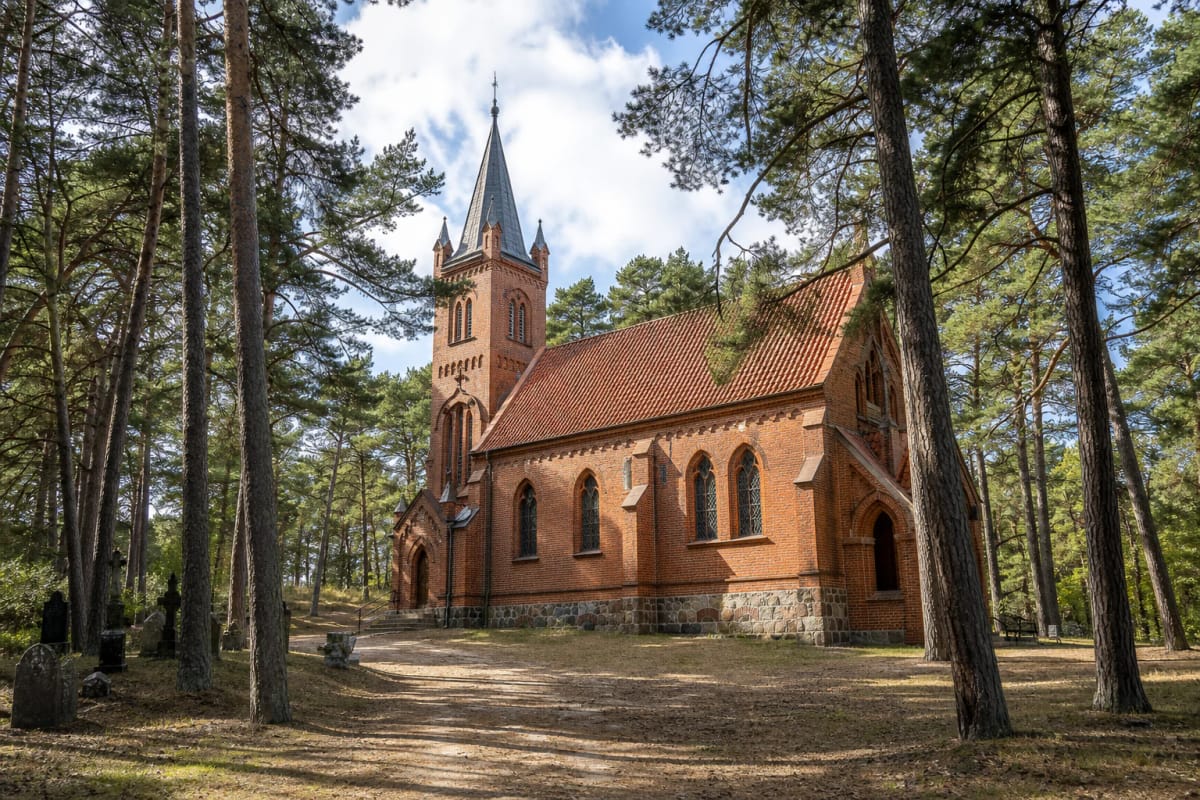
Nida Evangelical Lutheran Church is one of the strongest landmarks in Nida: a neo-Gothic red-brick church standing on a high pine-covered dune. It reminds visitors that the Curonian Spit long belonged to the Protestant culture of Lithuania Minor.
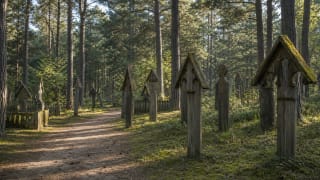
The church matters not only as an active place of worship but also as a witness to Nida's history. A museum operated inside it for many years, and the old cemetery with krikštai grave markers has survived around it.
The 1888 church
The Nida parish was established in 1847, and the present masonry church was built in 1887-1888 on the initiative of pastor Gustav Echternach. It was consecrated on October 10, 1888. The red-brick neo-Gothic form belongs to the sacral architecture of East Prussia of that period, and Lithuania's Register of Cultural Property protects it as object code 16011.
The church stands on a hill surrounded by pines, so it is visible from the settlement. Its location is not accidental: it became one of the main orientation points of Nida.
Old Nida and the story of sand
Before the present church, prayer houses stood in Old Nida about 2 km to the south as early as 1569, but by the end of the seventeenth century they had been buried by sand. This is part of the dramatic Curonian Spit story, in which moving dunes repeatedly forced people to move settlements.
The present church was built in a place already safer after dune stabilization. For that reason, the building speaks not only about faith but also about human struggle with the sand force of the spit.
Museum in the church and return to believers
During the Soviet period, from 1969 to 1989, the Curonian Spit History Museum operated inside the church. This was a typical Soviet practice: adapting sacral buildings for secular use.
Later the church was returned to believers. Today services and classical music concerts take place there, and the restored facade again gives the building a representative appearance.
The old cemetery with krikštai
Beside the church is a nineteenth- and twentieth-century old cemetery with krikštai, the distinctive wooden grave markers of Lithuania Minor. Krikštai were placed at the foot of a grave, and their form and ornaments can point to gender and local cultural signs.
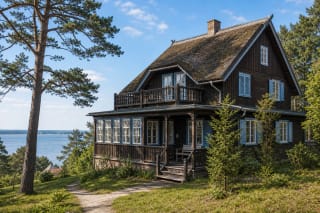
This cemetery and krikštai layer makes the church not only an architectural object but also an ethnographic one. Together with Curonian fishermen's houses, it helps Nida preserve a unique lagoon-side identity.
How to visit
Allow 20-40 minutes to see the church exterior and surroundings, or longer if you attend a concert or spend time in the old cemetery. Because this is an active church, visit respectfully.
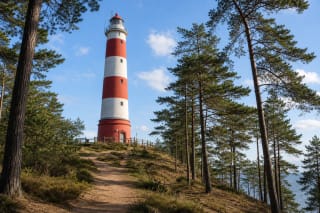
Nida belongs to Curonian Spit National Park and the UNESCO Curonian Spit landscape, so the church combines naturally with other town sites: the lighthouse, the Thomas Mann Museum, and the Curonian Spit History Museum.