- Category
- Building Methods and Structures
- Type
- Log-wall construction
- Context
- rentinys, wall logs, courses, corner joints, notches, moss, log construction, wooden architecture
- Source status
- well attested
Log construction, Rentiniai buildings, Wall-log construction
Rentininė Log Construction: types and elements
Log rentinys: A wall system made of logs or squared timbers laid one above another.
Sąsparinė corner: A corner joint that holds the wall logs and seals the building corner.
Chinked gaps: Spaces between wall logs filled with moss, straw, wool, or clay.
What is rentininė construction?
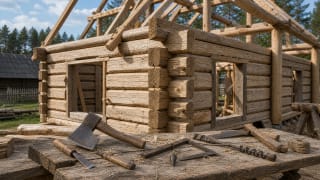
Rentininė statyba is a log-wall technique in which wall logs are laid one above another in horizontal courses. At the corners they are joined with kertės, sąsparos, or other joints.
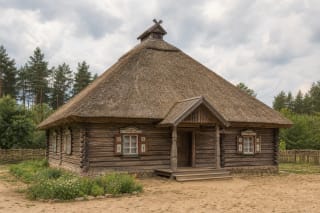
It is a primary structure of Lithuanian wooden folk architecture. It was used for dwelling houses, klėtys and svirnai granaries, some farm buildings, and wooden sacred architecture.
Wall logs and sealing
The wall logs had to be selected, hewn, and laid so the wall would be strong, straight, and as tight as possible. Gaps were chinked with moss, straw, wool, or other materials, and in some places additionally daubed with clay.
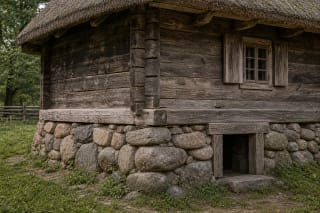
The lower course was especially vulnerable to moisture, so foundations, stones, and wood protection mattered greatly.
Kertės and sąsparos
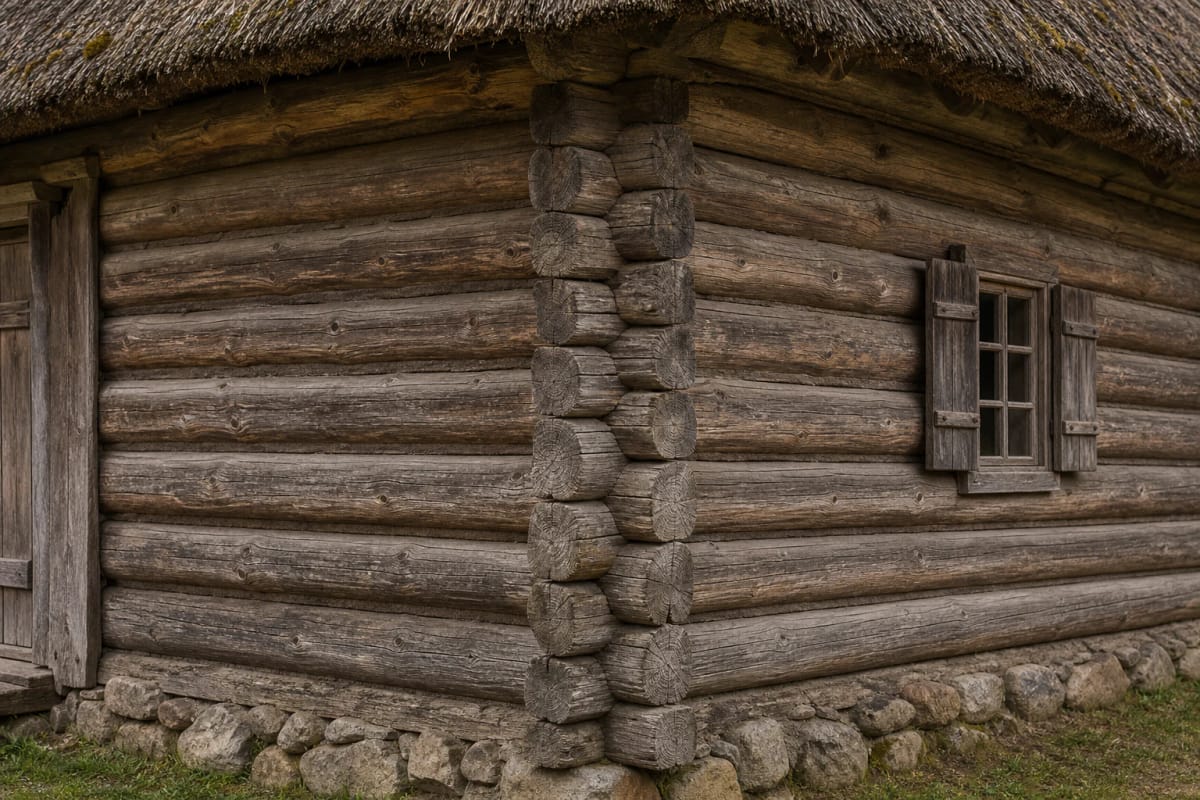
The corner is the crucial joint in rentinė construction. It must hold the wall, keep logs from sliding, and still remain tight enough. According to VLE, one row of perimeter logs joined at the corners is called a rentinys course; in traditional village houses the wall logs were joined by carved notches, forming a kertė with projecting log ends, by a sąspara, or by setting them into a post called a švilys; moss was placed between wall logs and the interior gaps were daubed with clay.
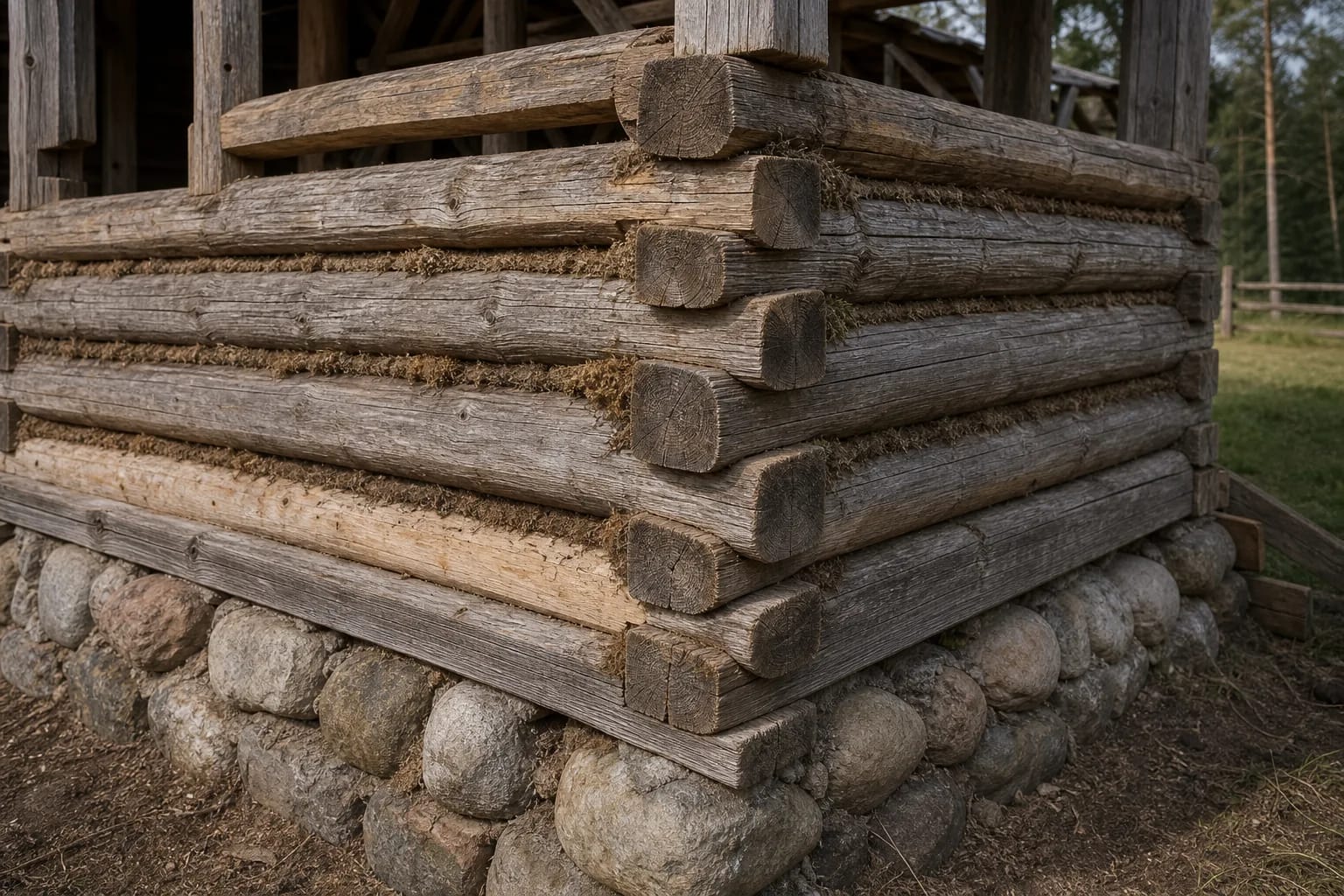
Different regions and periods used different corner solutions. Some leave projecting log ends; others create a cleaner facade.
Heritage care
Moisture is the greatest danger to a log building. When the roof, foundations, or rainwater drainage fails, lower courses and corners begin to rot.
In restoration, it is important not to replace the whole log structure unnecessarily. The most valuable approach is to preserve old timber, joints, markings, and the logic of the structure.