- Category
- Dwelling Houses
- Type
- Eastern and southern Aukštaitian dwelling house
- Context
- Dzūkija, Eastern Aukštaitija, log house, smoke pirkia, double-ended pirkia, priemenė, kamara, seklyčia, porch
- Source status
- well attested
Gryčia, Dzūkian pirkia, Aukštaitian pirkia, Family pirkia
Pirkia: types and elements
Single-ended pirkia: An earlier, simpler type in which the living room and priemenė formed the main house core.
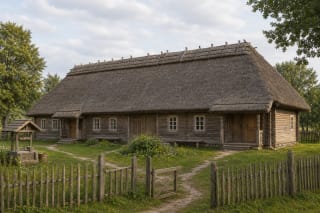
Double-ended pirkia: A type spreading from the mid-nineteenth century, with transverse walls dividing the house into family pirkia, priemenė with kamara, and seklyčia.
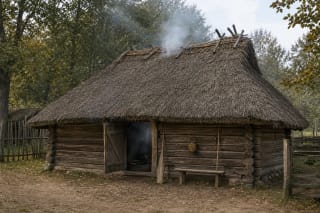
Smoke pirkia: A pirkia without a chimney, where smoke escaped through a ceiling opening, doors, or small open windows.
Cruciform-plan pirkia: A variant in larger farms with a side heated room, often used for storage or work.
What is a pirkia?
A pirkia is the traditional dwelling house of eastern and southern Aukštaitians. It is most strongly associated with Dzūkija, but the term and related variants were used across a broader Aukštaitian area. It is a log house whose form depended on family size, household wealth, village plan, and local carpentry.
A pirkia is not only an architectural facade. It includes a way of living: where the stove was heated, where people ate and slept, where food was stored, and how the house separated everyday family space from the cleaner seklyčia for guests.
History in Lithuania
The early pirkia was smoky and had two main parts: the family pirkia with the stove, and the priemenė. This plan suited a simple peasant dwelling logic, where one heated space was used for cooking, eating, working, and resting.
In the mid-nineteenth century the pirkia plan became more complex. Rectangular double-ended pirkios with three or more rooms spread. Two transverse walls often divided the house into the family pirkia, a priemenė with kamara, and the seklyčia. In the early twentieth century glazed porches began to be added to facades, and the traditional form gradually moved toward a new type of rural house. In Dzūkija forests in the nineteenth and early twentieth centuries there were also large three- or four-room pirkios with stoves at both ends, where several generations lived, while in the second quarter of the twentieth century a new type of dwelling house spread in villages.
Form and construction
Pirkia walls were usually built from round, hewn, or sawn logs. At the corners the wall logs were joined with projecting notched joints, a constructional and visual feature of the log building.
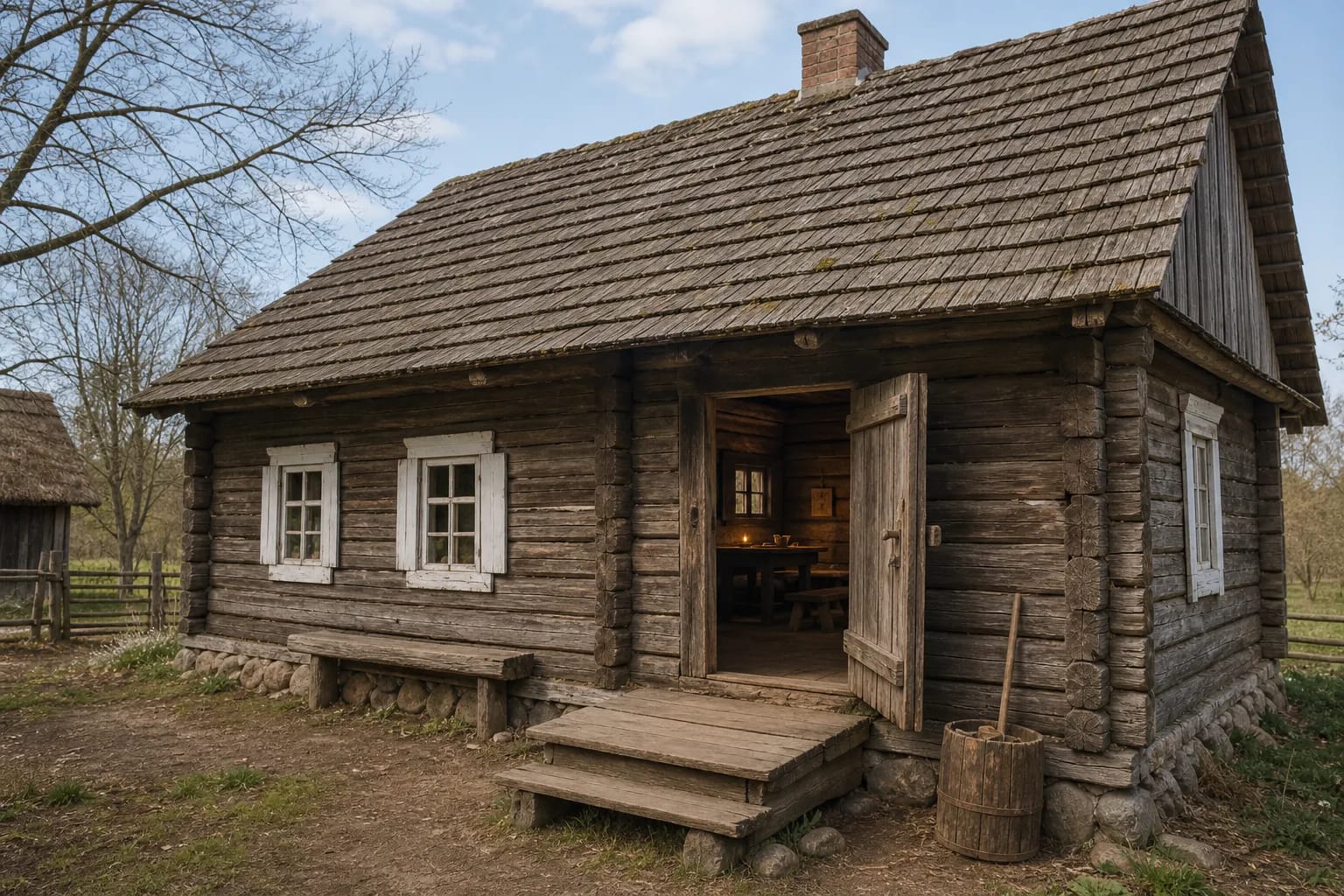
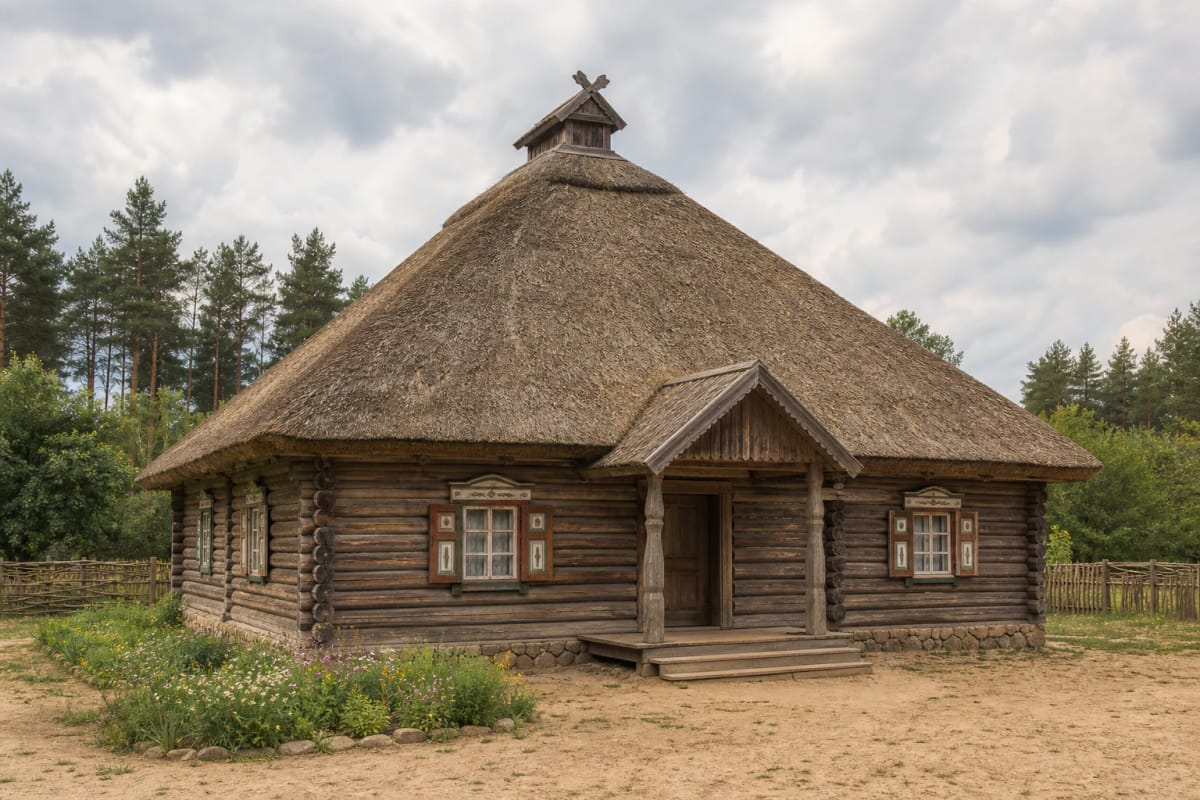
Roofs were high and usually hipped; in Dzūkija they often had a smoke vent and broad overhangs. Roof boards, lėkiai, wind boards, window trims, and shutters gave pirkios regional character, but decoration usually remained connected with construction rather than separate applied ornament. According to VLE, the Dzūkian hipped roof made up about one half to two thirds of the building height, and its plank gables were decorated with small windows, weather vanes, and lėkiai.
Interior plan
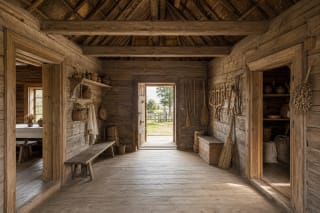
In the family pirkia, the stove stood near the door. The brightest corner held a table and long benches, while the other side might hold a bed, loom, or tools. This room was the main space of daily life.
The priemenė connected outside and inside. It could include a kamara, and in Dzūkian single-ended pirkios the priemenė was sometimes joined with a kitchen and two kamaros. The seklyčia was a cleaner room for guests, youth, or festive occasions.
Regional recognition
A Dzūkian pirkia is often recognised by a restrained log volume, high roof with smoke vent, entrance or porch, decorated shutters, and window trims. The farmstead context also matters: street villages, sandy landscape, closeness to forest, and a relatively compact ring of farm buildings.
A pirkia should not be confused with a Žemaitian troba or a Suvalkian stuba. All three are dwelling houses, but their plans, proportions, roof forms, and terms show different regional building traditions.