- Category
- Sacred Architecture
- Type
- Wooden sacred buildings
- Context
- Wooden church, sacred architecture, Žemaitija, Palūšė, Beržoras, Plateliai, bell tower, churchyard
- Source status
- well attested
Wooden sacred architecture, Folk-architecture church
Wooden Churches: types and elements
Rectangular-plan church: A simpler wooden church form with a clear nave volume.
Cruciform-plan church: A more complex plan emphasising the sacred axis and transept space.
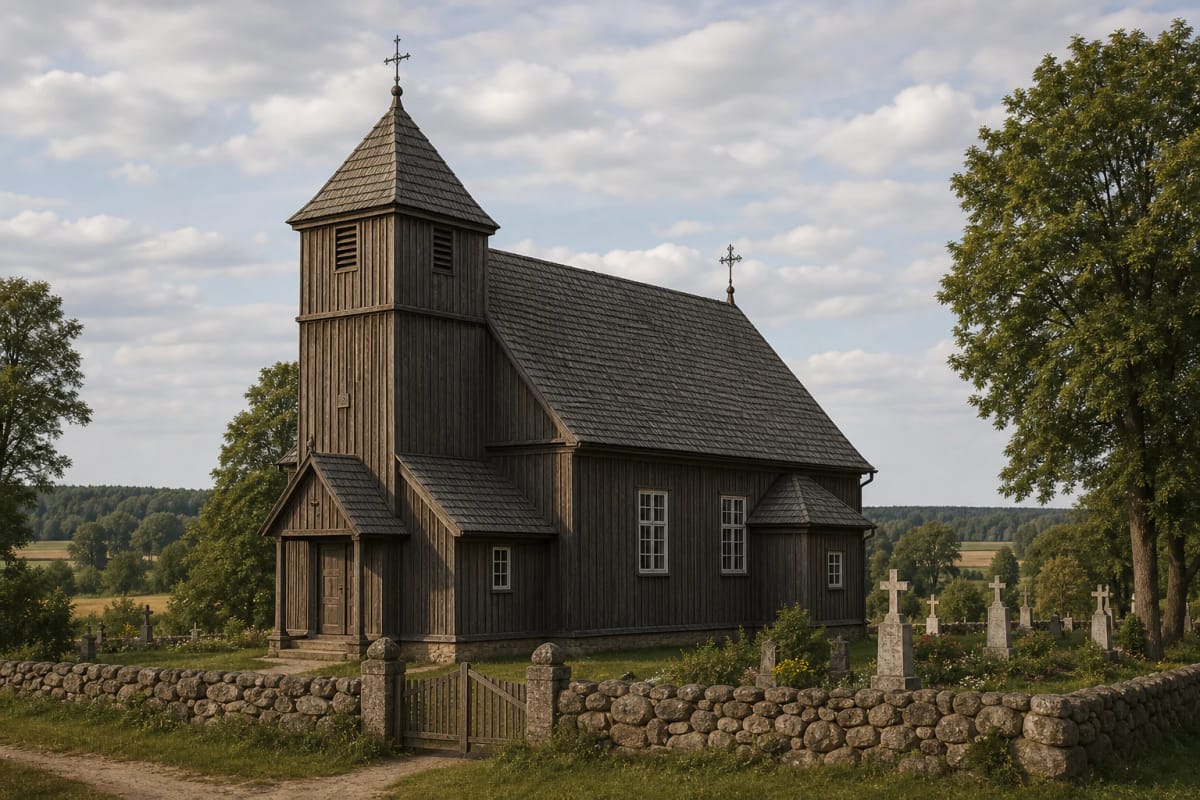
Church with a ridge turret: A silhouette accent above the roof, characteristic of wooden sacred architecture.
What is a wooden church?
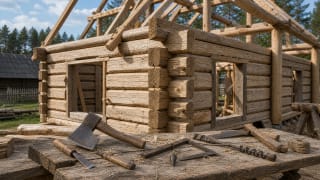
A wooden church is a sacred building built of wood and adapted to Catholic or other denominational liturgy. In Lithuania it often joins professional sacred architectural schemes with local carpentry.
A wooden church is not simply a village house with a cross. Its plan, altars, choir, turrets, churchyard, and bell tower create a sacred ensemble.
Historical layer
After the Christianisation of Lithuania, early churches were often wooden. The oldest fifteenth- and sixteenth-century buildings did not survive because of fires, wars, and rebuilding, but the eighteenth-century and later layer remains highly valuable.
Especially many old wooden church examples survive in Žemaitija and other regions where timber was available and communities maintained local building traditions for a long time.
Form and interior
Wooden churches may have rectangular or cruciform plans, high gabled or hipped roofs, turrets, and restrained facades. The exterior is often calm, while the interior can be ornate. According to VLE, churches are divided by volumetric composition into basilican, hall, and central forms, and by plan into Latin- and Greek-cross forms; hall churches were built in Europe from the eleventh century.

Inside, altars, pulpit, organ choir, carving, painting, and timber finish are important. This shows that sacred wooden architecture joins construction and art.
The ensemble
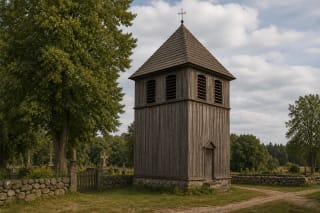
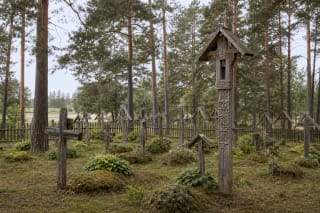
A church rarely stands alone. Churchyard, fence, gates, bell tower, crosses, graves, and trees make a whole sacred landscape.
Therefore protecting a wooden church requires attention not only to the building but also to its setting and community use.