- Category
- Building Methods and Structures
- Type
- Foundation, masonry, and moisture-protection material
- Context
- Lauko akmuo, fieldstone, stone foundations, strip foundation, lower log crown, lime-sand mortar, birch bark
- Source status
- well attested
Lauko akmuo, Laukakmenis, Stone foundation, Strip foundation
Stone Foundations and Fieldstone: types and elements
Corner stones: An older solution in which a log structure rested only at the corners or at the most important bearing points.
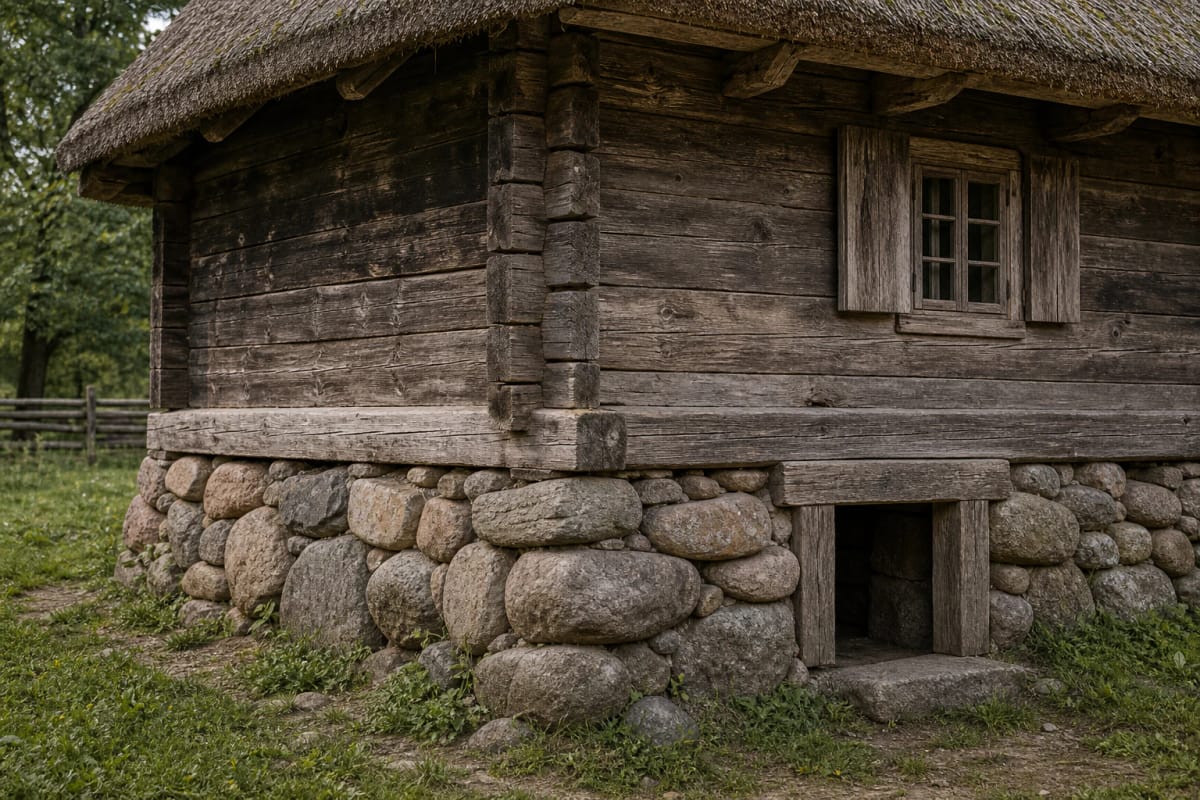
Strip stone foundation: A continuous foundation under the walls, more widely used in later rural building.
Fieldstone masonry: A stone construction built either with or without binding mortar.
Why was stone needed for foundations?
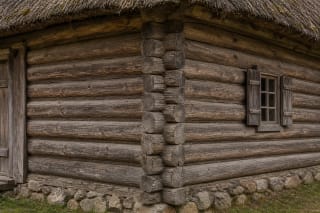
A wooden building lasts longest when its lower log crown does not touch constant ground moisture. Fieldstones lift the log away from the earth and give the structure a firmer base.
For that reason stone foundations are not only a construction detail but a condition for the survival of wooden heritage.
From corner stones to strip foundations
In older buildings, stones were sometimes placed only under the corners or the main bearing points. The spaces between them could be filled with earth and packed clay. According to VLE, archaeological research suggests that in Lithuania houses already had foundations in the thirteenth century: thick oak blocks and larger unhewn stones were placed under corners, sometimes under the whole wall; wooden rural buildings also used post foundations made from charred, tarred timbers set as deep as 1.4 m, with flat stones placed under the posts to increase the bearing area.
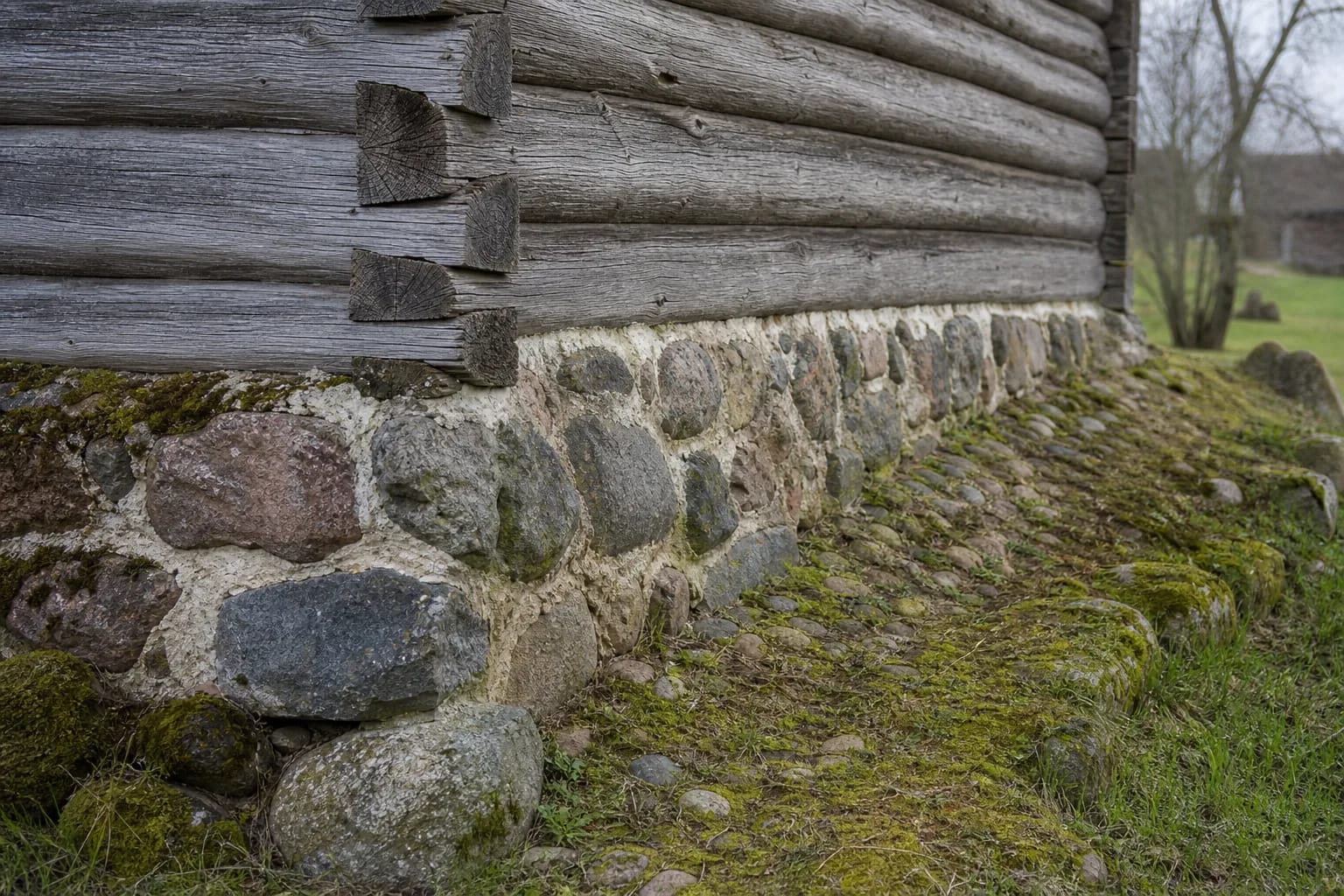
Later, continuous strip foundations spread more widely. At first stones could be stacked without a binder; later, lime-sand mortar was used.
Moisture insulation
In some places birch bark or other moisture-blocking materials were laid under the lower wall log. This shows that traditional builders understood the danger posed by water.
In restoration today, it is important not to cause damage with careless concrete or closed cement repairs that can trap moisture against the timber.
Fieldstone in the landscape
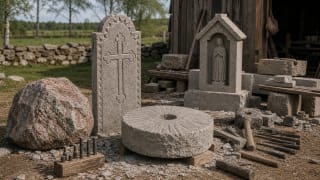
Fieldstone was used not only for foundations but also for fences, wells, cellar walls, road edges, and some farm buildings. According to VLE, split stones weighing 20-40 kg were suitable for building foundations and retaining walls, while smaller boulders, naturally rounded and more than 15 cm in diameter, were used for stone masonry, stone concrete, and paving.
Stone is therefore a material of the rural landscape, not just a technical base under a house.