- Category
- Living Houses
- Type
- Aukštaitian living house or everyday room of the house
- Context
- Aukštaitija, gryčia, pirkia, stove, family room, dūminė gryčia, everyday home space
- Source status
- well attested
Pirkia, Dūminė gryčia, Family gryčia, Aukštaitian house
Gryčia: types and elements
Gryčia as house: The Aukštaitian name for a traditional living house, close to pirkia.
Gryčia as room: The everyday heated living space where the family ate, worked, rested, and slept.
Dūminė gryčia: An early type without a chimney, where smoke dispersed through openings.
What is a gryčia?
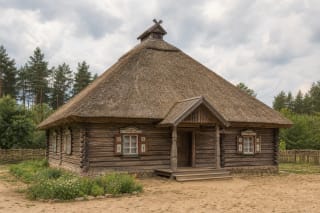
Gryčia is an Aukštaitian term that can mean a traditional living house or the main everyday room inside it. Because of this double meaning, gryčia is very important when reading old descriptions: sometimes the whole house is meant, and sometimes only the heated family space.
Gryčia is close to pirkia, but does not always coincide with it completely. Place, dialect, and the period of the source determine which name is used for a particular building or room.
Everyday family space
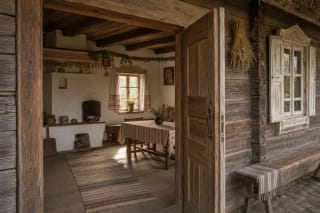
The stove stood at the center of the gryčia. Food was cooked there; people ate, did household work, spun, wove, repaired tools, slept, and received everyday visitors. The gryčia was therefore the social and thermal core of the house.
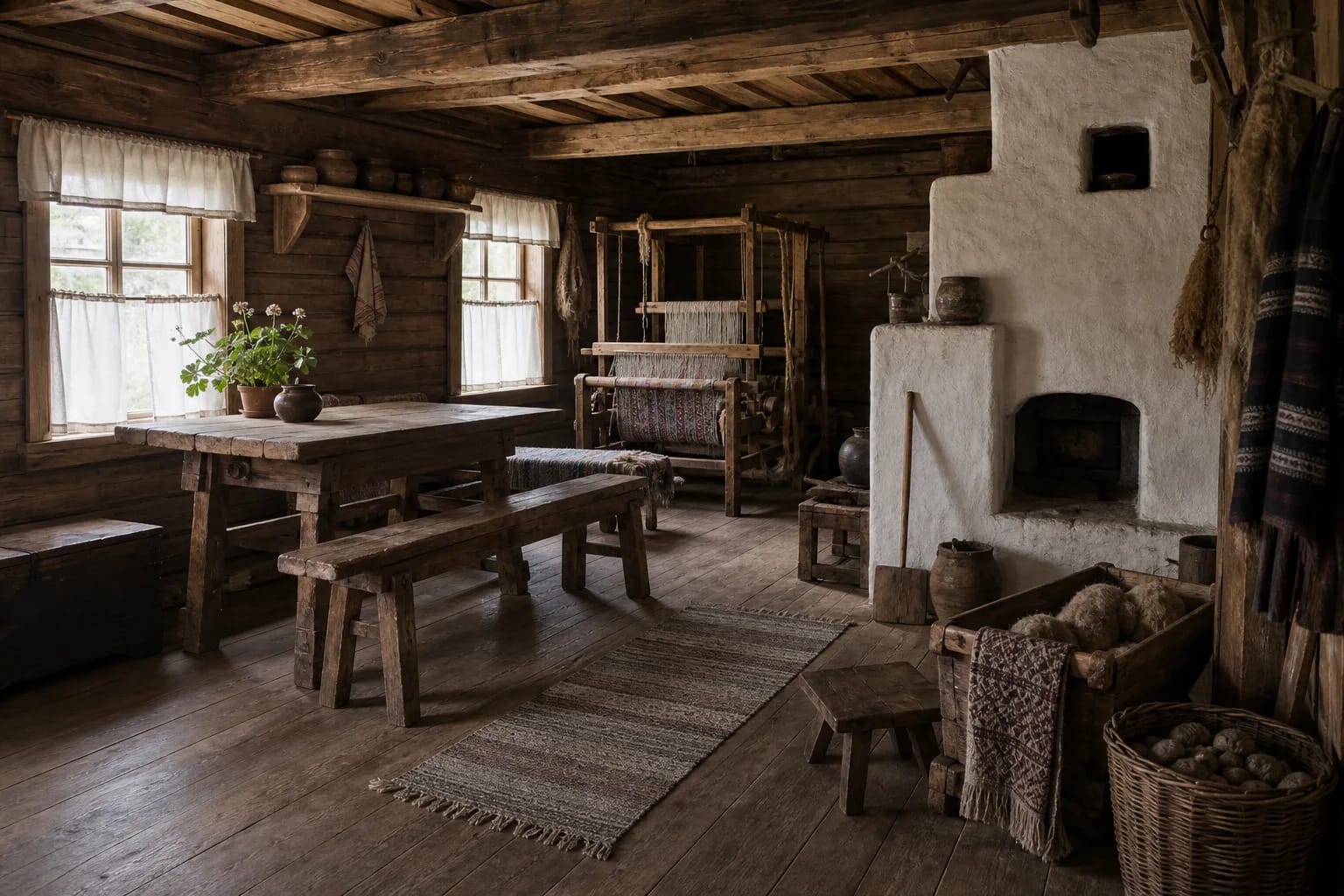
The brightest corner by the windows was often used for the table and benches. The arrangement of stove, windows, doors, and bed created an order repeated by the family through the rhythm of the seasons.
Smoke-filled development
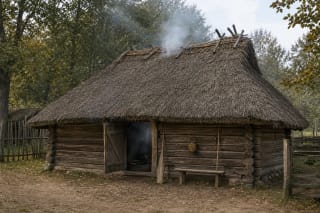
Until the mid-nineteenth century many gryčios were still smoke-filled. Smoke from the stove or hearth did not enter a masonry chimney but dispersed through openings. This affected wall color, ceiling height, ventilation, and the whole feel of domestic life.
Later, chimneys, more separate kitchens, more rooms, and a cleaner seklyčia spread. But the meaning of gryčia as the everyday heated family room remained for a long time.
Form and plan
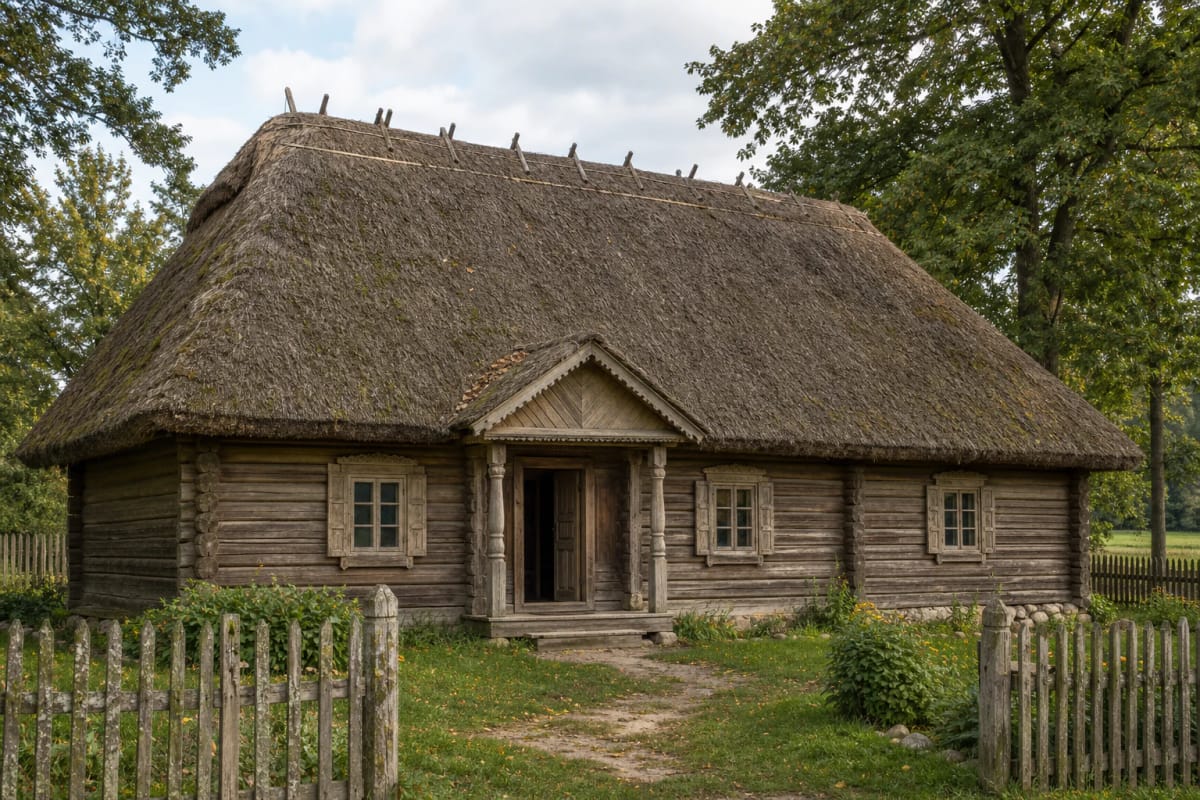
An Aukštaitian gryčia was often rectangular in plan. As a room it could have several windows, a stove in the corner by the entrance, and simple furniture arrangement. As a house it joined with a priemenė, kamara, and later seklyčia. According to VLE, a gryčia had a rectangular one- or two-room plan, usually four windows and a clay-packed floor, while the stove was built in the corner by the entrance; until the mid-nineteenth century most gryčios were still smoke-filled.
In northern and central Aukštaitija the gryčia plan differed from the Dzūkija pirkia, but the shared logic of log construction, stove, and family space remained close.
How to use the term
When writing about architecture it is important to specify whether gryčia means the whole building or a room of the house. For example, dūminė gryčia can describe both an early house type and the smoke-filled main living space.
Because of its closeness to pirkia, this page should be read together with the pirkia and dūminė pirkia topics. That makes the broader field of Aukštaitian living architecture clearer.