- Category
- Dwellings
- Type
- Early chimneyless dwelling
- Context
- Dūminė pirkia, dūminė gryčia, stove without chimney, smoke, priemenė, Aukštaitija, Šuminai
- Source status
- well attested
Dūminė gryčia, Pirkia without a chimney, Chimneyless dwelling
Dūminė Pirkia: types and elements
Dūminė pirkia with priemenė: An early two-part plan joining the heated living room (pirkia) to an entrance room (priemenė).
Dūminė gryčia: The Aukštaitian name for this type when referring to the main smoke-filled living space.
What is a dūminė pirkia?
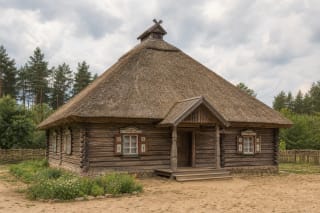
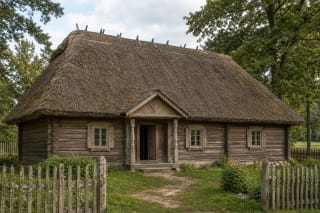
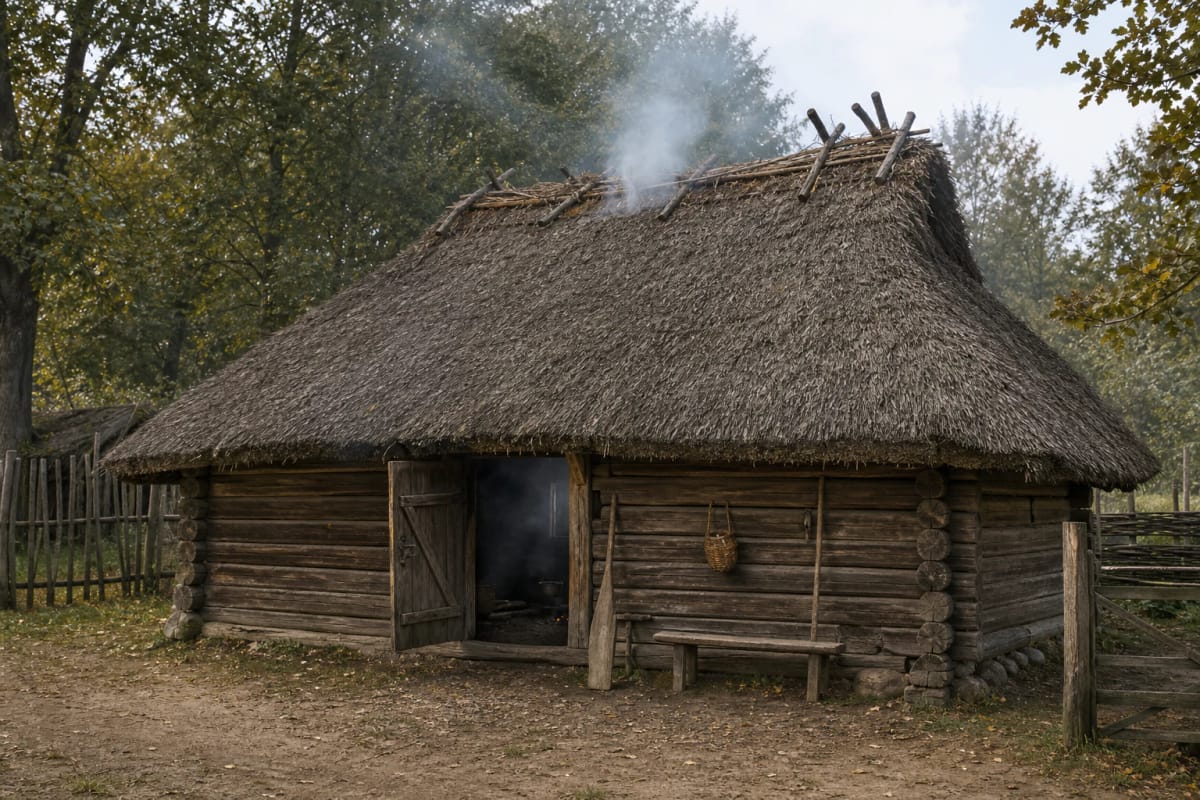
A dūminė pirkia is a traditional Lithuanian house without a chimney. Smoke from the stove does not enter a separate flue but rises into the room and escapes through ceiling openings, doors, or small opened windows. It is an early form of dwelling that required a different daily way of life.
A dūminė pirkia was not a mistake or an unfinished house. It was a technological and cultural system in which heat, smoke, cooking, drying, and insect control worked together.
Historical background
In Eastern Lithuania, chimneyless houses belong to an early stage in the development of dwellings. Later they were gradually replaced by pirkios with chimneys, more rooms, and a cleaner seklyčia (parlour).
In some parts of Aukštaitija, dūminės pirkios survived until the mid-twentieth century. Today surviving examples are valued as ethno-architectural heritage because they show a form of domestic life almost impossible to experience in a modern house. One known example is the chimneyless dwelling in Šuminai village, Utena district.
Stove, smoke, and light
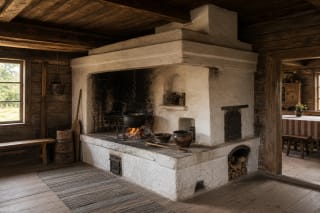
In a dūminė pirkia the stove was the main device for heat and cooking. Smoke first spread through the upper part of the room, darkening interior surfaces, while people lived below the smoke layer.
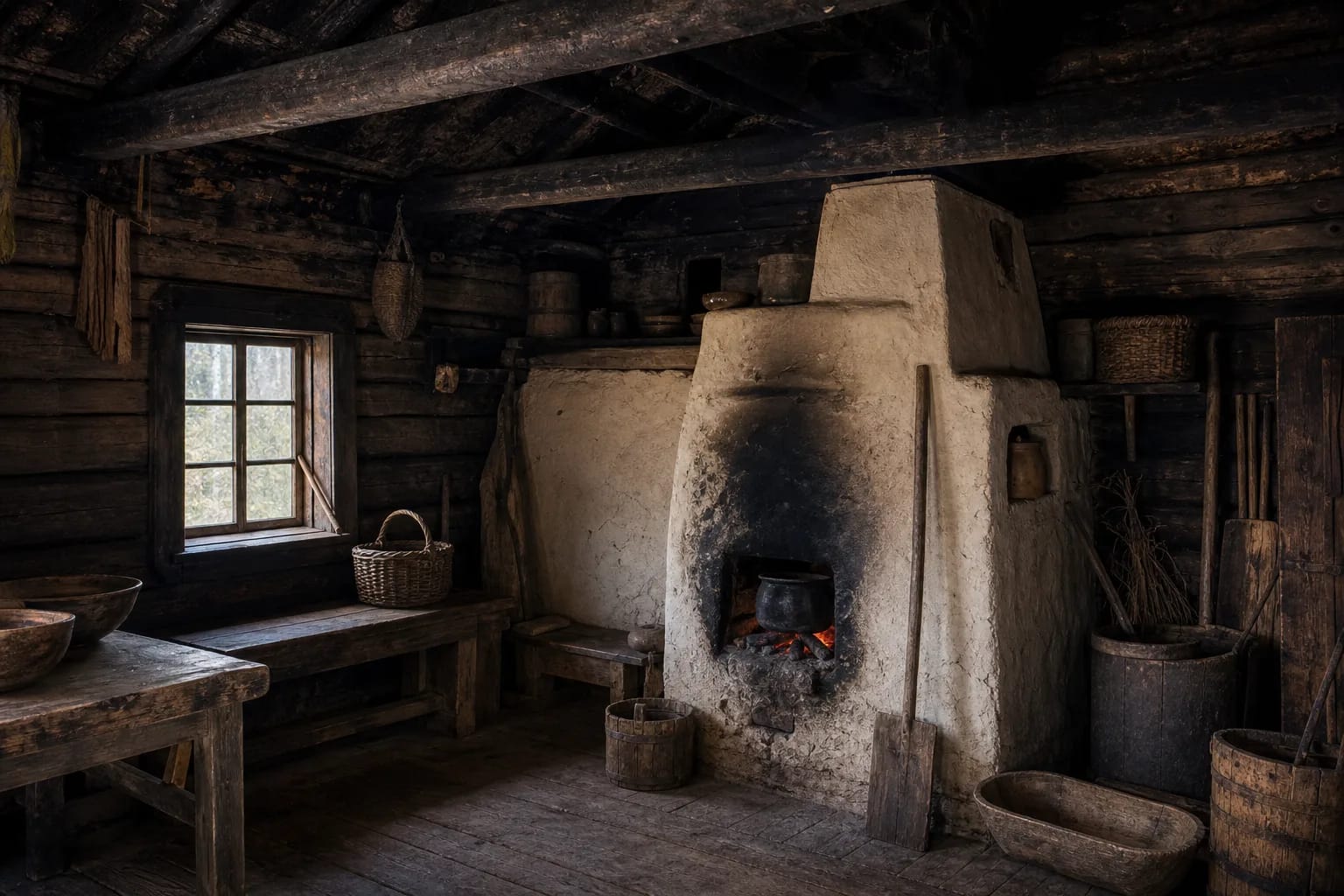
Windows were small, and there was less light than in later houses. This was shaped not only by technology but also by heat retention, wall construction, and older domestic order.
Layout and daily life
An early dūminė pirkia was often two-part: the heated family pirkia and the priemenė. The priemenė served as a transition between outdoors and the smoke-filled room, and also as a place for objects, firewood, or other necessities.
In such a pirkia the family cooked, ate, slept, worked, and warmed themselves in one main space. The dūminė pirkia is therefore a dwelling that brought many daily activities into one space, without the later separation of rooms.
Why it matters today
The dūminė pirkia helps show that traditional architecture is not only beautiful roofs and shutters. It is a compromise among technology, health, habits, climate, and family life.
From a heritage perspective, dūminės pirkios are fragile: adding a chimney or changing the windows, floor, or stove can quickly destroy the authentic system. Their care requires not only building knowledge but also ethnographic understanding.