- Category
- Dwelling-House Spaces
- Type
- Transitional room in a traditional house
- Context
- Priemenė, entrance space, namelis, pirkia, troba, kamara, kitchen, outside door, transition between yard and house
- Source status
- well attested
Entrance space, Priebutis, Priesienis, Namelis, Nameliukas
Priemenė: types and elements
Pirkia priemenė: The middle or entrance part of a pirkia, joining family room, kamara, and outside.
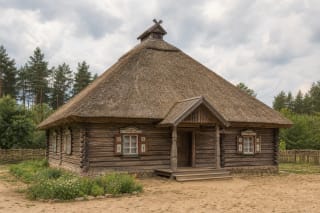
Troba priemenė: In a Žemaitian troba, the priemenė could be divided into good and poor parts near the chimney zone.
Priemenė with kamara: A variant in which part of the priemenė is partitioned for storing food, clothing, or objects.
What is a priemenė?
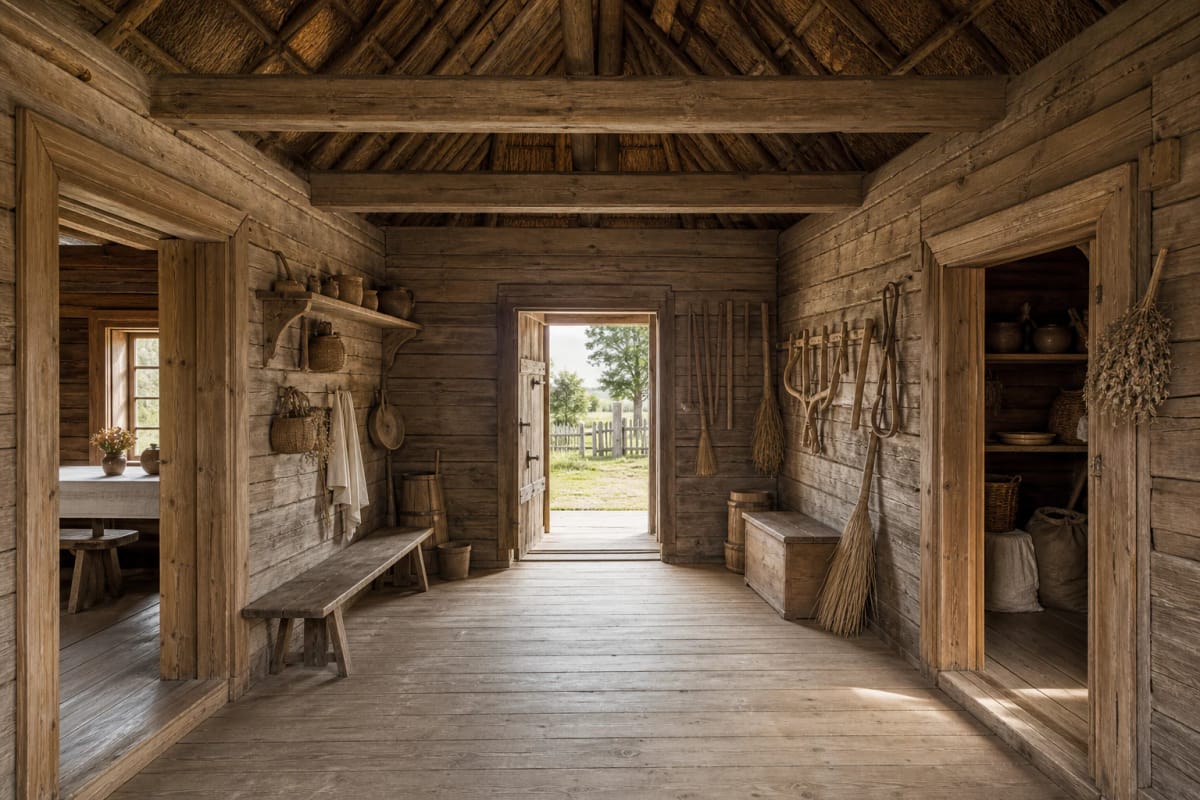
A priemenė is the room beside the outside door. It is neither fully outside nor the main living space. For that reason it served many transitional functions in the traditional house: people entered here, set things down, kept firewood, sometimes worked, or prepared food.
In old descriptions the priemenė may have different local names. In some places it was called namelis, nameliukas, priebutis, or priesienis.
In the pirkia plan
In the early single-ended pirkia, the priemenė was one of the two most important parts. It protected the heated room from direct cold, connected the outside with the stove space, and held practical objects.
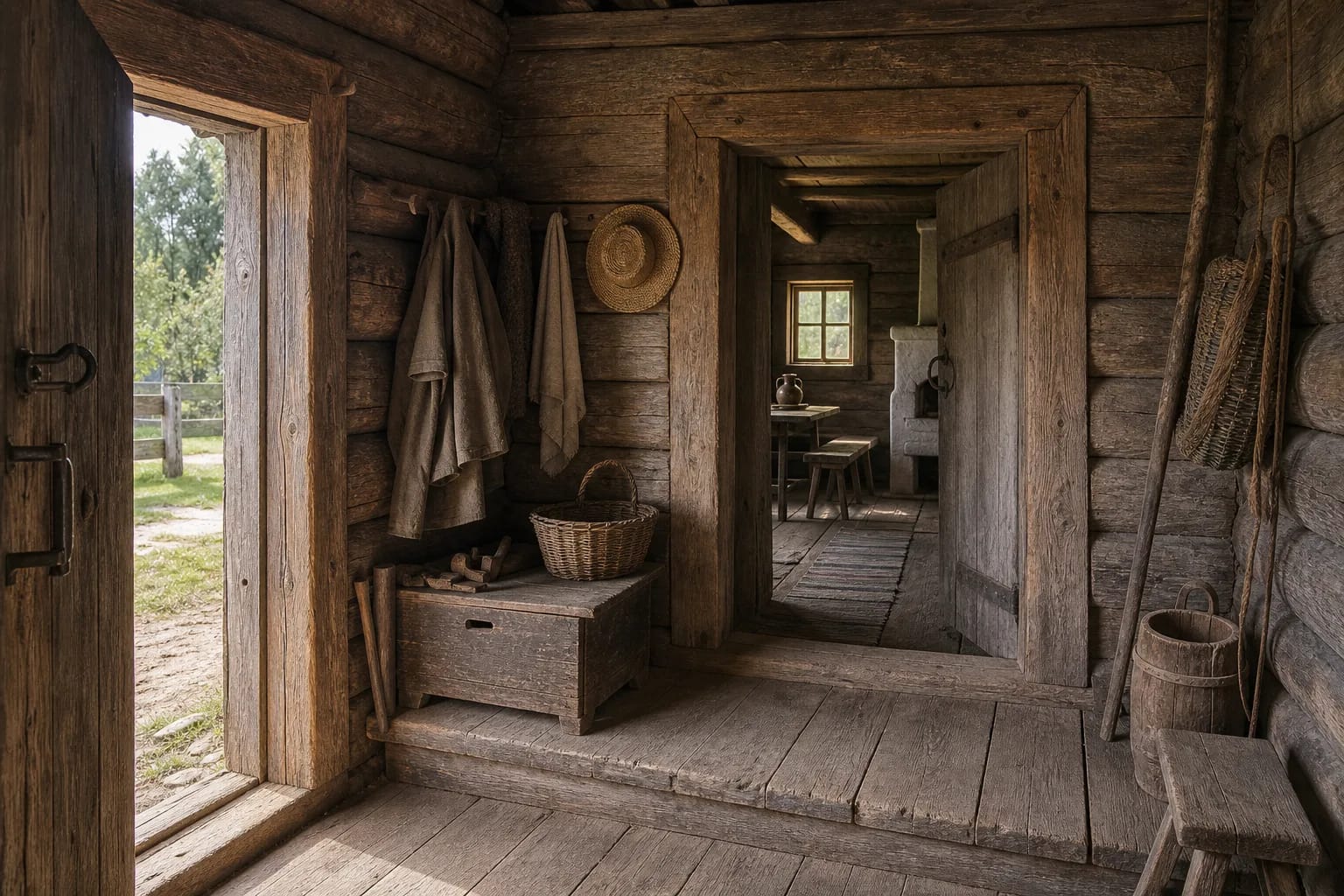
In the double-ended pirkia the priemenė often became the middle part. A kamara, kitchen, or additional small rooms could stand beside it. In this way the priemenė became a node of the house plan.
In the troba and regions
In the Žemaitian troba, the priemenė's relationship with the chimney was especially important. The chimney or virenė could divide the middle house zone into a good and a poor priemenė, from which different parts of the troba were reached.
In Dzūkija and Suvalkija the priemenė also had practical, sometimes even farm-related functions. In the early twentieth century, some priemenės were converted into kitchens, kamaros, or more habitable rooms.
Objects and everyday life
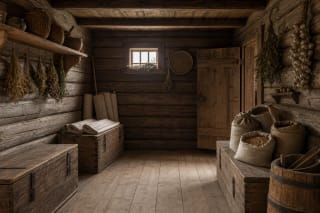
A priemenė could hold ladders or stairs to the attic, a slop tub called an auseklis, a mortar, old chest, cupboard, quern, firewood, or tools. It was a circulation place for objects: everything that did not quite belong in the clean pirkia but needed to be close at hand. According to VLE, in Dzūkija and Suvalkija pigs were even fed in the priemenė until the early twentieth century, while in the second half of the twentieth century the priemenė became a corridor of various sizes.
Because of this function the priemenė often looks less representative than the seklyčia, but architecturally it is very important. Without it the house would lose the logic of transition, heat protection, and interior planning.
Priemenė and porch
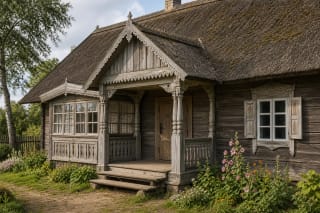
The priemenė is an interior room, while a porch or gonkelės is usually an element attached to the outside of the building. Their functions are nevertheless close: both protect the entrance, manage transition, and provide a place to pause briefly.
In later farmsteads, when glazed porches appeared, some priemenė functions moved into the porch, but the priemenė remained important in the traditional house plan.