- Category
- Dwelling-House Spaces
- Type
- Representative room of a traditional house
- Context
- seklyčia, geroji troba, stubelė, menė, guest room, weddings, baptisms, wakes, village house plan
- Source status
- well attested
Geroji troba, Stubelė, Pirkaitė, Menė, Clean room
Seklyčia / Geroji Troba: types and elements
Seklyčia in a pirkia: The cleaner room in a two-ended pirkia, set against the everyday family end.
Geroji troba in Žemaitija: The representative side of a Žemaitian troba, where guests were received and better things kept.
Unheated seklyčia: An older type used less often and therefore not always permanently heated.
What is a seklyčia?
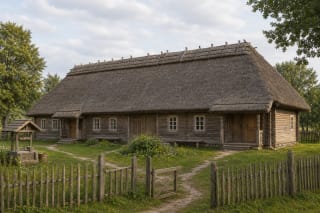
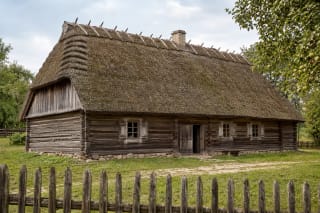
A seklyčia is the cleaner and representative room of a traditional dwelling house. In Aukštaitija and Dzūkija it is connected with the pirkia plan, while in Žemaitija a close term is geroji troba. According to VLE, the family rested there on Sundays and holidays; in northern Užnemunė it was called stubelė, in Žemaitija geroji troba, and in Aukštaitija seklyčia, pirkaitė, or menė; by the early 21st century most surviving examples were in houses of Aukštaitian street villages and dispersed farmsteads.
The seklyčia was used less often than the everyday gryčia or family pirkia. For that reason it could keep a more orderly appearance, better furniture, and readiness for guests or rituals.
Social purpose
Guests, matchmakers, relatives, and honored visitors were received in the seklyčia. Episodes of weddings, baptisms, or other family celebrations could take place there. It could also be used for wakes.
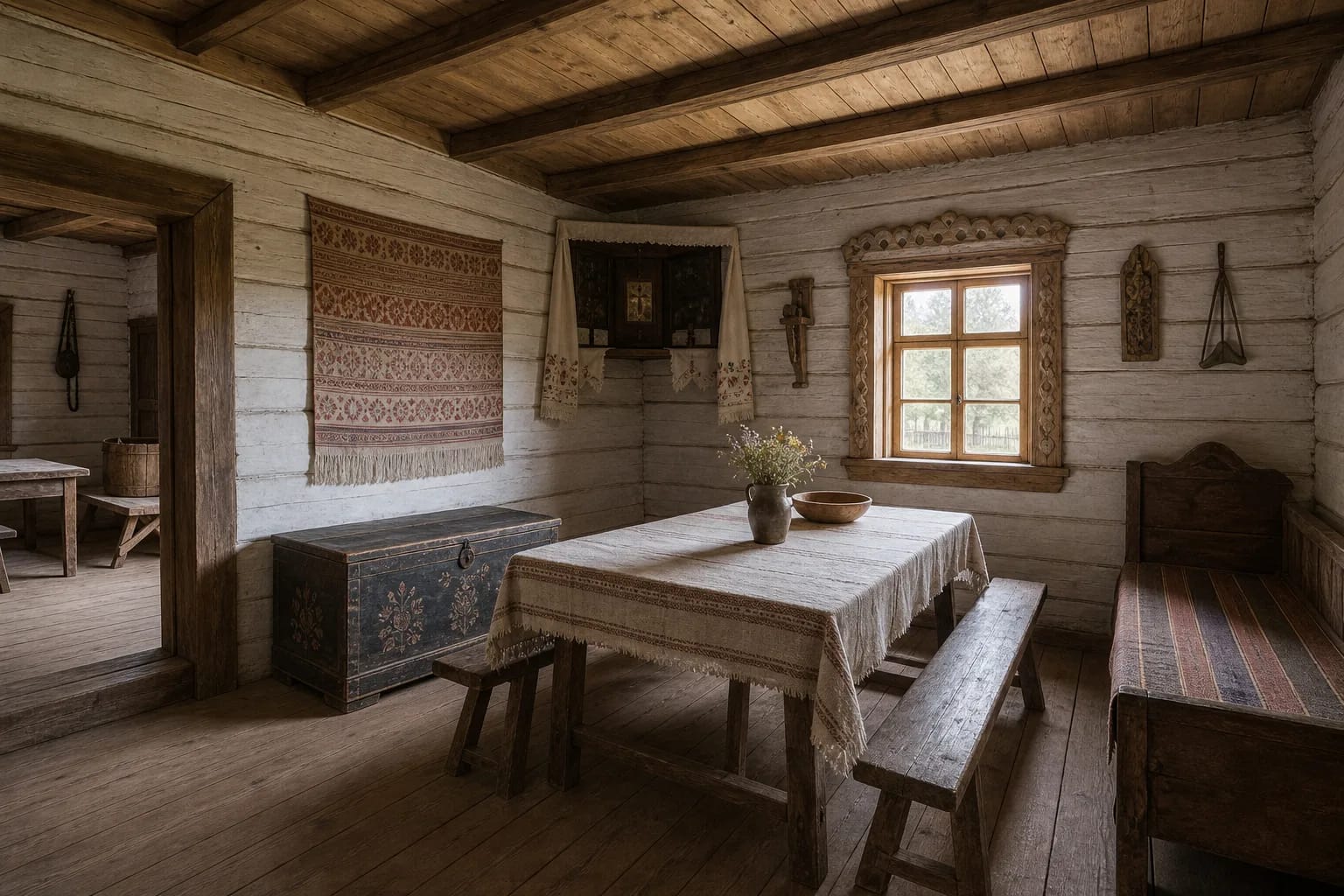
This room expressed household honor. A better table, benches, a guest bed, cupboard, chest of drawers, or dowry chest spoke of the family's orderliness, work ethic, and social self-image.
Relation to everyday rooms
Daily life centered in the gryčia, pirkia, or prastoji troba. The seklyčia differed by cleanliness, rare use, and symbolic importance. It was not just a room but a mechanism of household representation.
In a two-ended pirkia, the seklyčia often occupied the opposite end from the family pirkia. In this way architecture physically separated workday life from festivity and guest reception.
Heating and furniture
Older seklyčios were not always heated continuously. In the early 20th century some received separate stoves or upright heating stoves, making the room more comfortable in cold seasons.
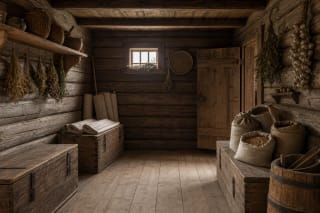
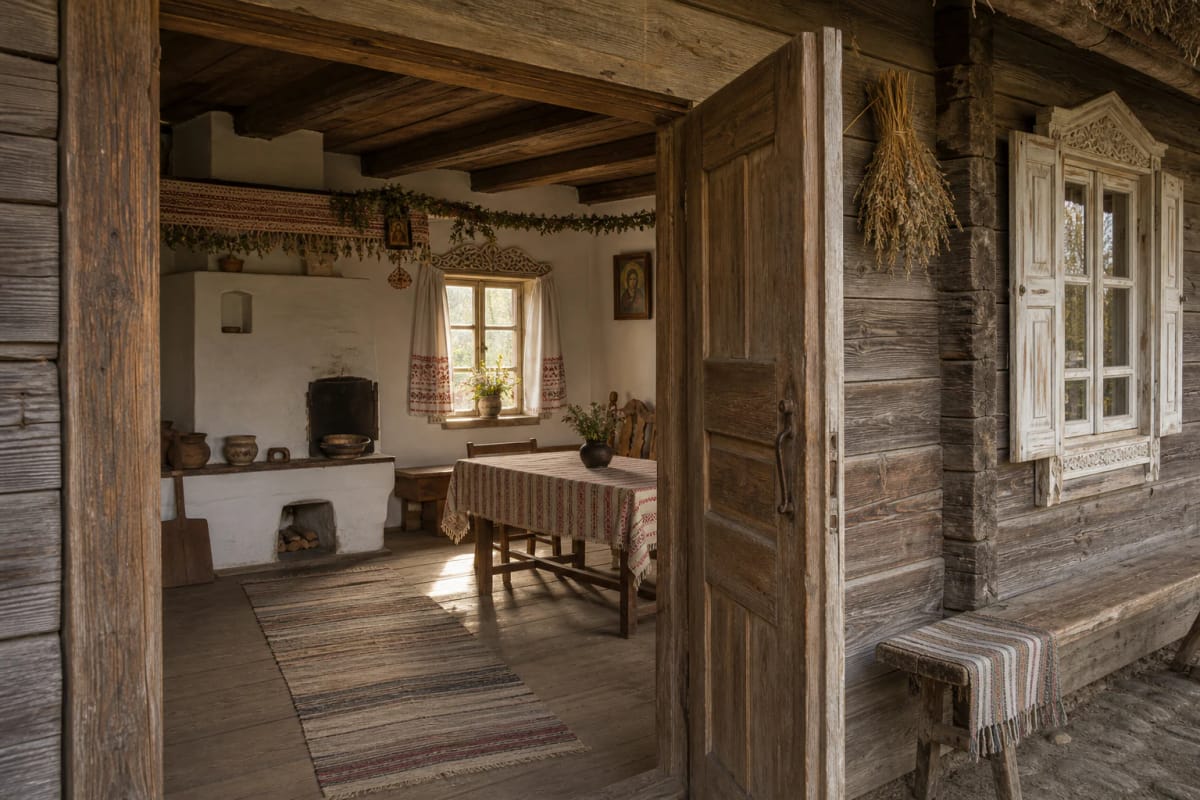
Furniture in the seklyčia was better than in everyday rooms: table, benches or chairs, guest bed, cupboard, chest of drawers, chest, religious images, or textiles. This made the seklyčia an important display of household culture inside the house.
Why this room deserves its own page
The seklyčia shows that a traditional house plan was social. The house did not only protect against cold; it organized relationships: family and guests, work and celebration, everyday and honorable.
For that reason the seklyčia connects architecture, furniture, textiles, family rites, and the history of village etiquette.