- Category
- Living-House Spaces
- Type
- Auxiliary room in a traditional house or svirnas
- Context
- Kamara, priemenė, svirnas, food stores, household objects, sleeping, maltuvė, pirkaitė, packed-clay floor
- Source status
- well attested
Maltuvė, Pirkaitė, Svirnas kamara, Storage room
Kamara: types and elements
House kamara: A room beside the priemenė or at the end of the house, used for storing supplies and objects.
Svirnas kamara: A room in the svirnas or klėtis for grain, flour, textiles, clothing, or more valuable objects.
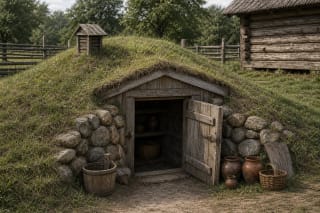
Kamara with cellar: In some houses the kamara could have a sunken cellar part or access to a cooler store.
What is a kamara?
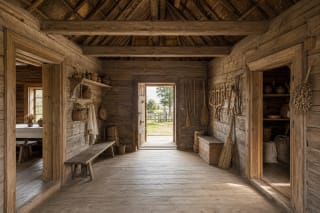
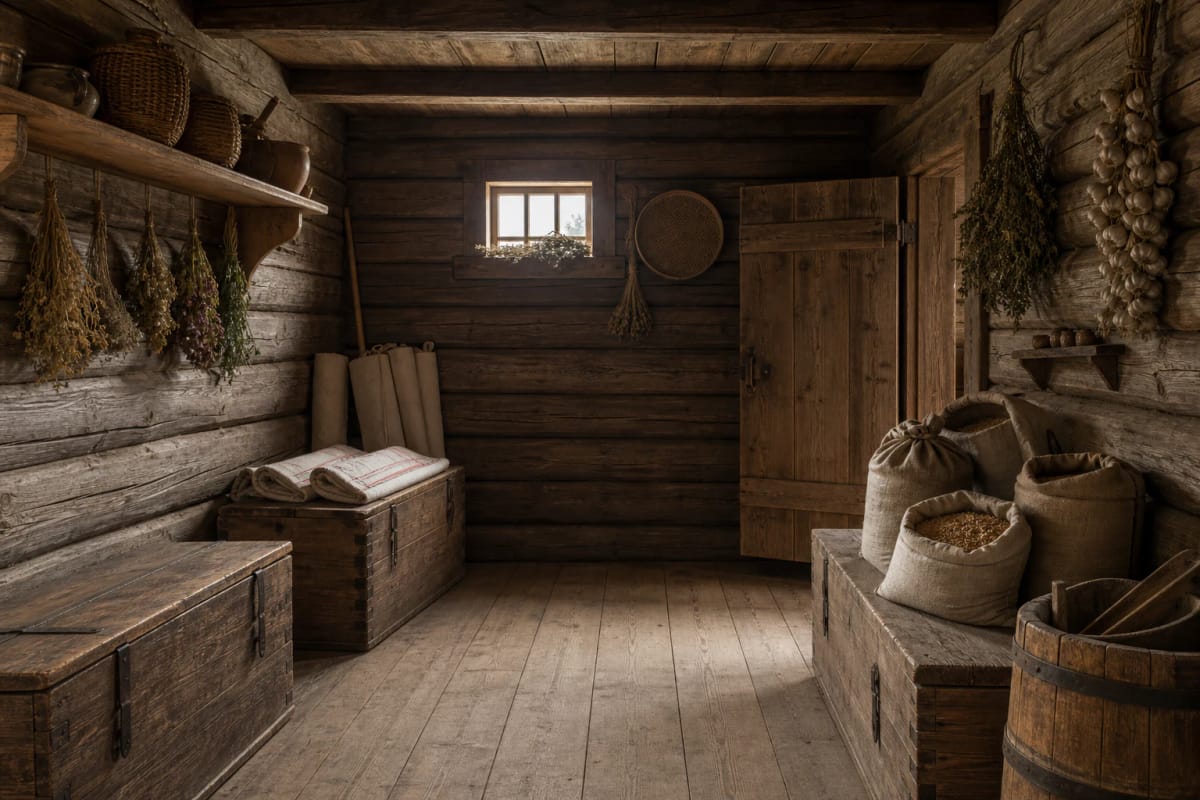
A kamara is an auxiliary room in a traditional house or svirnas. Food products, clothing, household and farm implements, dishes, hand mills, tubs, and sometimes sleeping places were kept there.
The kamara was usually not representative. Its value was practical: to store, cool, hide everyday disorder, and maintain the household supply system.
Place in the house
In Aukštaitija, a kamara often appeared by partitioning part of the priemenė or adding an extra pirkaitė. In a dvigalė pirkia, the priemenė with kamara became one of the main parts of the plan.
In Žemaitija and Lithuania Minor, kamaros could be in the svirnas, the ordinary end of the troba, or other auxiliary zones. Large houses could have several. According to VLE, Aukštaitian kamaros began to be installed in the early nineteenth century; because they held hand mills, a kamara was also called maltuvė; a Žemaitian kamara in a svirnas had two or three rooms with a separate entrance, and large houses had two to five kamaros of different purposes.
Windows, floors, and climate
A kamara could have a window, a small window, or no windows at all. Floors could be wooden or packed clay. These differences depended on region, wealth of the farm, and the room's purpose.
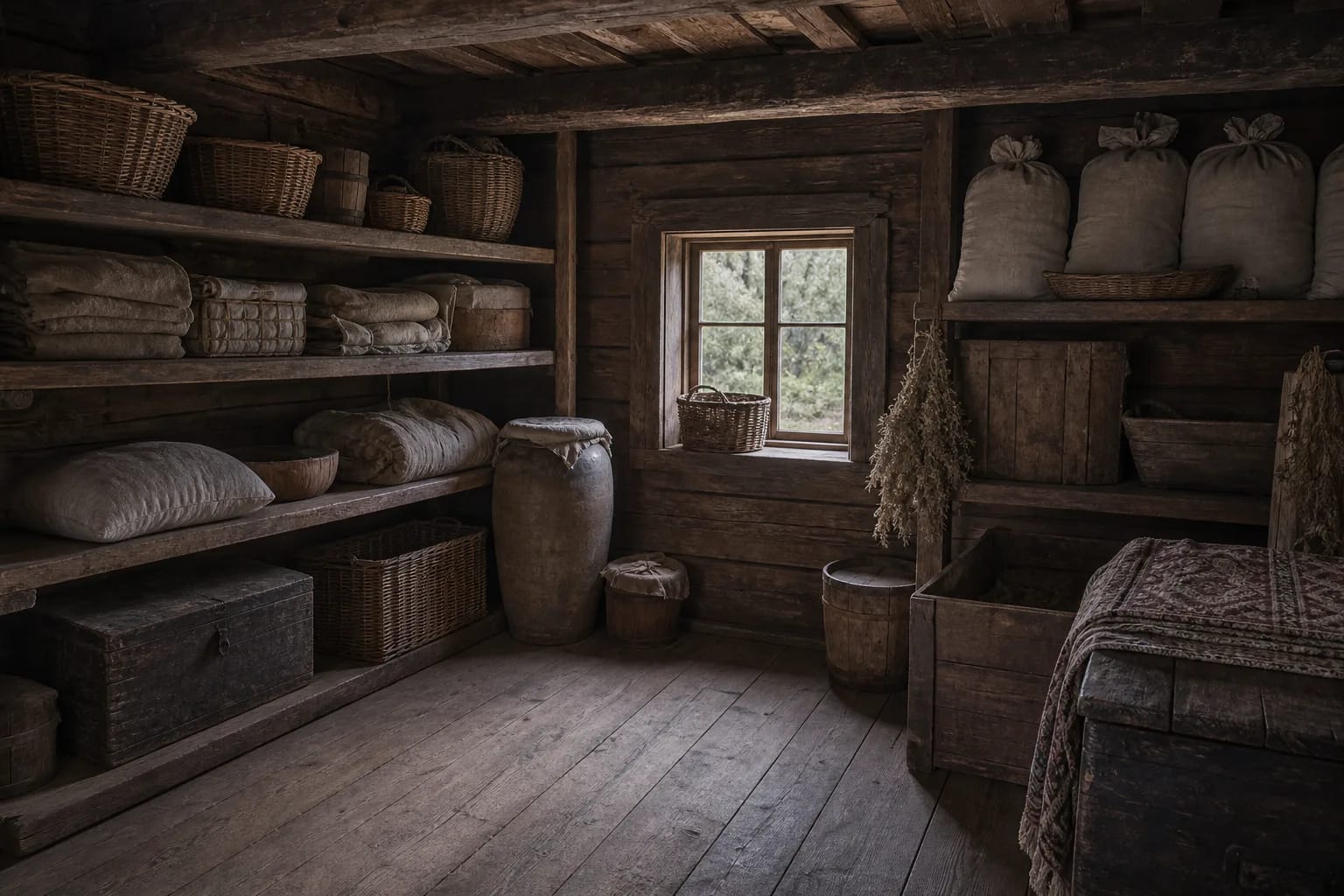
Food stores needed a cooler, drier place protected from sun. The kamara was therefore often less open than the living room.
Kamara and svirnas
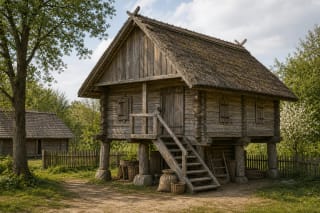
The svirnas or klėtis expands the kamara principle into a separate building. There, supplies, grain, clothing, textiles, and valuable objects were separated even more clearly from the living space.
Still, the house kamara remained useful because it was near the kitchen, pirkia, or priemenė. It was reachable every day and suited frequently used food and household items.
Why the kamara matters
Without the kamara, the traditional house would be only a living space. The kamara reveals supplies, food storage, work tools, and the material side of domestic life.
This room also helps explain why a traditional house plan is not just a count of rooms. Each space had a clear practical, social, and seasonal purpose.