- Field
- Weaving and yarn preparation tools
- Type
- traditional craft
- Heritage status
- well attested
- Context
- cloth width, edges, weaving
Why cloth needs width support
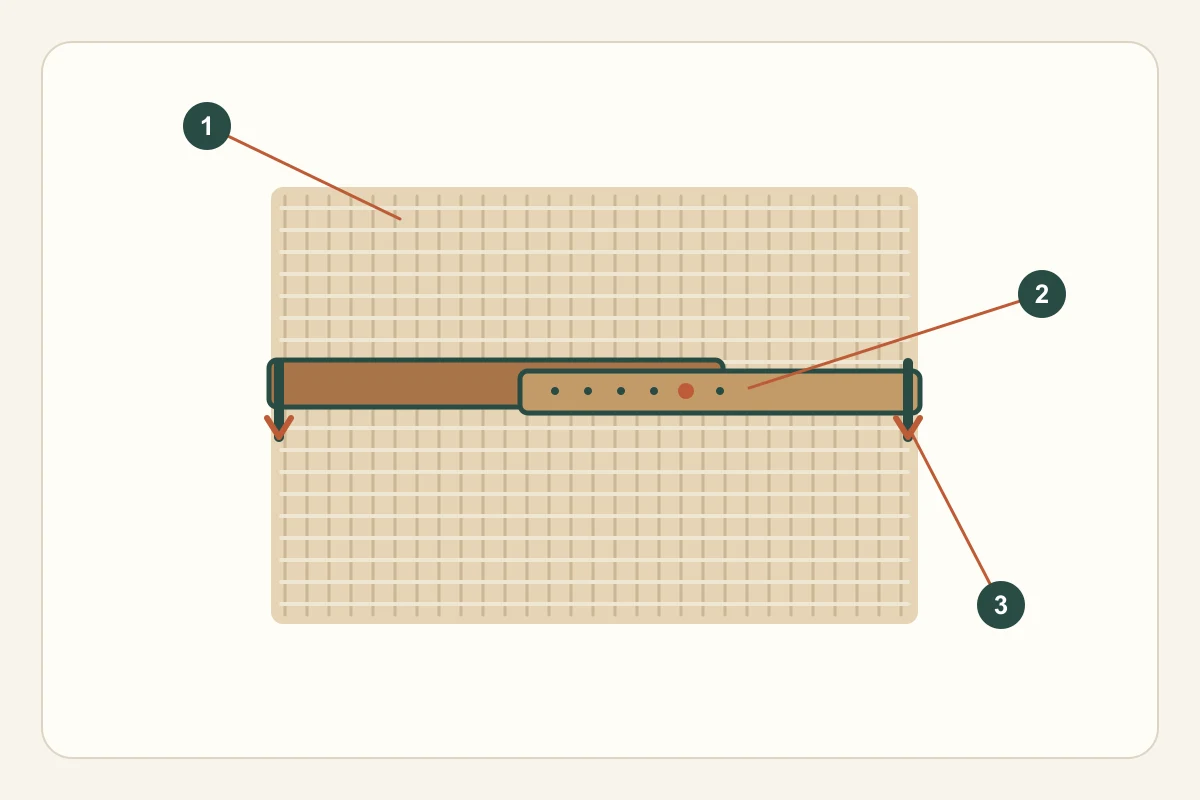
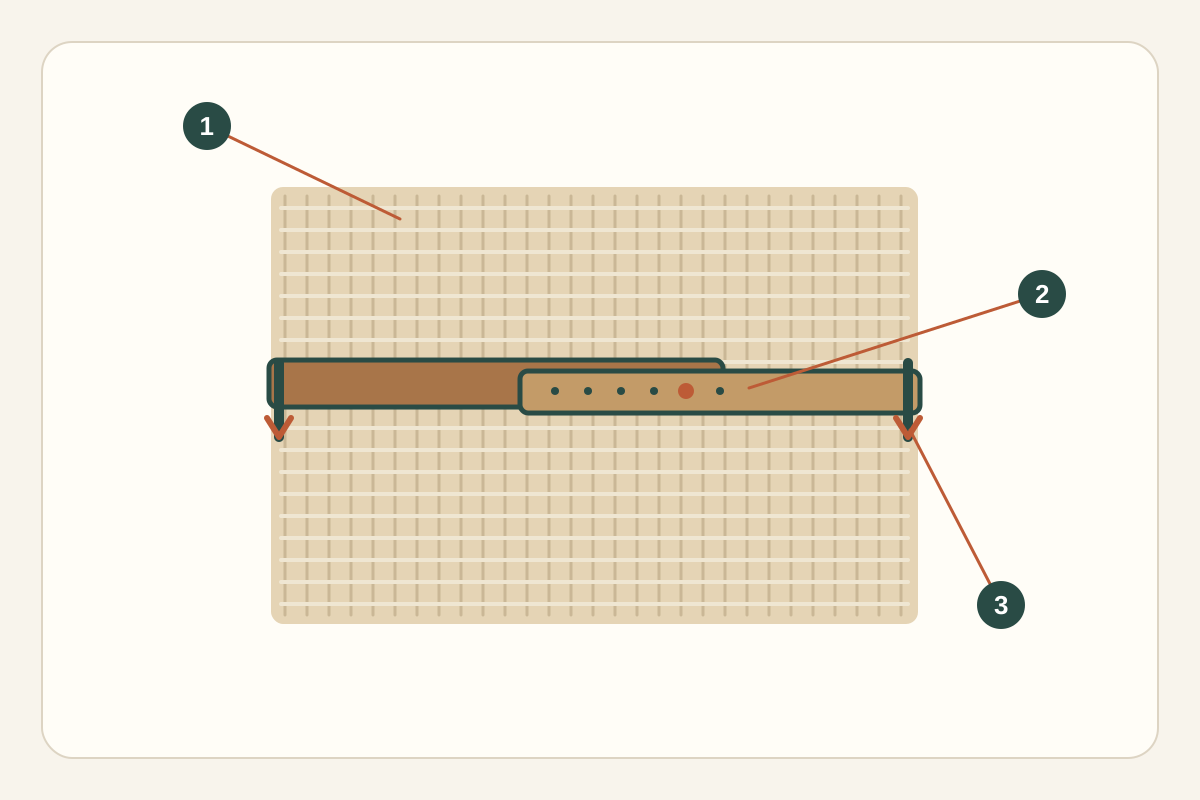
As weft interlaces with warp, woven cloth tends to draw in. A temple maintains the distance between its edges, so its role belongs to the woven area, not the initial preparation of yarn.
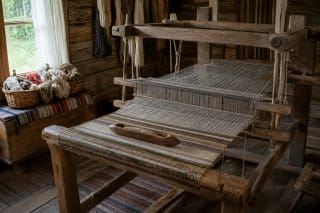
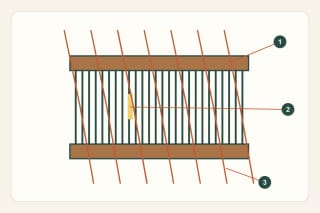
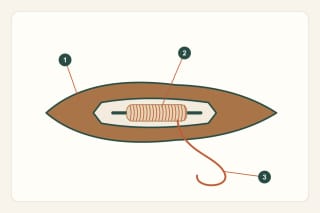
It is neither the shuttle carrying weft nor the reed beating it into place. Comparing those three jobs makes a loom easier to understand.
Features to record
Look for overall length, width adjustment and the construction of the ends. Photograph both faces: one may show decoration, the other joints or wear.
Not every long carved wooden object is a temple. Identification needs functional details or a reliable inventory entry.
Decoration and evidence
Describe visible geometry, inscriptions and dates separately. Function and decoration are different aspects of the same object.
A rosette or row of incised triangles does not establish one religious meaning. Any such claim needs a specific source and examination of that source’s interpretation.
Functional diagram
1 marks the cloth, 2 the temple across it and 3 the edge-holding points. The diagram explains a principle, not the mechanism of one historic object.
First identify where the tool works in a loom. Then compare museum specimens by dimensions and decoration.