- Field
- Weaving and yarn preparation tools
- Type
- traditional craft
- Heritage status
- well attested
- Context
- weft, bobbin, shed
The path through the shed
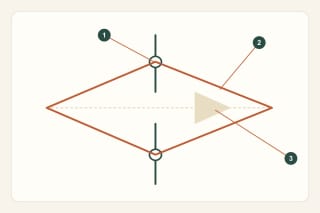
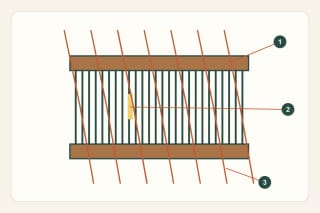
Warp runs lengthwise and weft across the fabric. A shuttle carries weft through the opening between separated warp threads, called the shed. That movement is only one part of a weaving cycle.
After insertion, the weft is brought against the cloth by another loom component. Watch shedding, insertion and beating as separate operations.
Body and bobbin
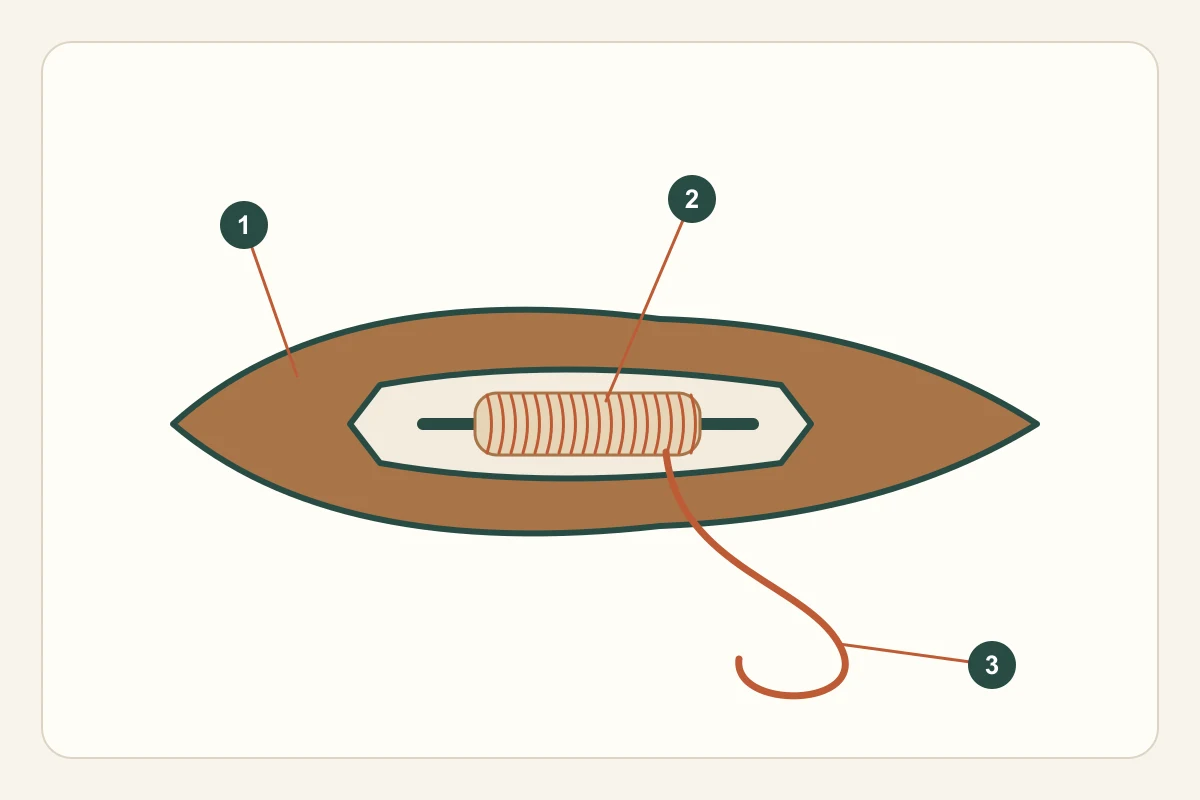
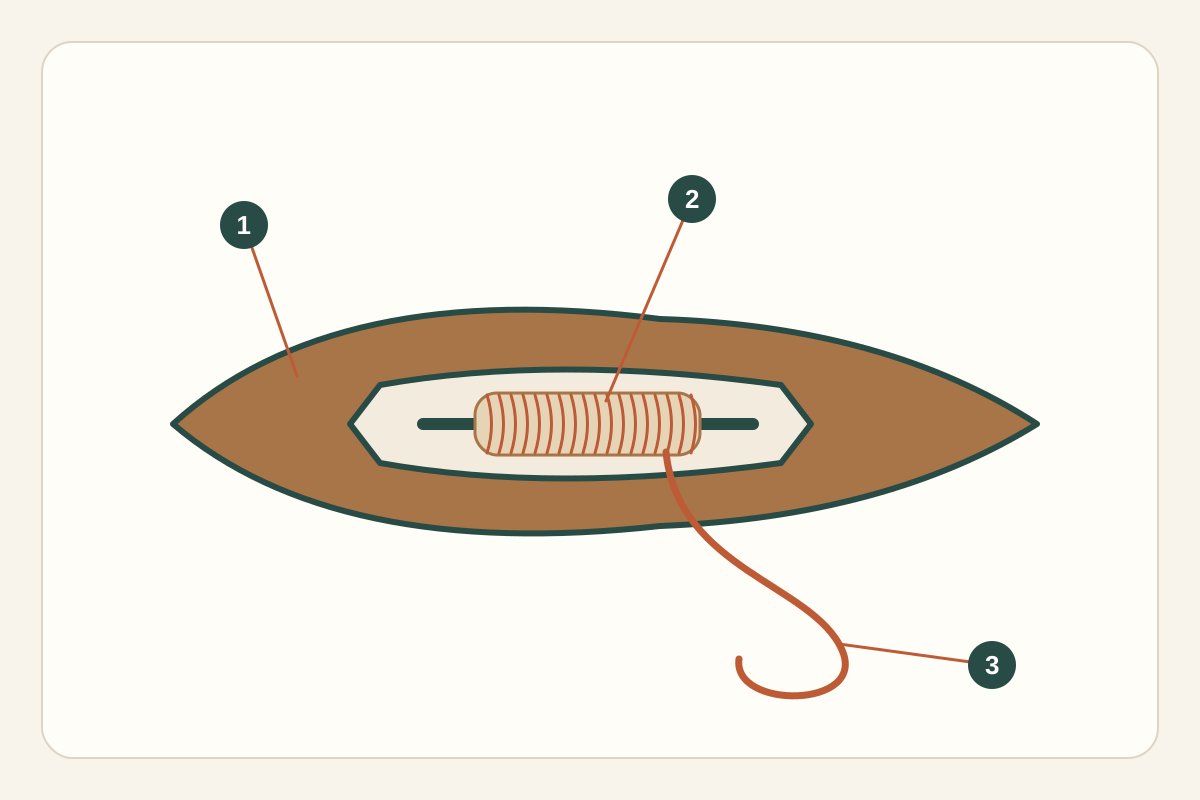
Shuttles vary in body construction and yarn storage. A bobbin is a yarn-holding part, not another name for the entire shuttle. Check whether the museum object is complete.
An empty cavity may mean that an insert is missing. Documentation can distinguish a particular design from an incomplete example.
Form and work
The elongated shape helps passage through the shed, but different fabrics and weaving methods use different shuttles. A simple band shuttle is not a miniature of every wide-loom shuttle.
Record material, dimensions, bobbin position and yarn exit. Describe wear and ornament after the functional features.
Three diagram features
1 marks the body, 2 a schematic bobbin and 3 the weft thread. The illustration explains one general arrangement without reconstructing a specific historical type.
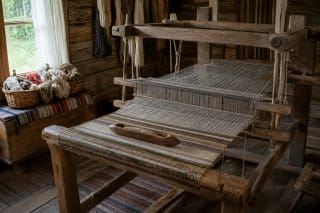
Exercise: identify the weft direction and shuttle passage in a weaving photograph. If the shed is hidden, record that the movement cannot be established from that frame.