- Field
- Weaving and yarn preparation tools
- Type
- traditional craft
- Heritage status
- well attested
- Context
- dent, warp, beating
Teeth and dents
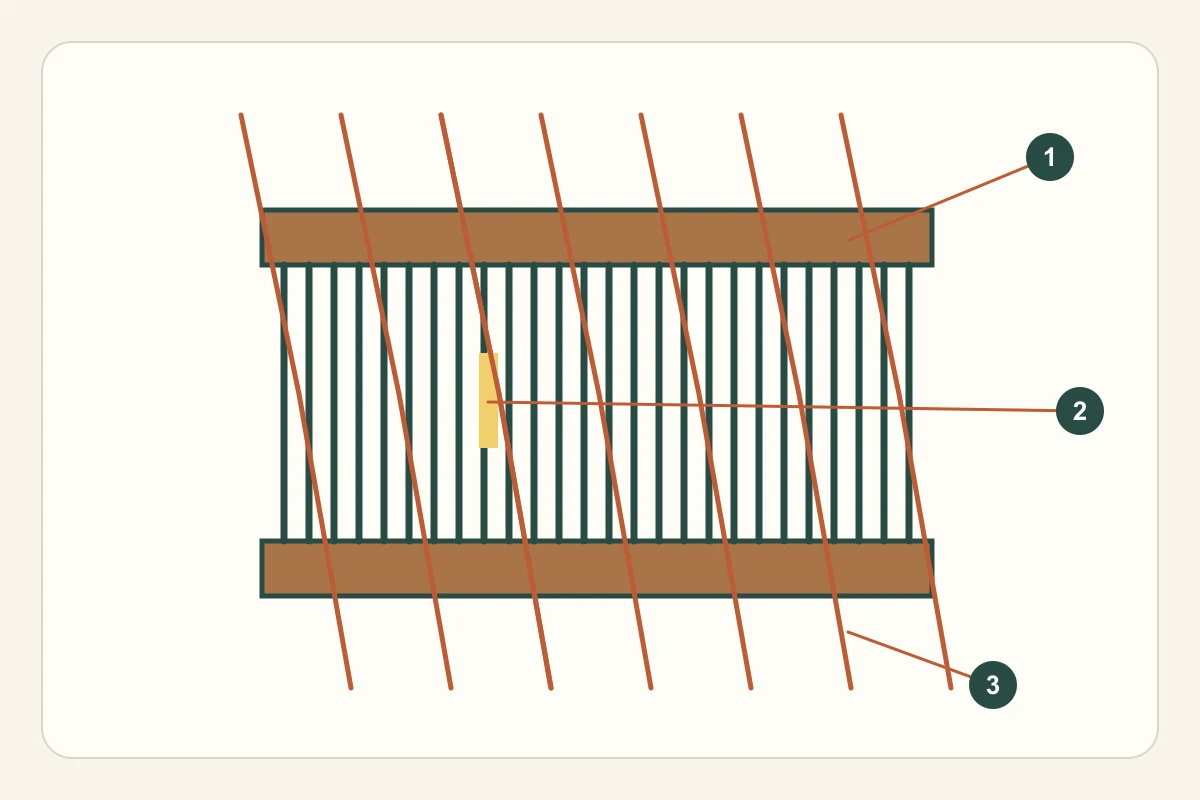
A dent is the gap between adjacent reed teeth through which warp is threaded. Distinguish the teeth from the spaces when counting; a mark in a photograph is not a complete measurement.
A comparison needs a known length. Photographs of two reeds at different scales cannot establish which is finer.
Different from heddles
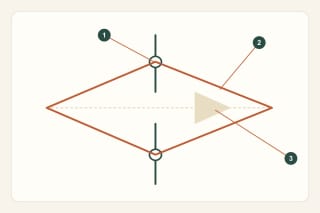
Heddles control which warp threads separate to make the shed. The reed spaces them across the width and, with the beater, brings weft against the cloth. The same threads pass through two components with different jobs.
In a museum demonstration, follow one warp end from its heddle eye to a reed dent. This is easier than trying to decode the entire loom at once.
Reed spacing is not cloth density
The number of warp threads placed in each dent depends on the intended cloth. Reed spacing alone therefore does not establish warp density: the threading information is also needed.
Record yarn, threading and the sample’s condition after finishing. These details are more useful for repeating a fabric than calling it “the same pattern”.
Threading diagram
1 marks the reed frame, 2 a dent and 3 warp threads. This enlarged explanation supplies neither a working sett nor construction measurements.
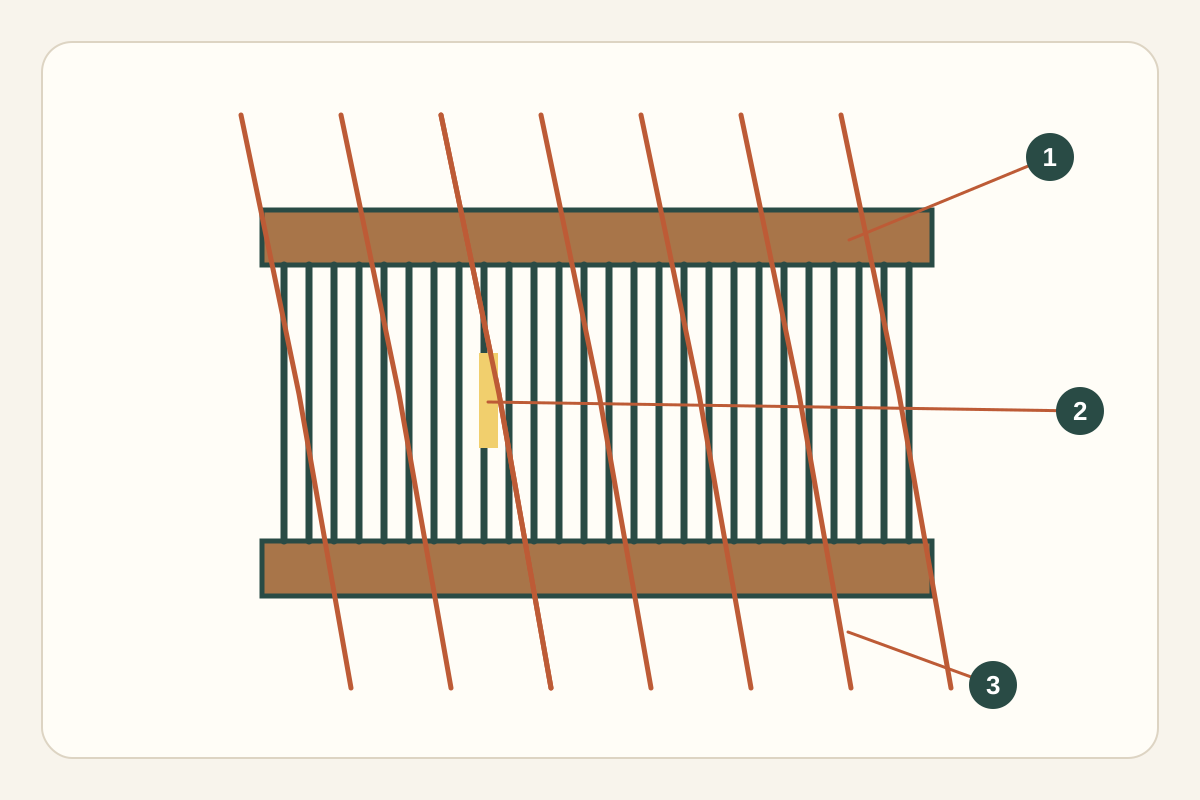
Exercise: count the illustrated threads and spaces separately. Explain why a length measurement is also necessary to describe fabric density.