- Field
- Weaving and yarn preparation tools
- Type
- traditional craft
- Heritage status
- well attested
- Context
- eye, warp end, shed
The eye and the warp path
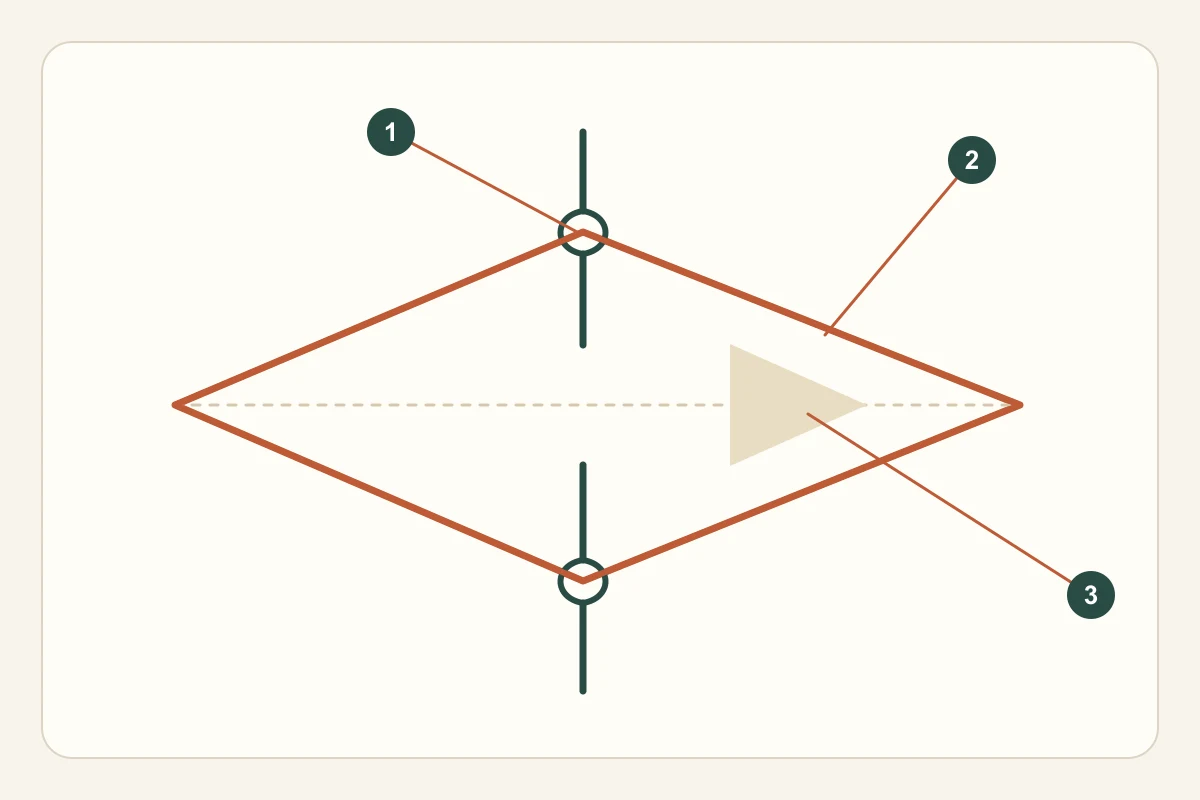
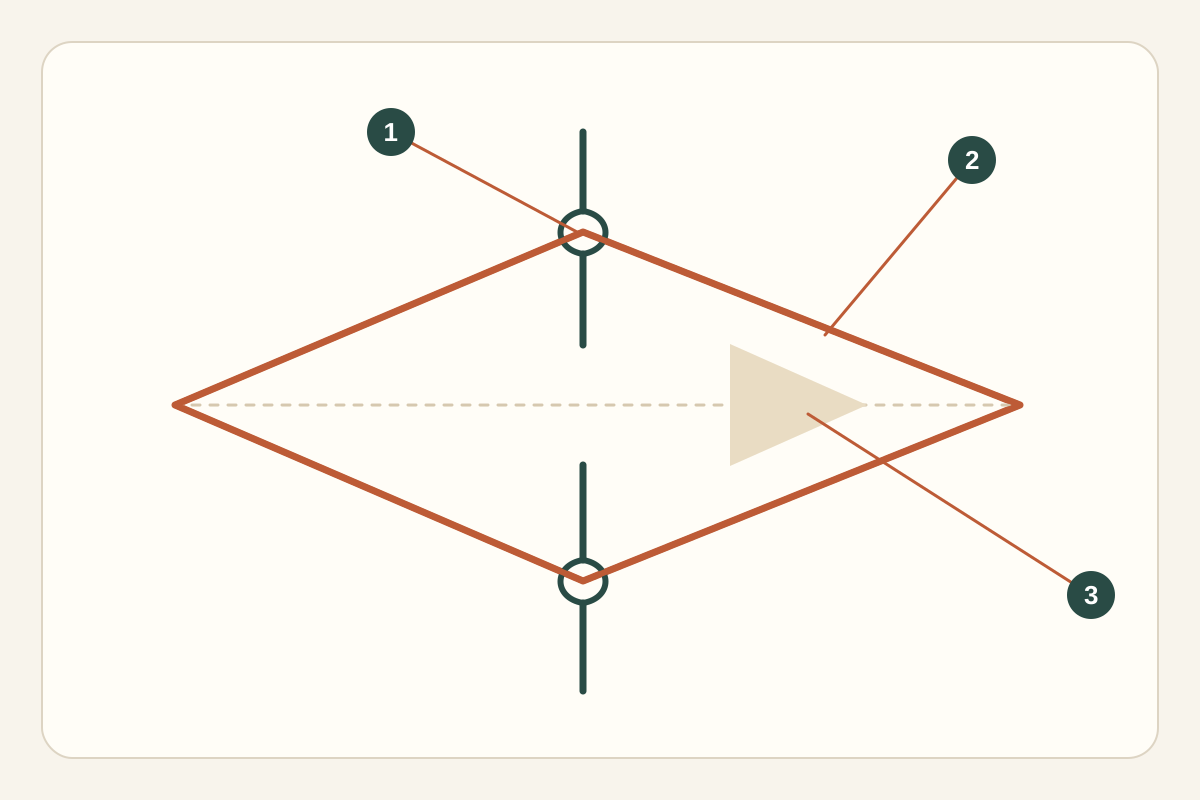
A warp end passes through a heddle eye. Changing heddle positions separates warp threads and opens a passage for weft. This explains why heddles are working components rather than decoration.
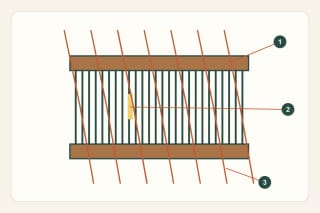
Follow one thread through the diagram. Keep lengthwise warp separate from the crosswise weft inserted during weaving.
What “four-shaft” means
Loom descriptions count controlled groups of heddles as shafts. A four-shaft loom does not have only four warp ends or four individual heddles.
Threading, shaft operation and yarn colours are different decisions. Shaft count alone does not specify the resulting pattern.
A museum example
Alytus Museum’s “Secrets of four-shaft weaving” activity connects weaving with the documented local weaver Julija Karpuškaitė–Platūkienė. It provides a way to link terminology with a named practice.
For a particular loom, ask which parts are original, replaced or adapted for teaching. A working loom’s present condition may differ from an older photograph.
How the shed forms
1 marks a heddle eye, 2 a warp end and 3 the opening between separated warp threads. This simplified illustration is not a dressing plan for a particular loom.
Exercise: explain what must change for another weft to interlace differently. Without threading and lifting information, leave the exact fabric pattern undetermined.