- Place
- Žagarė, Joniškis District Municipality
- Region
- Joniškis District
- Type
- hillfort on Žagarė Esker with a foothill settlement
- Address
- Žagarė, Žagarė eldership, Joniškis District
- Coordinates
- 56.35691, 23.23075
Žagarė II Hillfort, Žvelgaitis Hill, Plikasis (Kosčiuška) Hill
Žvelgaitis Hillfort on Žagarė Esker
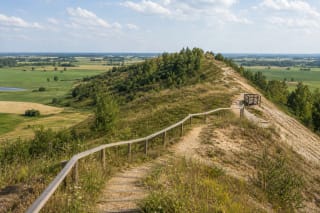
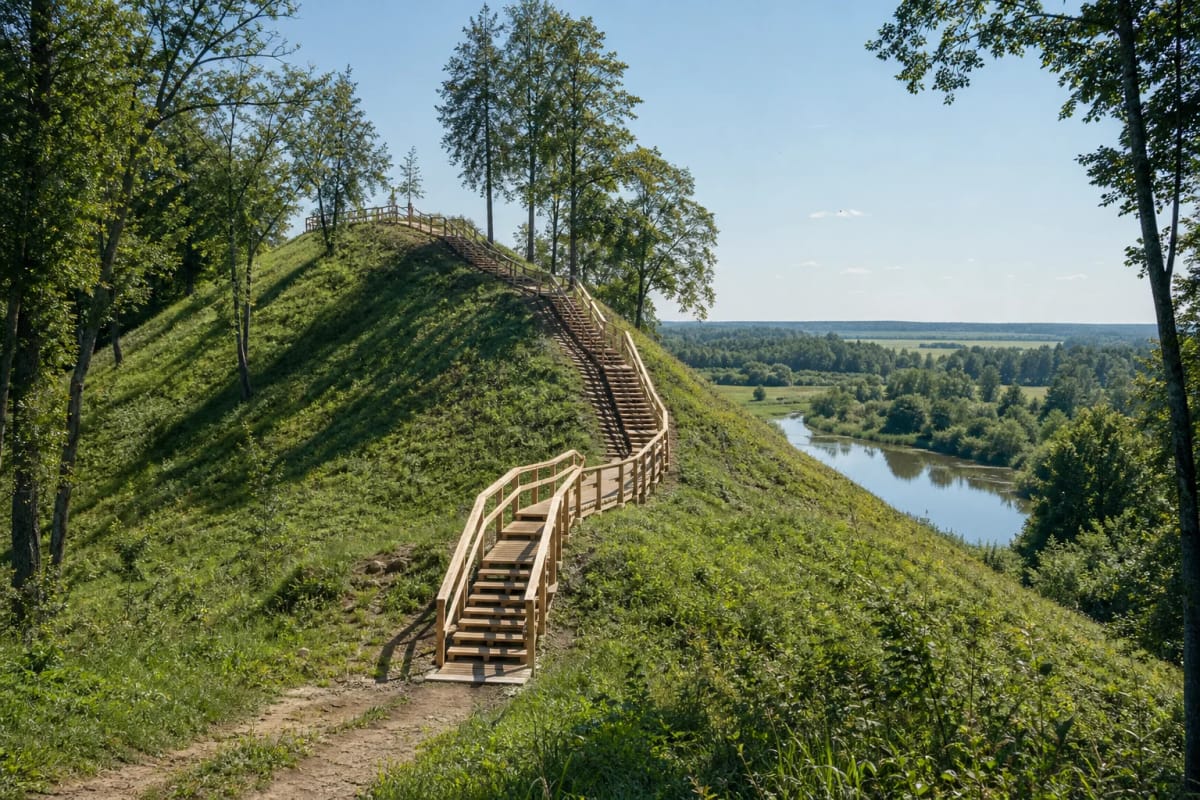
Žvelgaitis Hillfort is in Žagarė, Joniškis District, on the left bank of the Švėtė River. Saugoma.lt calls it the most impressive part of Žagarė Esker: the hillfort rises on a high geological ridge and therefore looks especially steep and tall. It is one of the best-known places in Žagarė Regional Park.
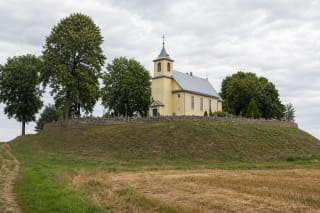
Žagarė has two hillforts. The first is Raktuvė Hill, where Raktuvė Castle stood; in the early nineteenth century it was damaged when burials began and a chapel was built. The second, about 700 m west, is Žvelgaitis Hill, the subject of this page.
Where the name Žvelgaitis comes from
According to legends, the castle of the legendary thirteenth-century duke Žvelgaitis stood on the hillfort. The real Žvelgaitis was a Lithuanian duke who died in 1205 during a campaign into Estonian lands, when Lithuanians were defeated near Ropaži by Semigallian and German forces. It is important to know that the historical Žvelgaitis is not directly connected with Žagarė.
VLE explains how the name arose: nineteenth-century historian Simonas Daukantas wrongly considered Žvelgaitis a duke of Jelgava and Žagarė, so in the first half of the twentieth century the name Žvelgaitis Hill attached to the Žagarė hillforts, and a nearby village was named Žvelgaičiai. The attractive name is therefore a later tradition, not a direct historical fact.
Form, research, and finds
VLE states that the slopes are steep, up to 15 m high, and the platform is trapezoid, about 50 x 55 x 68 m, encircled by a 1 m high and 10 m wide rampart. On the north-eastern edge a ditch 12 m wide and 2 m deep was dug, with another low rampart beyond it. Foothill settlements of about 3 ha stretch to the north-east and south-west.
The hillfort was investigated in 1956, 1999, and 2010. Finds include remains of a thirteenth-century wooden building and sixteenth- to eighteenth-century manor, weapons, tools, ornaments, coins, and tokens. In 2010 archaeologist Ernestas Vasiliauskas found as many as five crossbows and horse ice-shoes, finds typical of Livonian Order castles. Archaeologists therefore suggest that in the thirteenth-fifteenth centuries a wooden castle of the Archbishop of Riga, later the Livonian Order, may have stood here.
New stairs and visiting
New sturdy oak stairs lead to the highest part of the hillfort, making the climb convenient even after rain. The hillfort lies in Žagarė's recreation zone with Žvelgaičiai Lake, quarries, and Žagarė Esker forests, one of the park's most beautiful areas.
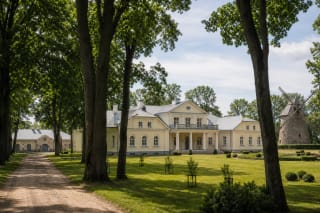
It is an open natural and archaeological heritage site with no tickets or opening hours. A visit usually takes 30-60 minutes. Žvelgaitis Hillfort combines well with Žagarė Manor, the esker, Raktuvė Hill, and other Semigallia-region sites.