- Place
- Vilnius City Municipality
- Region
- Vilnius
- Type
- private indoor zoo and animal-learning space at the Ogmios Miestas complex
- Address
- 27 Verkių Street, Vilnius (Ogmios Miestas)
- Coordinates
- 54.71317, 25.29450
- Visit duration
- 1.5-2.5 hours; longer if you plan around public or keeper feeding times
- Best time
- a weekday morning or shortly before a chosen feeding time; do not visit on the first Monday of the month
Vilniaus Zoopark, Zoopark Vilniuje, Vilnius indoor zoo, Vilnius Zoopark
An indoor zoo inside the Ogmios Miestas complex
Zoopark occupies part of the large Ogmios Miestas shopping and leisure quarter at 27 Verkių Street in the Šiaurės Miestelis area. The Google Maps point at 54.7131663, 25.294502 identifies the zoo's position within the building rather than a surveyed doorway, so it is classified as a site point. Follow the Zoopark signs inside the complex instead of choosing an arbitrary entrance to one of the many buildings at the same street address.
VšĮ Zoopark.lt opened its Vilnius zoo to visitors on August 31, 2018. The operator describes it as the first zoo in Vilnius and the city's only indoor zoo. In 2025, Lithuania's Environment Ministry confirmed that Vilnius has one of the country's three private zoos, all subject to licensing, education, species-conservation, and animal-welfare requirements.
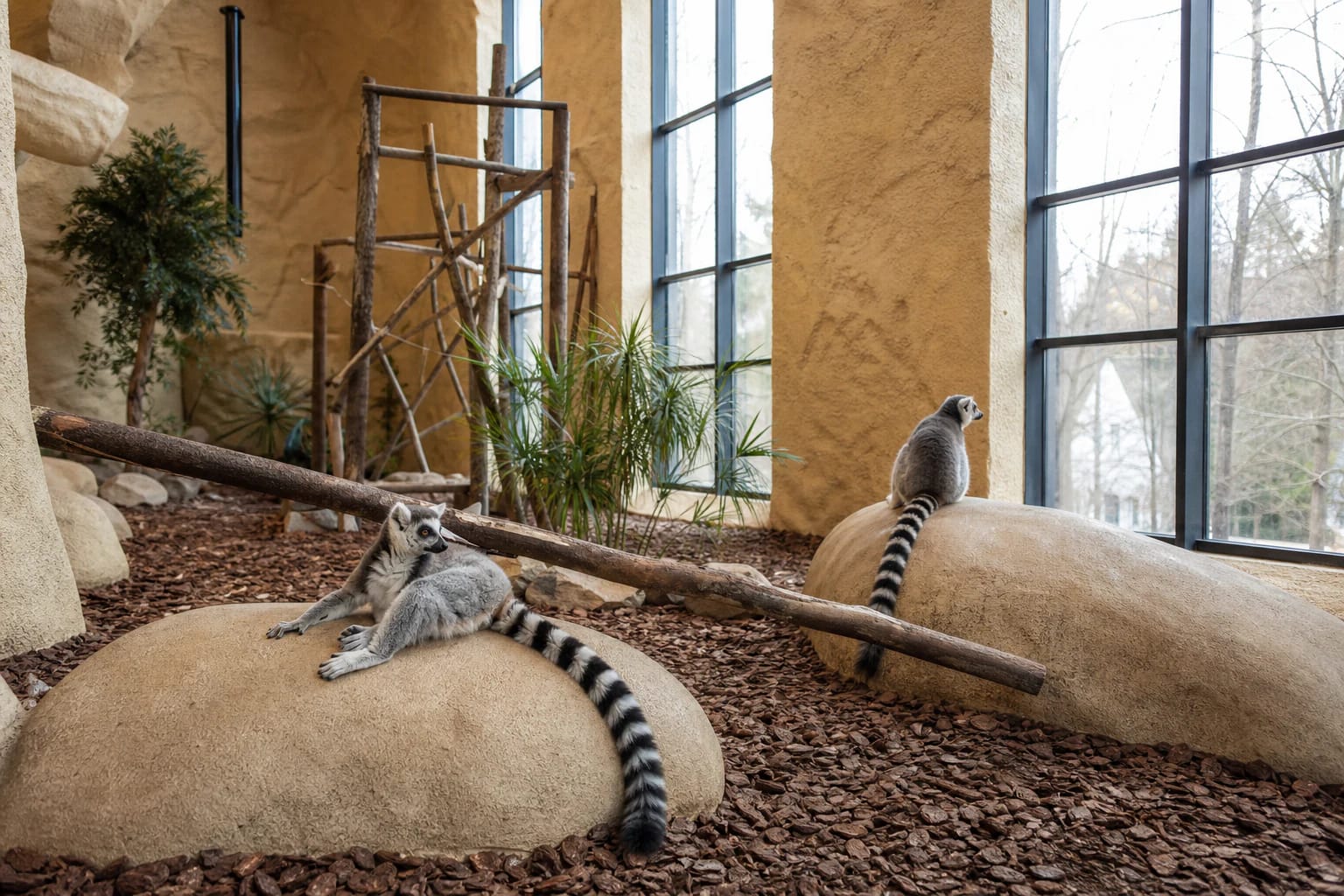
This is not an open-air collection of large hoofed animals or big predators. Its format centres on smaller species, short distances between exhibits, and close but keeper-controlled observation. The indoor setting works well in cold or wet weather, although visitors with sensitivities should expect warm rooms, the natural smells of animals, hay, and bedding, and occasionally loud tropical birds.
From pygmy marmosets to tree pythons and tropical frogs
The current official Vilnius catalogue names pygmy and common marmosets, cotton-top and red-handed tamarins, golden-headed lion tamarins, ring-tailed lemurs, and nocturnal Senegal bushbabies. Other mammal groups include meerkats, three-banded armadillos, sugar gliders, degus, rabbits, and guinea pigs.
The bird areas include channel-billed toucans, green aracaris, lorikeets, and other tropical birds. Terrariums and aquariums can contain tortoises and turtles, green tree pythons, corn snakes, bearded dragons, geckos, green anoles, fire salamanders, tree frogs, fish, and invertebrates. Some species are most active at particular times, so a sleeping bushbaby or a hidden reptile does not mean that the exhibit is empty.
The main official introduction advertised almost 90 species in 2026, while the separately searchable Vilnius list named several dozen at that time. Neither figure guarantees that every animal will be visible during one visit. The collection, individual animals, welfare breaks, and zones closed for maintenance can change, so contact Zoopark before travelling if one particular species is essential to your visit.
Feeding is a managed activity, not permission to touch freely
Visitors may feed only the species approved by Zoopark that day and only with food bought on site and labelled for that animal. On July 21, 2026, rabbit and guinea-pig feeding was scheduled for 11:00-11:30, 14:00-14:30, 16:00-16:30, 17:00-17:30, and 18:00-18:30, with no more than 10 portions per session. Koi food cost EUR 1, while parrot and small-mammal feed cost EUR 2, but quantities and availability may be restricted to protect each animal's diet and wellbeing.
A separate keeper schedule listed morning, 14:00, and evening feeds for meerkats, lemurs, monkeys, and farm animals. These sessions are opportunities to observe behaviour and hear explanations, not guaranteed performances. Timings can move, an animal may need to rest, and staff can close a zone if contact or visitor numbers are unsuitable at that moment.
The default rule is not to stroke, lift, or place your face close to an animal. Enter an open habitat or make contact only when a keeper and that zone's specific rules allow it. Do not tap glass, wake animals, shout, or use flash photography. Wash your hands after the visit; the operator advises people with animal or hay allergies not to enter.
Opening hours, the monthly sanitation day, and tickets
On July 21, 2026, Zoopark advertised daily opening from 10:00 to 20:00 except on the first Monday of every month, when the zoo closes for a sanitation day. Holiday schedules, zone closures, or technical work can alter a visit, so check the official opening information on the day you travel. No clear last-admission time was published, making an arrival immediately before closing unwise.
On the same date, admission on a weekday cost EUR 12 for both children and adults, while a five-person family ticket cost EUR 55. On weekends, public holidays, and specified school-holiday days, standard admission was EUR 15, the student or senior ticket was EUR 14, and the five-person family ticket was EUR 65. Children under 2 entered free with proof of age, and visitors with disabilities were offered a 50 percent reduction.
Prices and the treatment of school-holiday periods can change, so consult the official tariff before buying. Guided service for groups was cheaper when reserved and cost more without advance booking, with a higher weekend than weekday rate. For a tour, birthday room, or educational session in English, confirm the language, time, group size, and total charge directly with the zoo.
Pushchairs, photography, food, and getting there
The visitor rules explicitly permit pushchairs and wheelchairs, although bicycles, scooters, skates, and similar equipment are not admitted. The website does not, however, publish a complete step-free route from a car or public-transport stop, door widths, accessible-toilet details, or wheelchair hire. Visitors with mobility disabilities should ask the zoo to confirm the appropriate entrance and access to every desired zone before travelling.
Personal photography and filming are allowed without flash, provided they do not disturb animals or other visitors; drones are prohibited, and commercial filming requires written permission. Visitors may not bring pets. Because the general rule does not describe assistance-animal arrangements, contact the operator in advance about a guide dog or another individual access requirement rather than assuming an exemption.
Outside food may not be brought into the zoo, and the rules permit only food purchased on the premises. The wider 27 Verkių Street complex has places to eat, including one immediately beside Zoopark, but meals are not part of zoo admission. Confirm parking time limits and whether the same ticket permits re-entry later that day on site, because the official zoo information does not set out those conditions in detail.