- Place
- Vilnius City Municipality
- Region
- Vilnius
- Type
- city defensive-wall bastion and arms museum
- Address
- Bokšto g. 20/18, Vilnius
- Coordinates
- 54.67694, 25.29222
Vilnius Bastion, Bokšto Bastion
A bastion on Bokšto Hill
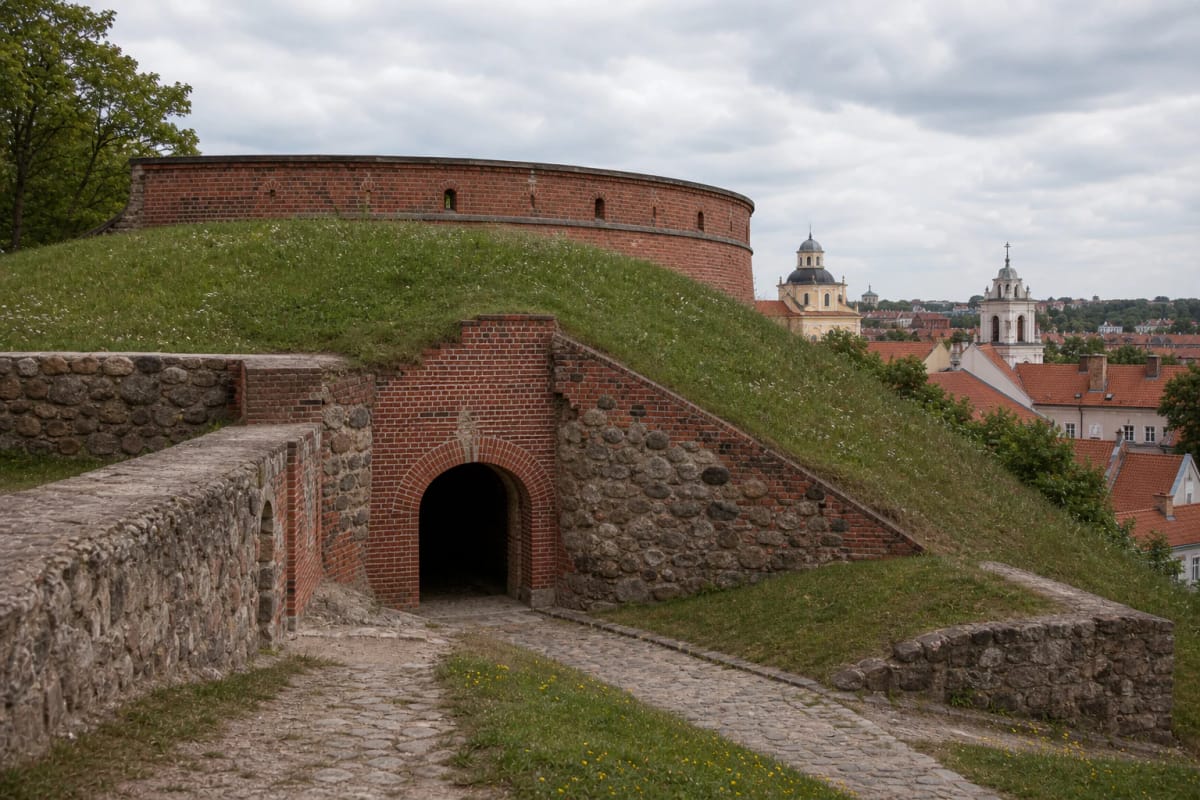
The Bastion of the Vilnius Defensive Wall stands on the slope of Bokšto Hill, where the old-town terrain falls toward Užupis and Subačius. The setting immediately shows why Vilnius defence relied not only on masonry but also on slopes, ditches, and visibility: the fortification had to cover a vulnerable eastern edge of the city.
The bastion belongs to the Vilnius city defensive wall, which began to be built in masonry in 1503 by order of Grand Duke Alexander and was completed in 1522. The wall was about 3 km long and enclosed the area of today's Old Town. The bastion itself was added later, in the first half of the seventeenth century, when a simple wall was no longer enough for warfare.
Cannon tower, casemate, and tunnel
The bastion consists of three linked elements: a rectangular brick cannon tower, about 12 m long and 9 m wide; a horseshoe-shaped underground artillery casemate, about 8 m high; and the tunnel connecting them. The tunnel is about 48 m long, 2.8 m wide, and 3.5 m high, allowing soldiers and weapons to move safely between the tower and the casemate.
Sources state that the bastion was designed by military engineer Friedrich Getkant, and the fortification's purpose belongs to the artillery age. It was not made for beauty but for function: to control approaches, protect the wall with crossfire, and use the terrain of Bokšto Hill for city defence. After decline, the bastion was abandoned; in the second half of the twentieth century, in 1965-1970, it was conserved and adapted for visitors.
National Museum of Lithuania arms exhibition
An arms museum opened in the bastion in 1987 and today operates as a branch of the National Museum of Lithuania. The exhibition explains the defensive and arms history of Vilnius and the Grand Duchy of Lithuania, so visitors see not just masonry but the military context behind it.
Exhibits include artillery pieces and small saluting cannons, smaller weapons such as an arquebus, hand bombard, pistol, and rifle, seventeenth- and eighteenth-century armour parts of a Grand Duchy soldier, including helmets and breastplates, as well as an executioner's sword, city-gate locks, engravings of Vilnius plans, and excerpts from Kazimieras Simonavičius' The Great Art of Artillery. Moisture-reduction and conservation works were carried out after 2007.
Panorama from the bastion
One of the bastion's strongest features is the view. From the Bokšto Hill slope you can see part of Vilnius Old Town, church towers, and the city's relief, so after visiting the underground spaces it is worth stopping outside and reading the city from above.
This panorama is not only scenic. It helps explain why the bastion appeared here: defence required visibility toward approaching routes, control of the slope, and a connection to the line of the city wall that followed the edge of Bokšto Street.
How to visit
Allow 45-90 minutes for the bastion. The museum uses National Museum of Lithuania tickets, while opening hours and prices change, so check the official museum page before travelling. A virtual tour is also available and can help prepare for the visit.
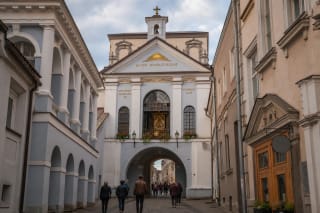
The museum is convenient by public transport via the Užupis stop, served by buses 10, 11, and 33; the nearest paid car park is at O. Šimaitės g. 1. On foot, it combines easily with the Gates of Dawn, Town Hall, Subačius viewpoint, and Stiklių quarter, but leave time for slopes and stairs.