- Place
- Ventė, Kintai Eldership, Šilutė District Municipality
- Region
- Nemunas Delta Regional Park
- Type
- state-protected historic lighthouse with a viewing gallery
- Address
- Marių g. 24A, Ventė, Kintai, Šilutė District
- Coordinates
- 55.34100, 21.19000
- Visit duration
- 30-60 minutes for the lighthouse and viewpoint; 1-2 hours with the Bird Migration Exhibition and lagoon shore
- Best time
- a clear, calm day for Curonian Lagoon views; spring or autumn if you want to combine the visit with bird migration
Ventės rago švyturys, Ventė Lighthouse, Lighthouse of the Ventė Lighthouse Complex, Windenburger Eck Lighthouse
An 11-metre lighthouse at the tip of Ventė Cape
The lighthouse stands at the very end of Ventė Cape, on the eastern shore of the Curonian Lagoon in Nemunas Delta Regional Park. The State Service for Protected Areas gives the address as Marių g. 24A and the coordinates as 55.341, 21.190. This is the point of the actual structure, not the centre of the entire 4.6-kilometre peninsula.
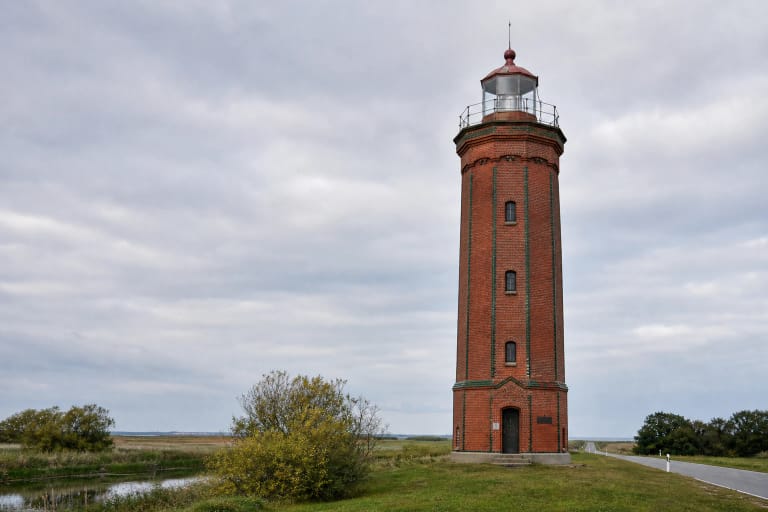
VLE gives the red-brick tower's height as 11 metres. Its modest height is offset by an exposed waterside position: a viewing gallery at the top looks over the Curonian Lagoon, and official descriptions name the Curonian Spit and Rusnė Island among the visible landmarks. In clear weather, the viewpoint makes the narrow meeting of land and water around the lighthouse easy to understand.
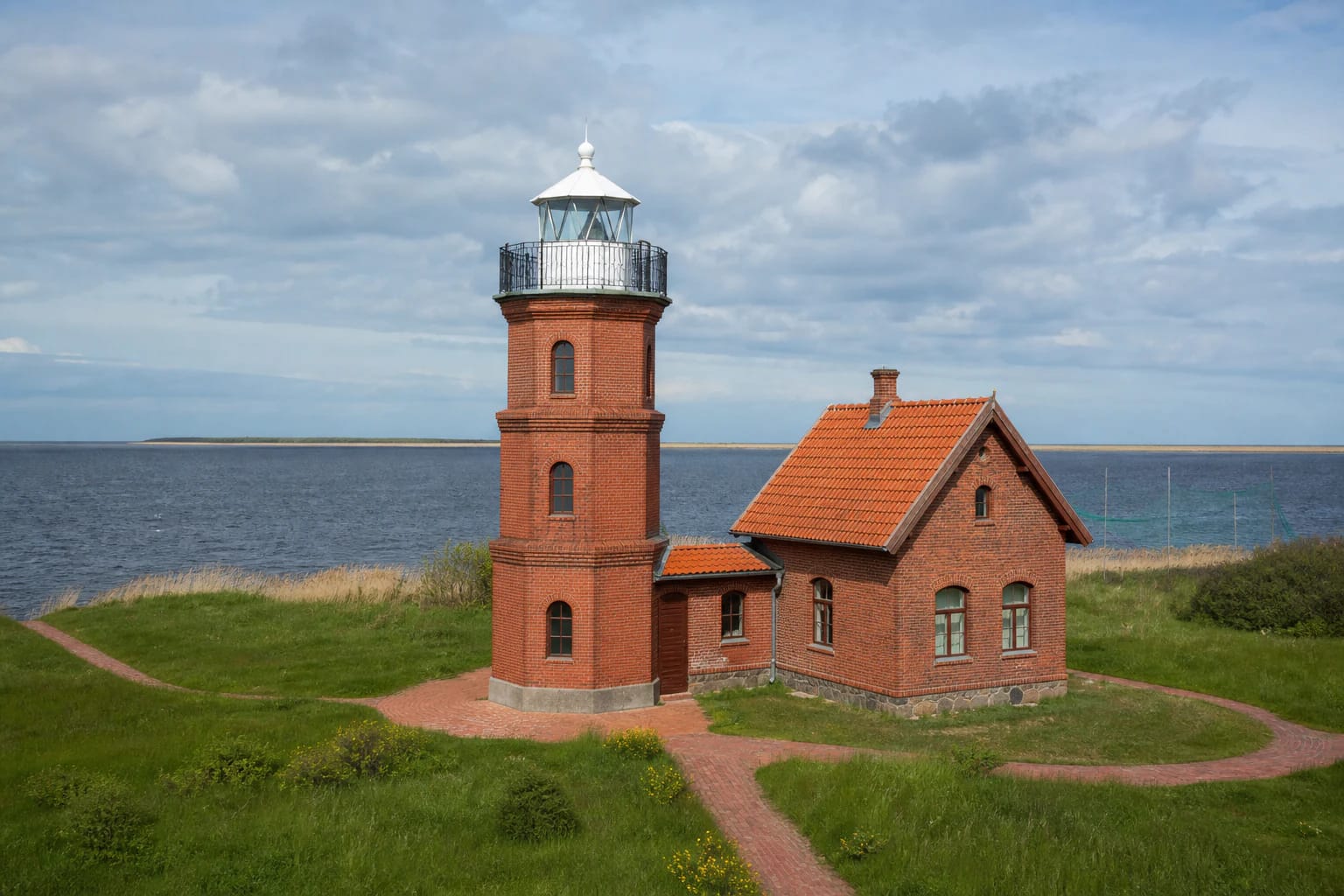
The tower is not a freestanding, generic cylinder. It is joined to a red-brick house with red tiled roofs and belongs to Ventė Cape Ornithological Station. Station paths, bird traps, low Pamarys vegetation, and the lagoon shore surround it, so the lighthouse is best understood as part of a working scientific complex.
The 1837 wooden predecessor and two dates for the present lighthouse
The first Ventė Cape Lighthouse was built in 1837. Saugoma.lt and the Encyclopedia of Lithuania Minor describe it as a wooden tower with an oil lamp. Water surrounded the exposed cape tip on three sides, leaving both structure and shore vulnerable. Around 1860, the tip was paved with stone to protect the lighthouse.
Official sources disagree on the date of the present masonry tower. The Register of Cultural Property dates the protected structure to 1852, while VLE says the current 11-metre masonry lighthouse was built in 1863. The checked sources do not explain the discrepancy, so the two years should not be quietly merged into one supposedly certain construction date.
The heritage register also states that the structure was partly reconstructed and repaired in 1954 and 2008. These are separate stages in the tower's development. VLE's 2013-2015 reconstruction dates concern the ornithological station and its exhibition, so they should not be presented as the construction of a new lighthouse.
An octagonal Brick Style tower with ornate spiral stairs
The heritage register describes a tapering, octagonal, three-stage tower in the Brick Style. A stone-masonry plinth survives at its base, its walls are red brick, and the top carries an octagonal viewing gallery and a lantern with a riveted metal frame, glazing in its upper portion, a sheet-metal roof, and a finial.
The stairs are among the most valuable interior features. Red-brick spiral stairs wind around a masonry column in the basement and first stage; the second and third stages contain cast-iron spiral stairs with openwork ornament, a decorated central support, and the type of profiled timber handrail recorded by the register. A metal landing and the gallery railing survive at the top.
The structure has heritage code 16799, is state protected, carries regional significance, and is valued for its architectural, engineering, and historical qualities. It forms part of the Ventė Lighthouse Complex, code 22538. Saugoma.lt also says the signal lamp switches on automatically in the evening and off in the morning, but visitors should check the current operating and access arrangements before travelling.
Lighthouse keeper Mikas Posingis and the birth of the ornithological station
The heritage council's assessment directly links the lighthouse to the history of bird ringing. It records Mikolas Posingis, also known as Mikas Posingis, as lighthouse keeper from 1924 to 1944. Regarded as a pioneer of bird ringing at Ventė Cape, he suggested to Professor Tadas Ivanauskas that birds should be ringed here.
Through Ivanauskas's efforts, Lithuania's first ornithological station was founded at Ventė Cape in 1929. A navigation landmark thus became the nucleus of a scientific site: the water visible from the tower is the same natural barrier at which migrating birds concentrate. The large traps around the lighthouse are research infrastructure, so visitors must follow staff instructions and avoid disrupting station work.
Opening times, tickets, and a safe climb
On 14 July 2026, the Kaunas Tadas Ivanauskas Museum of Zoology website listed exhibition hours as Tuesday-Sunday, 10:00-18:00, with last admission at 17:15 and closure on Mondays. It did not provide a separate timetable guaranteeing lighthouse climbs. Tower access may depend on station operations, weather, and safety, so check the official page or contact the station before travelling.
On the same date, the official price list gave admission to the Bird Migration Exhibition as €4, reduced admission as €2, and a group guide service as €25. It did not list a separate lighthouse fee, so do not assume that an exhibition ticket automatically guarantees a tower climb. Hours, prices, and access rules can change - verify current official information before your visit.
The masonry and cast-iron spiral stairs leading to the gallery are narrow, official descriptions mention no lift, and the top can be windy. Visitors who need more time, families with young children, and people with reduced mobility should confirm access in advance. Allow 30-60 minutes for the lighthouse and view, or up to 1-2 hours with the exhibition, station grounds, and lagoon shore.