- Place
- Varniškės area, Ignalina District Municipality
- Region
- Aukštaitija National Park
- Type
- old oak and Aukštaitija forest landscape
- Coordinates
- 55.42790, 25.95540
Varniškės II Oak
Why the title uses the plural
Traveller lists often use the plural form Varniškės Oaks, but Saugoma.lt officially presents a specific object: Varniškės II Oak. This page therefore keeps the visitor-facing plural title while grounding all measurements and facts in the confirmed tree, without inventing additional protected oaks.
That distinction matters. If a source discusses Varniškės II Oak, it cannot automatically be turned into a description of several protected trees. It is fair to talk about the Varniškės oak landscape, but concrete figures must be tied to the documented tree.
Dimensions and age of Varniškės II Oak
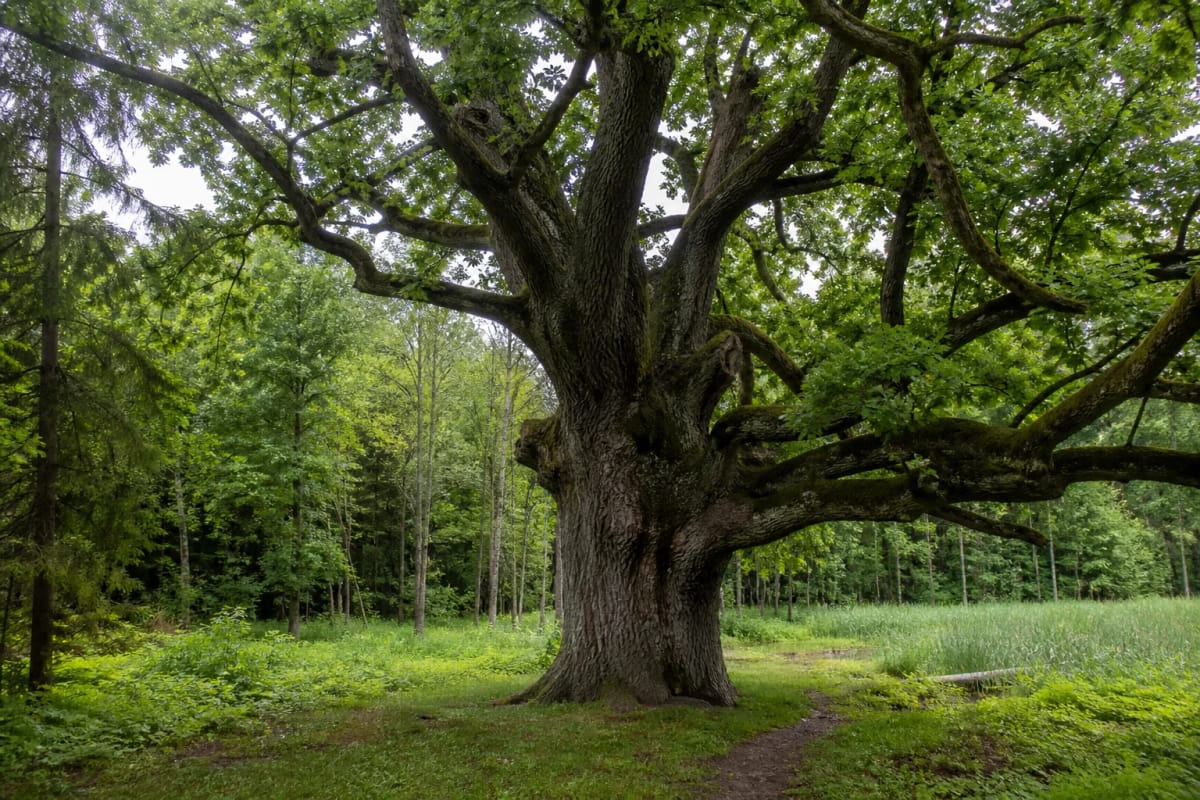
According to Saugoma.lt, Varniškės II Oak is a common oak, Quercus robur, with a trunk circumference of about 5.7 m, a height of about 22 m, and an age of more than 400 years. These are strong indicators of an old tree: such a trunk means the oak was already growing long before many of the changes that shaped today's Aukštaitija landscape.
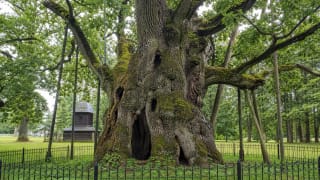
Saugoma.lt also records a local-memory detail: during wartime, local residents are said to have hidden sheep and bacon in the hollow trunk overnight. Such stories show that an old hollow tree could be not only a landscape marker but a practical participant in community life.
An old oak as a living habitat
The measurements matter, but they do not tell the whole story. An old oak is valuable as a habitat: its thick bark, hollows, dead branches, and broad root zone can be important for insects, fungi, lichens, and birds. That is why such trees are included among natural-heritage objects.
Saugoma.lt states that the tree spreads in a clearing among forests. Such an open growing place lets the oak develop a broad crown, so an old oak often looks wide and branching rather than simply tall, unlike trees of similar age growing inside dense forest.
Aukštaitija and Pliaušė Reserve context
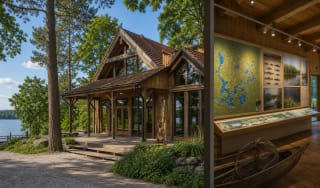
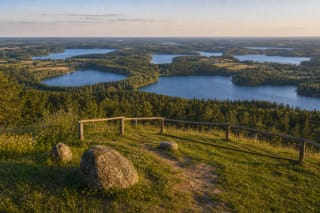
According to Saugoma.lt, Varniškės II Oak stands in the Pliaušė Hydrographic Reserve, within Aukštaitija National Park in Ignalina District. This is not an urban park, so visitors should expect a landscape of forest, meadows, and wetter places. Aukštaitija National Park, whose directorate is in Palūšė, is known for lake districts, old pinewoods, and ethnographic villages.
Old oaks in Aukštaitija often reveal themselves more quietly than the most famous national sights. Their value lies not in mass infrastructure but in the ability to see one tree as a long-lived participant in the landscape. Varniškės II Oak is best included in a wider park route rather than treated as the sole reason for a trip.
How to visit the Varniškės oak
Near an old oak, stay on the path, do not drive across meadows or forest floor, and do not disturb the root zone. If a site looks easy to reach, that still does not mean you can walk anywhere; compacted soil and damaged roots are among the main threats to an old tree.
No ticket is normally needed for an independent visit to the oak. If you are travelling through Aukštaitija National Park, check Palūšė visitor-centre and park-directorate information before going for trails, seasonal restrictions, and protected-area visiting rules.