- Place
- Uostadvaris village, Rusnė Eldership, Šilutė District Municipality
- Region
- Pamarys
- Type
- Nemunas Delta technical heritage object
- Address
- Uostadvario g. 51, Uostadvario k., Rusnės sen., Šilutės r.
- Coordinates
- 55.34300, 21.29200
Uostadvaris polder water-lifting station
The first polder water-lifting station in Lithuania
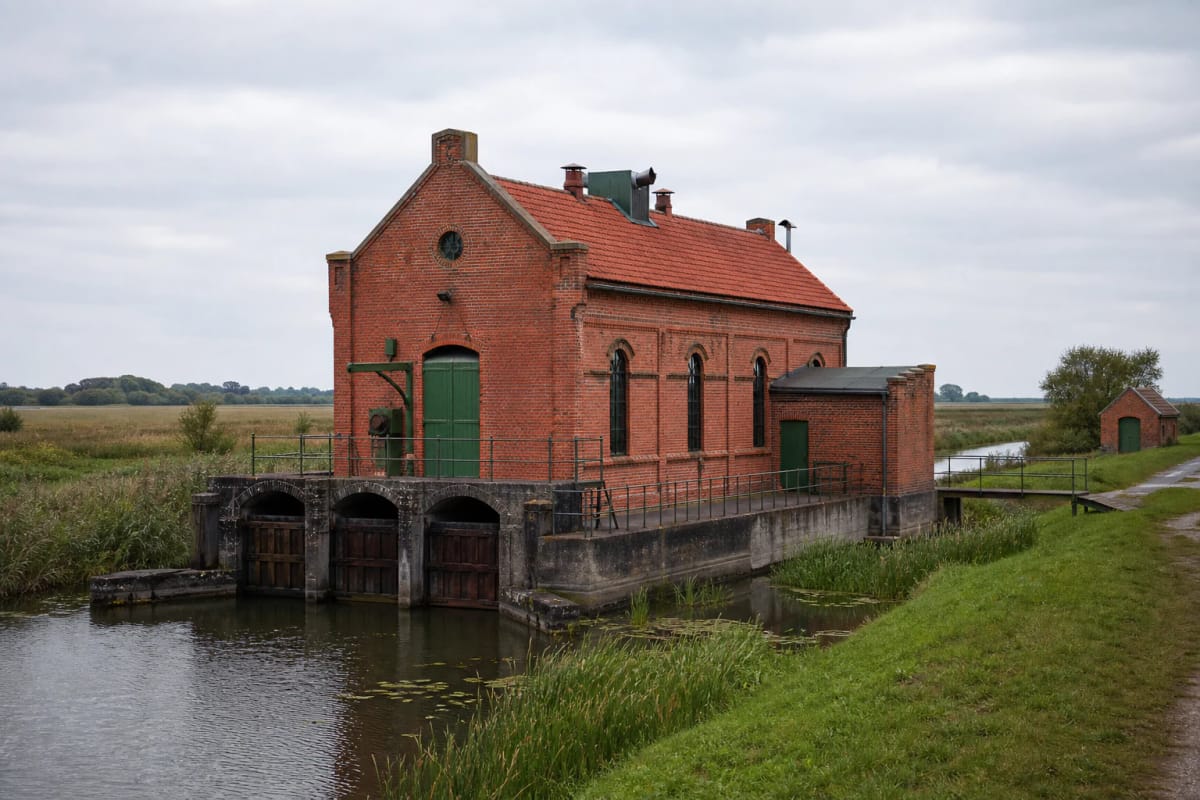
Uostadvaris Water-Lifting Station is one of those places where the Nemunas Delta appears not only as nature but as long-maintained water infrastructure. According to protected-area data, it is the first station of this type in Lithuania and the oldest hydrotechnical installation on the right bank of the Nemunas Delta. In polder country, water is not background: it determines homesteads, roads, fields, and the whole order of life.
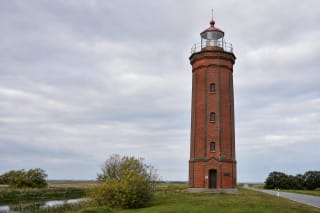
In the Register of Cultural Values the object is listed at Uostadvario g. 51, Uostadvaris village; its KVR code is 16753, it is state protected, and it belongs to the Uostadvaris Water-Lifting Station building complex. The station stands on the picturesque bank of the Vilkinė River, near Krokų Lanka.
1907 construction and the Schichau steam engine
According to KVR, the station was built in 1907 to a 9 July 1906 project by the Royal Land Drainage Construction Office of Königsberg; inscriptions with the construction date 1907 are still visible in the risalit pediments. Inside operated a steam engine made in 1906 in Elbing, now Elbląg, by F. Schichau, one of the best-known machine factories of East Prussia at the time.
The station was later partly reconstructed in 1953, 1967, and 1978, so the site shows more than one time layer: original steam technology, Soviet-period electric pumps, and today's heritage status. These dates and the manufacturer's plate show that Uostadvaris is not only a pretty old building but a witness to industrial and hydrotechnical history.
How polder logic works
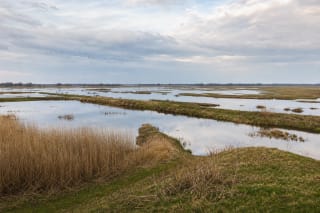
A polder is a low area protected from water by embankments, where excess water must be mechanically lifted out. Uostadvaris station used steam-powered pumps to lift water from the Vilkinė polder fields, which lie below sea level, and discharge it into the Atmata, protecting meadows and homesteads from flooding.
Saugoma.lt links the place with the Pakalnė Polder Landscape Reserve. For that reason, view the station not as an isolated building but together with four arched culverts with metal gates, channels, level fields, embankments, and waterways around Rusnė.
Šilutė Polder Museum and what to see
A few years ago the station was restored, and the Šilutė Polder Museum was installed in its former machine hall, telling how the Šilutė region historically fought excess water and the threat of floods. When visiting, look at the red-brick building, its relationship with the Vilkinė canal, the culverts, and the surrounding polder relief.
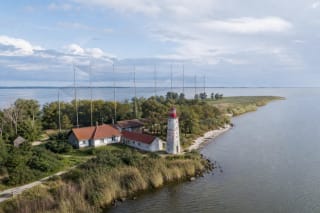
Uostadvaris Lighthouse stands very close, so the two places are practical to visit together. One tells about landmarks on waterways, the other about managing excess water in the delta; together they form a coherent Uostadvaris technical-heritage complex.
Opening hours and planning
Because a museum operates in the station, visiting arrangements may change seasonally, and verified official KVR and protected-area sources do not provide permanent opening hours or ticket information. When planning, check the latest Šilutė Polder Museum information and do not rely on old travel-portal entries.
The object itself usually takes 30-60 minutes. Allow more time if the same day includes Rusnė, Uostadvaris Lighthouse, Pakalnė polders, and other Nemunas Delta sites.