- Place
- Klaipėda District Municipality
- Region
- Samogitia
- Type
- wooden church and state-protected building complex
- Address
- Laisvės Street 28, Veiviržėnai, Klaipėda District
- Coordinates
- 55.60041, 21.59970
Veiviržėnai St Matthew Church, Veiviržėnai Church of St Matthew the Evangelist
Wooden church in the centre of Veiviržėnai
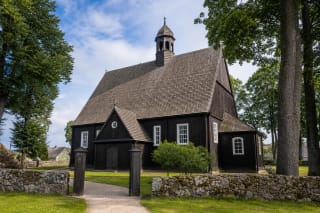
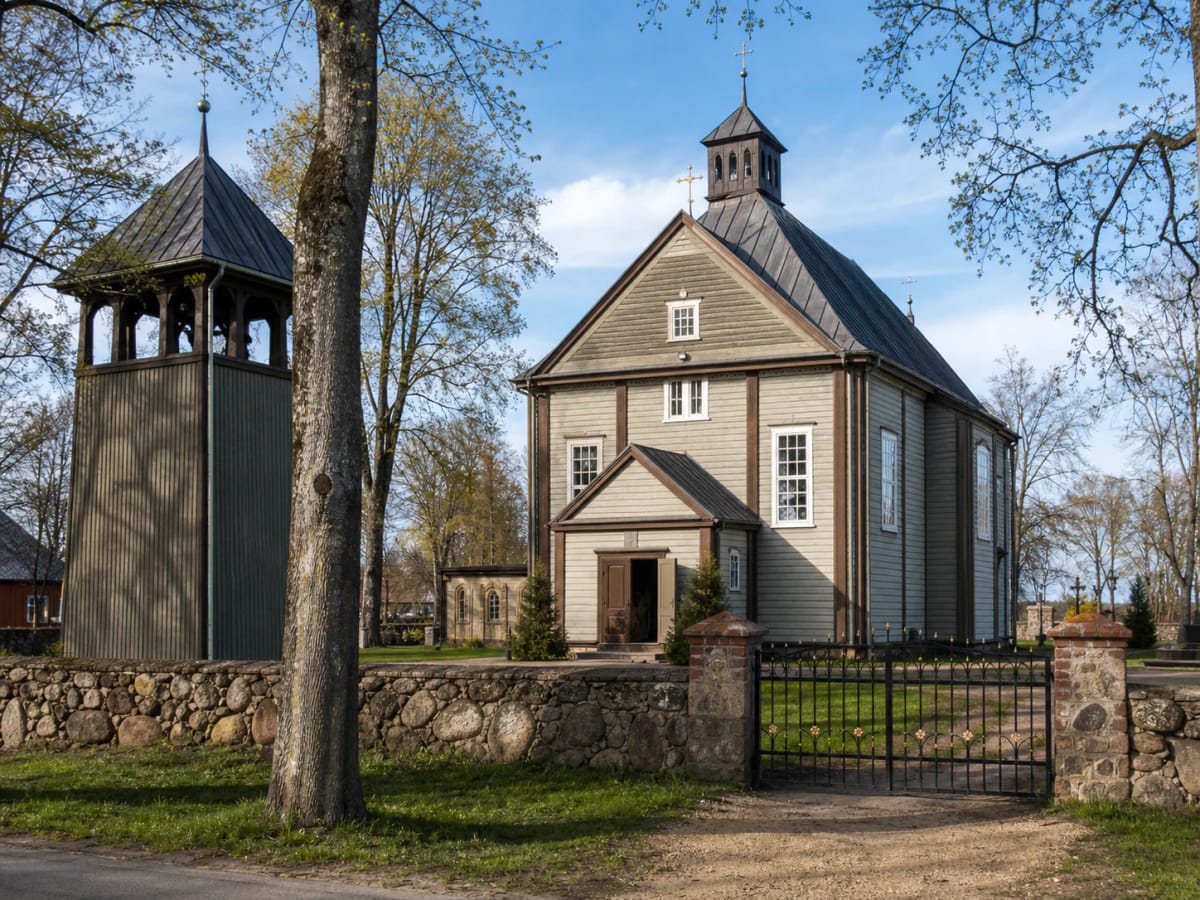
The Church of St Matthew the Apostle and Evangelist stands on Laisvės Street in the centre of the radially planned town of Veiviržėnai. According to the Cultural Heritage Register, it is part of the state-protected Veiviržėnai church building complex (code 33477), while the church itself has a separate unique code, 1422.
This is not only a single wooden building. The complex includes the church, belfry, churchyard fence with gates, and small sacred-architecture objects. When visiting, walk around the whole churchyard rather than stopping at the facade.
Built in 1767-1769, Samogitian folk architecture
The Cultural Heritage Register dates the church to 1767-1769 and notes a repair in 2009 to a project by architect P. Ramonas. It is a second-half eighteenth-century wooden sacred-architecture site that has kept the features of Samogitian folk architecture; VLE gives the year as 1769.
The Register describes the style as traditional folk architecture typical of Samogitia, with Historicist elements. That wording matters because the church is not a pure example of one style: it shows local wooden building, later renewal, and Historicist details together. A parish is recorded in Veiviržėnai from 1804, and the town's first wooden church was built as early as 1639.
The churchyard ensemble and memorial objects
The churchyard is a key part of the visit. The folk-architecture belfry dates to the second half of the nineteenth century, and the Historicist churchyard fence with gates to the late nineteenth century. Nearby are the St George cemetery with an 1791 cemetery chapel and gates.
Around it gathers a complex of memorial objects: a Lourdes grotto (first half of the twentieth century), a chapel-post made in 1992 by folk artist A. Kniūkšta, and an early-twentieth-century chapel. Places like this show the context of Lithuanian cross-crafting and small sacred architecture, so if you are interested in wood carving allow extra time here.
Inside the church: altars and art
According to VLE, the church has three altars with nineteenth-century sculptures and two smaller altars (eighteenth and nineteenth century), as well as many eighteenth- and nineteenth-century paintings and sculptures. Among them is a late-nineteenth-century sculptural group of the Three Kings.
The interior also holds two nineteenth-century reliquaries and five nineteenth-century chasubles. This body of art is why the Register values the object not only for architecture but also for its sacral and artistic significance - all three valuable properties are marked as important.
Heritage status in the Cultural Heritage Register
The church (code 1422) is entered in the complex as a regional-significance, state-protected object; it was added to the register in 1992. In earlier lists it was marked with the codes S529 and AtV425.
In practice this means the Veiviržėnai church is an officially protected and documented example of Samogitian wooden heritage. For a visitor, the complex status is a reminder to read the church, belfry, fence, and churchyard monuments as a single ensemble.
Masses, feast day, and visiting
At the time of research, the Diocese of Telšiai page listed Sunday Masses at 10:00 and 12:00, weekday Mass at 18:00, and Saturday Mass at 10:00. The parish page also gives the titular St Matthew feast date as September 21, transferred to Sunday. Because schedules change, check the official parish or diocesan information before travelling.
For the architecture and churchyard, 20-45 minutes is usually enough. If the church is closed, the exterior, gates, belfry, and small sacred architecture still make the stop worthwhile. Veiviržėnai combines well with Gargždai Area Museum, Vėžaičiai church, Agluonėnai Ethnographic Homestead, or the Dreverna direction, placing the wooden church within a wider Klaipėda Region and Samogitia route.