- Place
- Vievis, Elektrėnai Municipality
- Region
- Elektrėnai Municipality
- Type
- museum of Lithuanian road history, engineering, and maintenance machinery founded in 1995, with more than 8,000 objects
- Address
- Kauno g. 14, Vievis, Elektrėnai Municipality
- Coordinates
- 54.77244, 24.81400
- Visit duration
- 1-1.5 hours; about two hours with a pre-booked tour or education session
- Best time
- Tuesday-Saturday with at least 90 minutes before closing; dry weather makes the outdoor machinery easier to inspect
Lithuanian Road Museum, Road Museum, Kelių muziejus Vievyje
A museum of roads and road workers, not cars
The name sometimes causes confusion: this is not a collection of vintage passenger cars. Its subject is the road itself: planning, preparing foundations, laying surfaces, building bridges, marking lanes, winter maintenance, and the people who performed that work. Vehicles matter here when they explain road technology.
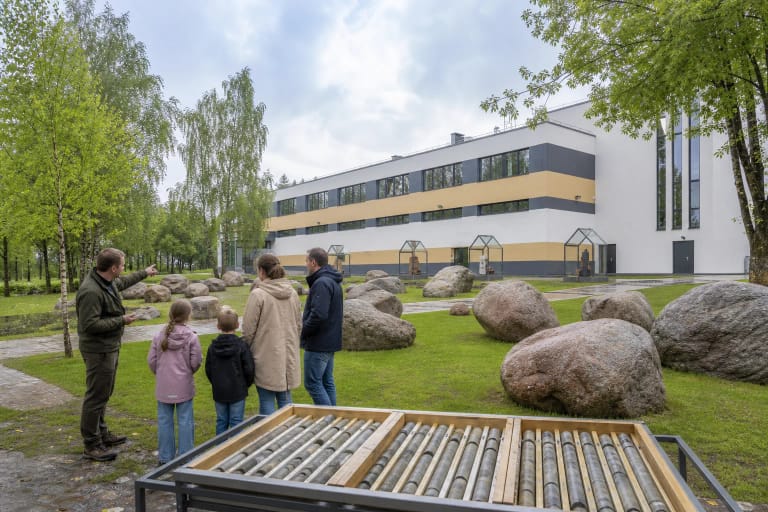
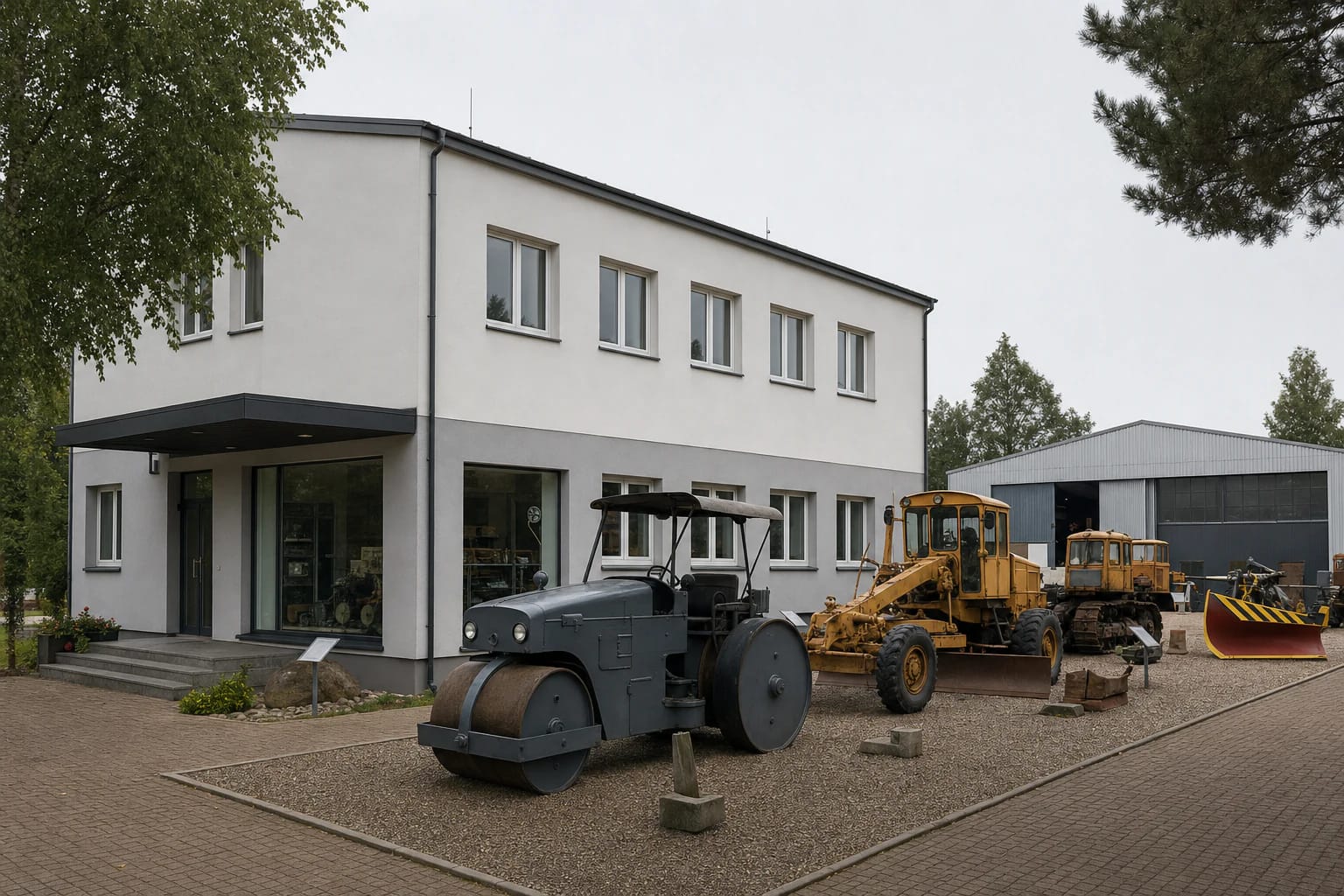
More than 8,000 objects occupy three distinct types of space. The main building's two floors contain maps, records, photographs, publications, signs, engineering models, and smaller tools. A separate hangar and outdoor yard change the scale with heavy road construction and maintenance machinery.
Begin with the chronological and thematic indoor account before moving to the large equipment. An old roller, grader, or snow-clearing machine then becomes more than a piece of metal: you can understand what problem it solved and how it changed a road worker's job.
A long-held road workers' idea realised in 1995
After Lithuania restored independence and the Lithuanian Road Administration began operating, material preserved by road workers for many years could finally be shown publicly. The Lithuanian Road Museum opened in Vievis on 19 October 1995, with Juozas Stepankevičius as its first director.
Road workers themselves donated a large part of the collection. A technical object therefore often carries the story of a particular job, crew, or route. The museum's value lies not only in the age of rare machinery but also in professional memory of how infrastructure was created through everyday physical work.
The museum is operated by AB Kelių priežiūra. The company launched a renewal plan in 2023, and in 2025 the Road Museum became a separate unit within its structure. New indoor and outdoor displays, interactive activities, and education programmes are being developed, so the site may look different from an earlier visit.
From the Samogitian Highway to modern motorways
Old maps of Lithuania, photograph albums, and technical records chart how local routes became a national network. Models of bridges, viaducts, bus stops, and other structures show that a road is not merely a strip of surfacing but an interconnected engineering system.
A major part of the exhibition concerns the Samogitian Highway linking Kaunas and Klaipėda. Completed and ceremonially opened in 1939, it is represented by the kalamaška used during construction, specialist tools, and durable road workers' footwear known as čempės.
The Vilnius-Kaunas-Klaipėda motorway represents another stage. Construction of the Kaunas-Klaipėda section began in 1968 and finished in 1987. Displays allow visitors to compare interwar manual labour and early mechanisation with post-war motorway machinery and today's safety devices.
An 1854 bitumen boiler and other unexpected objects
One of the oldest and strangest exhibits is a horse-drawn bitumen boiler made in Germany in 1854. It lay forgotten for years in old road workers' premises before being rediscovered. Its construction captures a period when road-surface technology was advancing but horses still supplied the motive power.
In the main hall, look for a brass plaque cast in 1930 for a bridge over the Nemunas in Kaunas, early road signs, tools, and portraits of engineers. These smaller objects often explain the purpose of the large machines better than sheer size does.
A crash attenuator, called a shield by the museum, represents newer work-zone safety and has helped protect lives on the road. Interactive displays include a road-maintenance simulator and a virtual truck, but visitors may climb into or operate only those exhibits clearly designed for interaction.
Opening hours, free admission, and guided visits
In 2026 the museum advertised opening Tuesday-Friday from 10 am to 6 pm and Saturday from 10 am to 5 pm. It closes on Monday, Sunday, and public holidays, and shuts one hour early on the day before a public holiday. Check the official website before making a longer journey.
The official services page stated in 2026 that admission was currently free. Guided tours and education sessions require advance booking by telephone on +370 613 95945 or email at info@keliumuziejus.lt. As the museum is being renewed, admission arrangements and programmes may change.
The main display covers two floors, while heavy equipment occupies another building and the yard. No detailed public description of lifts, stairs, or an accessible toilet was found, so visitors with mobility, visual, hearing, or sensory requirements should discuss their needs with the museum in advance.