- Place
- Panevėžys City Municipality
- Region
- Aukštaitija
- Type
- professional-art exhibition gallery, custodian of an international ceramics collection, and creative-learning centre
- Address
- 3 Respublikos Street, Panevėžys
- Coordinates
- 55.72802, 24.35995
- Visit duration
- 60-90 minutes for the main gallery; 90-150 minutes with the Ceramic Art Pavilion and courtyard display
- Best time
- a Wednesday-Friday afternoon after checking the exhibitions and installation changes in both spaces at 3 Respublikos Street
Panevėžio miesto dailės galerija, Panevėžys Art Gallery, Art Gallery on Respublikos Street
One name, three venues and two addresses
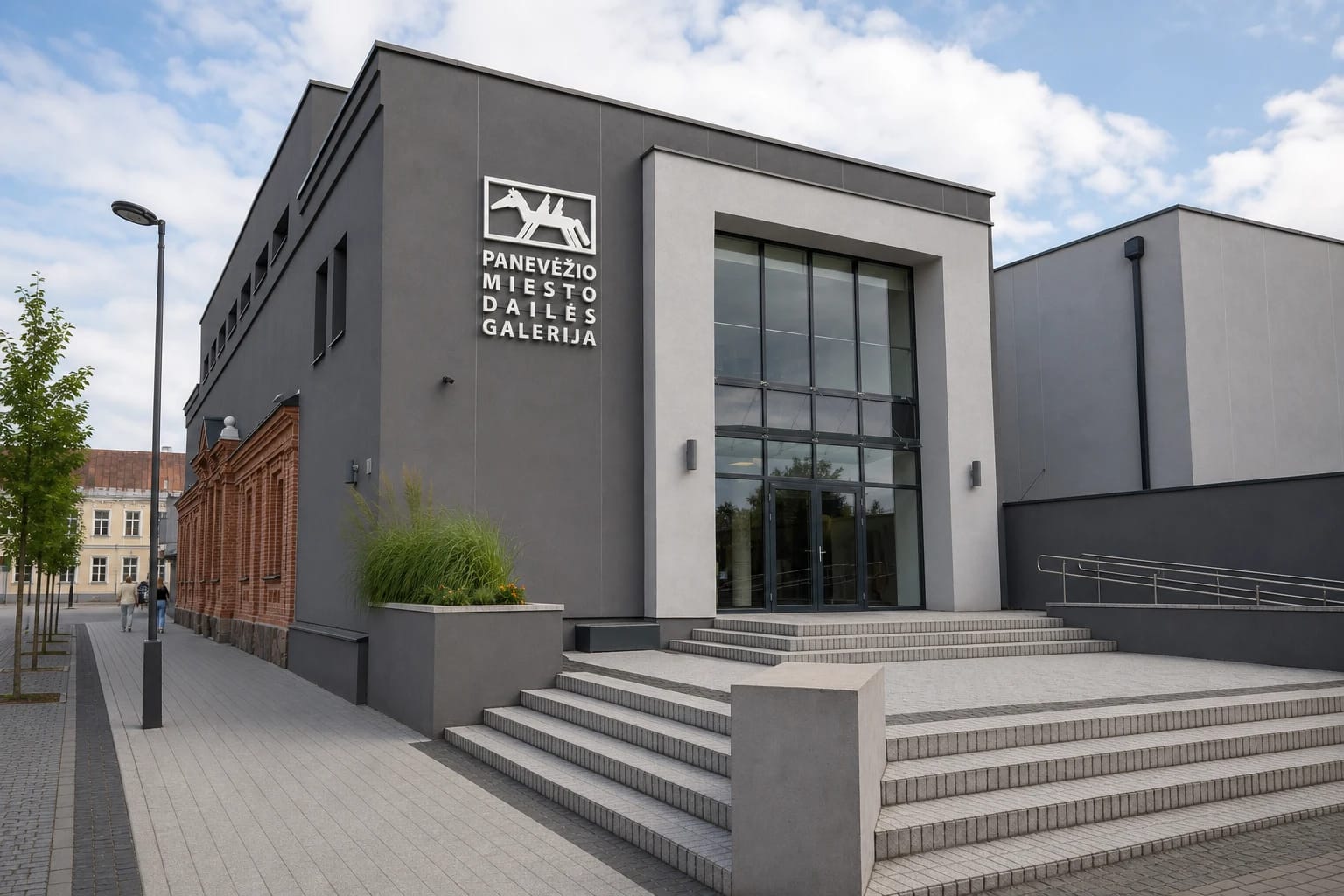
The map point on this page, 55.728020, 24.359953, marks the Panevėžys Civic Art Gallery site at 3 Respublikos Street rather than a particular doorway or parking place. From the street, identify the main entrance by its dark grey two-storey volume, tall glazed portal, broad stairs, and the ramp rising on the right. An ornate red-brick section of the historic building survives to the left.
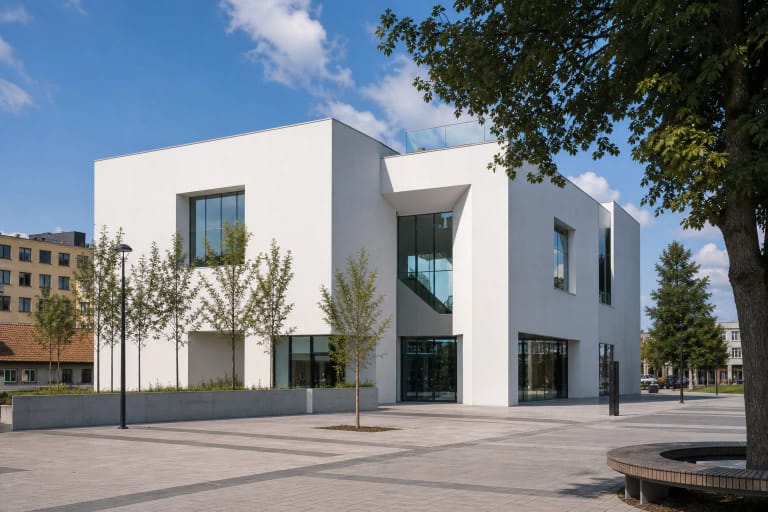
Two distinct exhibition spaces operate together at 3 Respublikos Street: the main Art Gallery and the Ceramic Art Pavilion, which opened in 2015. The main hall hosts professional art across different media, while the pavilion focuses on ceramics and interpretations of the collection. Sharing an address does not mean that one exhibition occupies both spaces at any given time.
The institution's third venue is Panevėžys Photography Gallery at 11 Vasario 16-osios Street. Founded in 1992 and incorporated into the Civic Art Gallery in 2010, it has its own entrance and changing photography programme. To visit all three, check the venue named on each exhibition notice and allow for a separate short walk to the Photography Gallery.
An 1889 court became a museum in 1945 and an art gallery in 1990
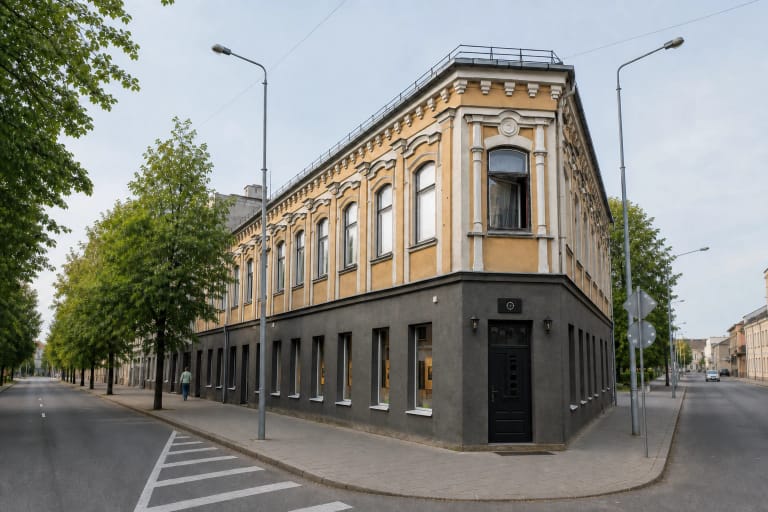
The county library's heritage portal dates the building to 1889 and records it under KVR code 30777. Bronislava and Jonas Kasperavičiai commissioned it on their land to lease to the Panevėžys court, then known as the Union of Justices of the Peace. The architect is unidentified, so no unverified designer or architectural style is assigned here.
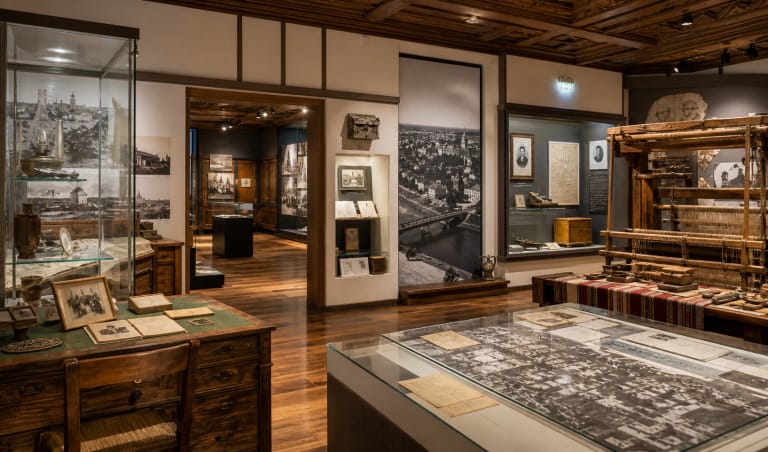
A crafts school operated here for a period in the early twentieth century. From 1925 to 1944 it housed the Panevėžys division of the Kaunas Regional Court, and in 1944 part of the building was used by a company of the Lithuanian Local Force. It passed to Panevėžys Regional Museum in 1945; the first post-war display opened in 1947, and the museum remained until 1985.
A reconstruction begun in 1985 adapted the building for art, and the gallery started operating here in 1990. Another major reconstruction followed in 2018-2020. Today's architecture deliberately combines restored red brick with dark contemporary volumes, a glazed entrance, and the newer pavilion. It is not an unchanged nineteenth-century interior.
A collection is not a permanent display: only a selection is outside
The official collection page, updated in 2025, counted 688 works and compositions in the contemporary ceramics collection. Almost all were acquired through the Panevėžys International Ceramic Symposium, which the gallery has organised since 1990. Chamotte and stoneware appear not only as vessels but as sculpture, installation, and large outdoor work.
The gallery also holds 57 works of fine art, 519 photographs and video-art pieces, and 15 works of art glass. Those figures describe the collections in storage, not what is simultaneously visible in the rooms. Storage is not automatically a permanent exhibition: works are selected for curated shows and can also travel to other institutions.
The gallery explicitly describes only the selected international-symposium ceramics in its courtyard as a permanent display that can be seen in different seasons. Inside the Ceramic Art Pavilion, collection works appear in thematic selections, while other ceramics exhibitions can take their place. Visitors should neither expect all 688 works nor confuse the outdoor selection with the pavilion's current programme.
On 18 July 2026 the main gallery and pavilion had different exhibitions
On the review date, the main Art Gallery was showing Aukštaitijos dailė 2026. Įkvėpimo topografija, or Aukštaitija Art 2026: Topography of Inspiration, through 2 August inclusive. The biennial survey traces its roots to 1995. Its 2026 edition brought together 26 professional artists from the region to consider how nature, cities, memory, social ties, and personal experience shape creative work.
At the same time, the Ceramic Art Pavilion separately listed Sofiia Horbachevska's Tuštumos svoris, or Weight of Emptiness, through 23 August. This is a practical example of why visitors to 3 Respublikos Street must check the named room as well as the institution: the main gallery and pavilion can have different artists, themes, and closing dates.
Both dates are a snapshot of the programme on 18 July 2026, not a lasting promise. When a show ends, works are removed and the space prepared for the next installation; visitors may not be admitted for part or all of a regular opening day. Before making a dedicated journey, open the latest exhibition listing or call the ticket desk on +370 45 584804.
2026 opening hours, tickets, tours and cautious access advice
Hours published on 18 July 2026 for all three gallery venues were 11 am-7 pm Wednesday-Friday and 11 am-5 pm Saturday-Sunday, with closure on Monday-Tuesday. The gallery was closed on Lithuanian public holidays and closed one hour earlier on the day before one. Last admission was 30 minutes before closing. Check the schedule again before travel.
On the same date, admission to the Art Gallery was EUR 5 for an adult and EUR 2 for an eligible concession. No separate Ceramic Art Pavilion price was itemised on the page. Admission was free for children under seven and other listed groups, for everyone on the last Sunday of each month, for families during the last-Saturday Šeimadienis programme, and at exhibition openings. Conditions can change.
A tour for up to 15 people cost EUR 15 in Lithuanian or EUR 20 in English and had to be booked at least one week ahead. Visitor rules allowed photography and video without flash or a tripod unless a particular exhibition imposed an exception. A ramp is visible at the main entrance, but no new public audit was found for the complete route, door widths, lift, adapted toilet, or resting places; ask the ticket desk about individual access needs.