- Place
- Ignalina District Municipality
- Region
- Aukštaitija
- Type
- restored manor estate, culture venue, and wellness space
- Address
- Dvaro g. 7, Paliesius village, Mielagėnai elderate, Ignalina District
- Coordinates
- 55.25070, 26.47840
Paliesius manor estate
A manor estate in Paliesius
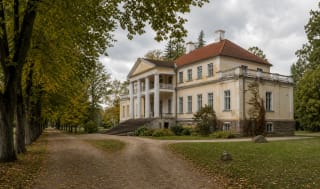
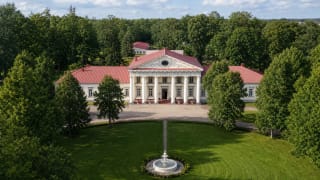
Paliesius Manor is known today as a culture, concert, and wellness space, but its foundation is a protected manor estate in Ignalina District. The Cultural Heritage Register identifies it as Paliesius manor estate, a complex of regional significance with unique code 107.
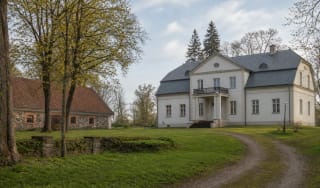
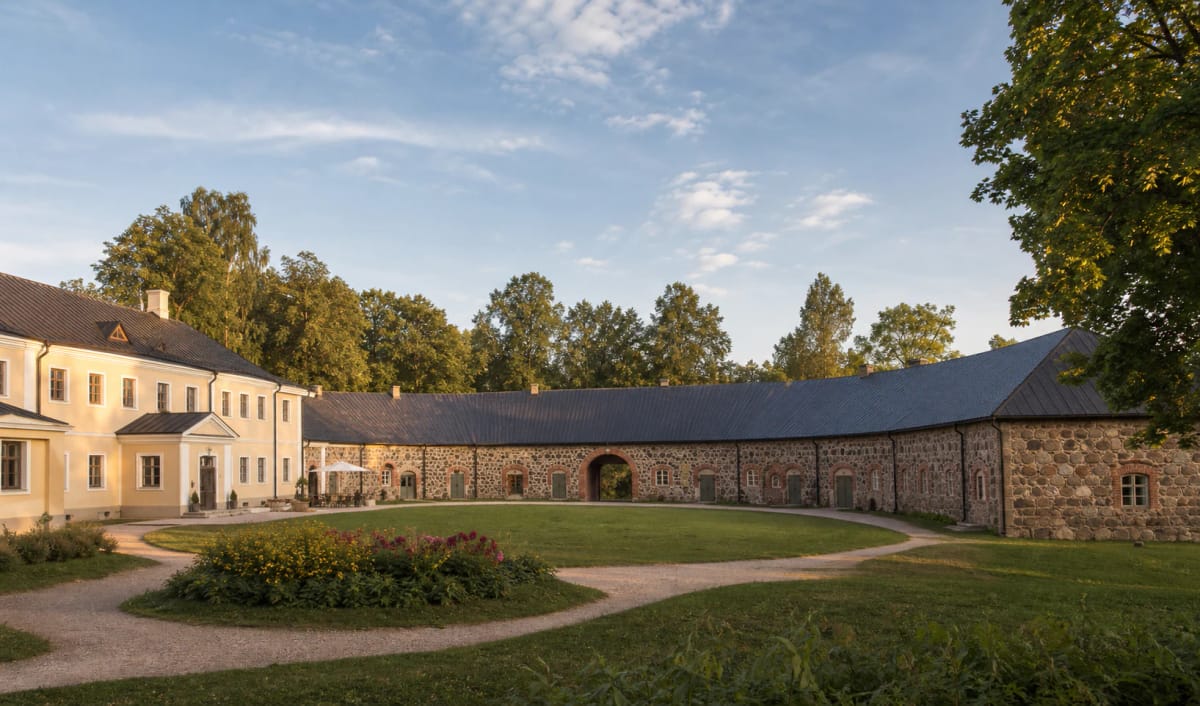
It is important not to describe Paliesius as a fully surviving palace. The manor palace stood until 1974, when the collective farm allowed it to be demolished. Today the most visible buildings from the manor period are the steward's house, the icehouse, and the famous horseshoe-plan stone stable, now used as the Pasaga hall.
Tyzenhauzes, Kublicki, and the 1831 uprising
The manor's documented history begins in the seventeenth century. According to the official manor history, Paliesius Manor owners, the Tyzenhauzes, are mentioned in historical documents in 1671, and the name is derived from a place by the forest, paliesius. From 1736 the manor belonged to the Kublicki family of Livonian nobility; during their rule, in the first half of the nineteenth century, the present estate ensemble developed with the steward's house and horseshoe-plan stable.
Stanisław and Adolf Kublicki were active organizers and participants in the 1831 uprising in Užneris County, and after the uprising they were forced to withdraw to Prussia. Paliesius Manor is described as one of the centres where the uprising was organized; this should be understood as a documented political-history layer of the manor, not merely a romantic legend.
The horseshoe-plan stone stable and Pasaga hall
The strongest architectural accent at Paliesius is the horseshoe-plan stone stable, described by the Cultural Heritage Register as unique in Lithuania. Its form, stone masonry, and large courtyard scale explain why manor farm buildings can sometimes be no less interesting than palaces. Before restoration, the stable survived as ruins, so the architects preserved the authentic stone walls and covered them with a contemporary glass and metal shell with a planted sloping roof.
Today this space functions as the Pasaga concert and conference hall. It is a good example of how a heritage object can live through events, concerts, and visitor experience while retaining the identity of the estate. Besides the stable, the steward's house and two-storey icehouse survive; the manor palace stood until 1974, when the collective farm allowed it to be demolished.
Restoration in 2011-2014
The present appearance of the manor is closely tied to its twenty-first-century revival. In 2007 the manor was acquired by physician Julius Ptašekas, through UAB Diagnostinės sistemos, and the main restoration, reconstruction, and adaptation works were carried out in 2011-2014 to a project by architects D. and J. N. Ferguson. Five buildings were restored or adapted: the steward's house, now used for hotel, cafe, and spa functions; the horseshoe-plan stable; the icehouse; a wooden administrative office; and a new service building for a bakery and clinic.
For its methodical and comprehensive approach, the Paliesius Manor restoration received a diploma from the Lithuanian Restorers' Union in 2015. That is why Paliesius clearly shows a meeting of two periods: the heritage of a first-half nineteenth-century manor estate and a contemporary but heritage-sensitive adaptation. When visiting, it is worth distinguishing the surviving manor layer from new elements.
Visiting and events
During research, no single stable opening time or museum-style ticket for the manor territory was found. Visiting Paliesius Manor is often connected with concerts, events, accommodation, or specific services.
Before travelling, check the official manor website. If architecture is your main interest, plan a quiet exterior visit; if you are interested in the manor's current cultural life, choose a concert or another officially announced event.