- Place
- Palanga City Municipality
- Region
- Palanga
- Type
- resort-history museum in the historic Villa Anapilis
- Address
- Birutės al. 34A, Palanga
- Coordinates
- 55.91796, 21.05746
Villa Anapilis, Resort Museum
Palanga Resort Museum: Palanga telling its own story
Palanga Resort Museum is one of the best places to begin a route through the town's history rather than its beach life. It tells how Palanga became a resort and which people, buildings, photographs, documents, and everyday objects shaped the memory of the seaside town.
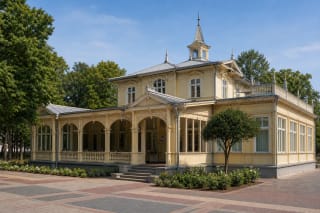
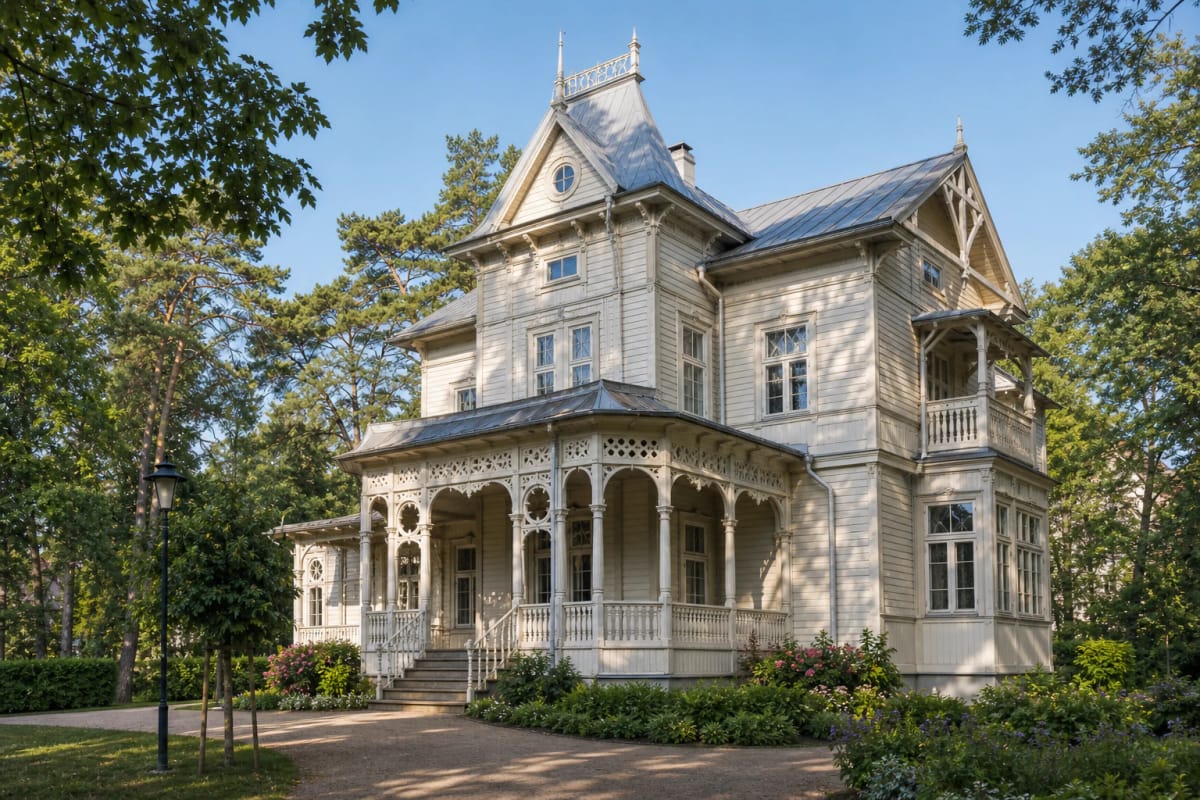
The museum operates in Villa Anapilis, so the building itself is part of the exhibition. A wooden resort villa with a veranda and decorative details helps visitors understand that Palanga's history is inseparable from seasonal rest, representation, summer life, and wooden seaside architecture.
Villa Anapilis: a Tiškevičiai resort villa
The museum is at Birutės al. 34A, in Villa Anapilis, one of Palanga's most architecturally striking resort villas. According to the museum's official history, the villa is dated to about 1898, because that year it appeared in a booklet of Palanga views published in Paris. The exact architect and construction date are unknown, though it is thought to have been built after a model from the Wolgast timber company's catalogue.
The villa is marked by a complex plan, asymmetrical composition, pyramidal turrets, openwork decoration, and half-timbering imitations. It was first built for Countess Sofija Tiškevičienė; after her death in 1919 it passed to her daughter, later was acquired by the Agricultural Bank, whose main shareholders included Jonas and priest Juozas Vailokaitis, and on October 31, 1940, it was nationalized. The name Anapilis comes from a local expression, ana pilimi.
Protected heritage: Cultural Heritage Register code 1290
Villa Anapilis was entered in the Cultural Heritage Register in 1997 and in 2005 was declared a state-protected immovable cultural heritage object; its unique register code is 1290. This means the museum building itself is a protected cultural value, so its architecture belongs to the content of the visit.
Restoration of the villa began at the end of 2014, using European Union and Norwegian funding. The restored villa was opened to the public on September 23, 2016, and transferred to Palanga Resort Museum.
A resort-history museum founded in 2013
Palanga Resort Museum was founded in 2013 by a decision of Palanga City Municipality Council. It is a relatively young institution, but its subject is long: the formation of the Palanga resort, the local community, holidaymakers, cultural life, and town memory.
The museum matters because Palanga is often seen through present-day seasonal noise. The exhibition lets visitors see the town as a historical phenomenon, with archives, photographs, objects, stories, and turning points that shaped how the resort looks today.
What Palanga Resort Museum preserves
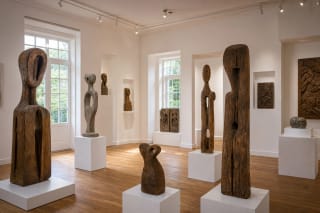
The museum has five main collections: archaeology, art, photography, history, and manuscripts. They are complemented by ethnography, philately, Tiškevičiai family, and local-history subcollections. This means the museum is not merely a nostalgic room about summers by the sea, but covers a wider field of town and resort culture.
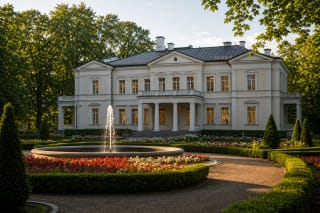
For visitors, the most valuable approach is to look for connections: old photographs with present streets, Tiškevičiai-period stories with the Amber Museum and Birutė Park, resort entertainment with the kurhaus, and archaeological and local-history exhibits with Palanga's longer settlement history.
Why it is worth stepping in even briefly
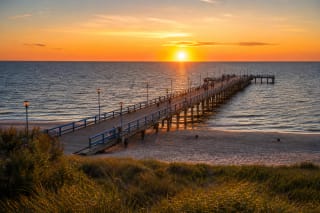
Palanga Resort Museum slows the town down. After visiting it, Birutės Avenue, wooden villas, the park, the kurhaus, and even Palanga Pier become easier to see differently. The town becomes not only a space of summer consumption but a layered history of a resort.
This is especially useful for first-time visitors to Palanga or for people who know the town only from summer season. The museum gives context that adds weight to familiar places.
How to visit
The museum usually takes 45-90 minutes. Before visiting, check official opening hours, temporary exhibitions, and education programmes, because schedules can change.
On a route, the museum combines well with Palanga Kurhaus, the Amber Museum, Birutė Park, Basanavičiaus Street, and the pier. If you travel with children, choose themes such as old photographs, resort entertainments, and villa architecture.