- Category
- Manors and Broader Wooden Heritage
- Type
- Resort villas, summer houses, and spa buildings
- Context
- Wooden resort architecture, villas, summer houses, Palanga, Druskininkai, Birštonas, Juodkrantė, kurhaus
- Source status
- well attested
Resort wooden architecture, Wooden villas, Summer houses, Holiday houses
Wooden Resort Architecture: types and elements
Wooden villa: A leisure building with verandas, balconies, and decorative wooden ornament.
Kurhaus: A resort public building for gatherings, entertainment, and leisure.
Summer house: A seasonal leisure house, often lighter and more open in architecture.
What is wooden resort architecture?
Wooden resort architecture is the group of wooden buildings made for leisure, treatment, and summer stays: villas, summer houses, kurhauses, treatment buildings, holiday houses, and pensions.
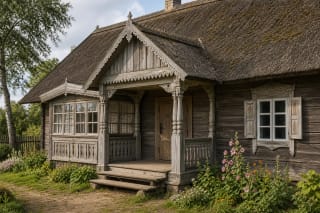
It is not peasant farmstead architecture, but it belongs to Lithuania's broader wooden heritage. Here wooden craft meets leisure culture.
Development of resorts
Druskininkai grew as a mineral-water resort in the nineteenth century, Palanga became a seaside resort with villas and a kurhaus, Birštonas developed a spa tradition, and Juodkrantė shaped the summer-resort image of the Curonian Spit. According to VLE, a mineral-water treatment facility already operated near Biržai in 1587, later becoming the Likėnai resort; Druskininkai was founded as a resort in 1838, Birštonas in 1846, and Palanga in 1888.
Each resort has its own wooden architectural character, but all value the veranda, light, air, closeness to nature, and the aesthetics of rest.
Form and decoration
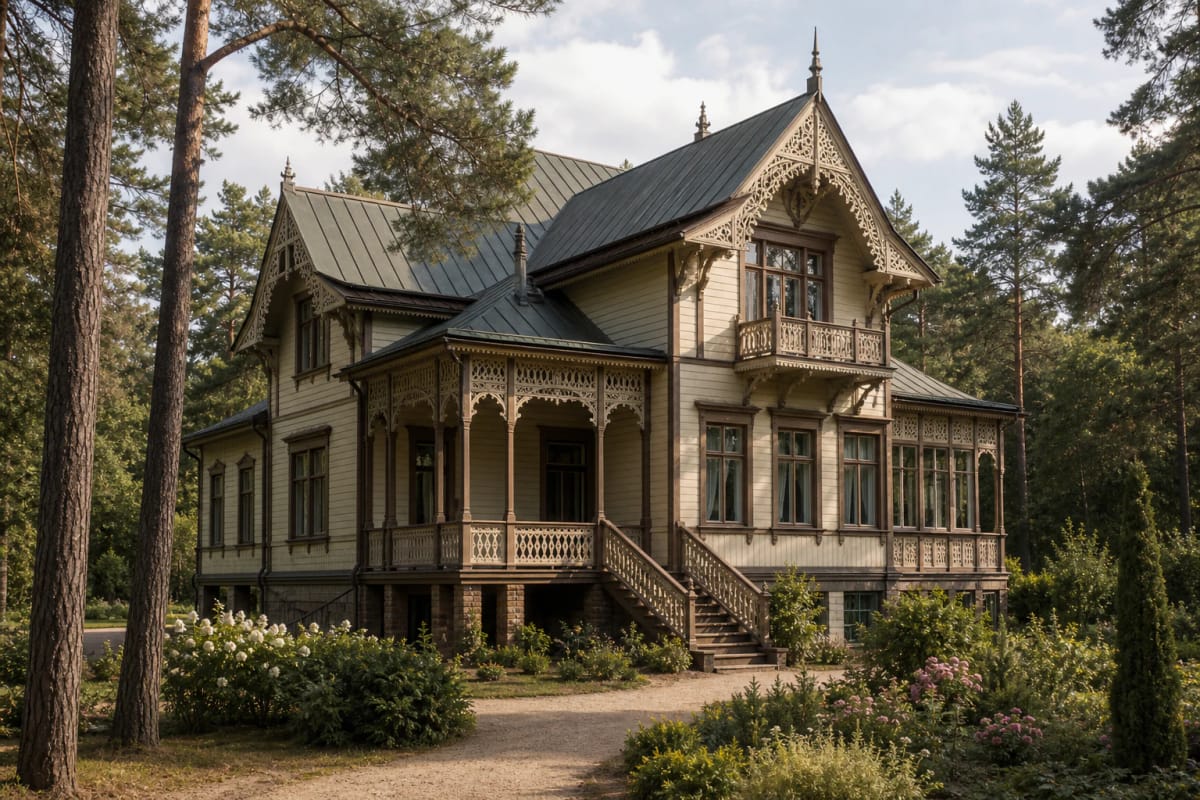
Resort villas often have verandas, balconies, small towers, openwork carving, larger windows, and lighter proportions. Swiss-style, Romantic, and historicist influences are often visible.
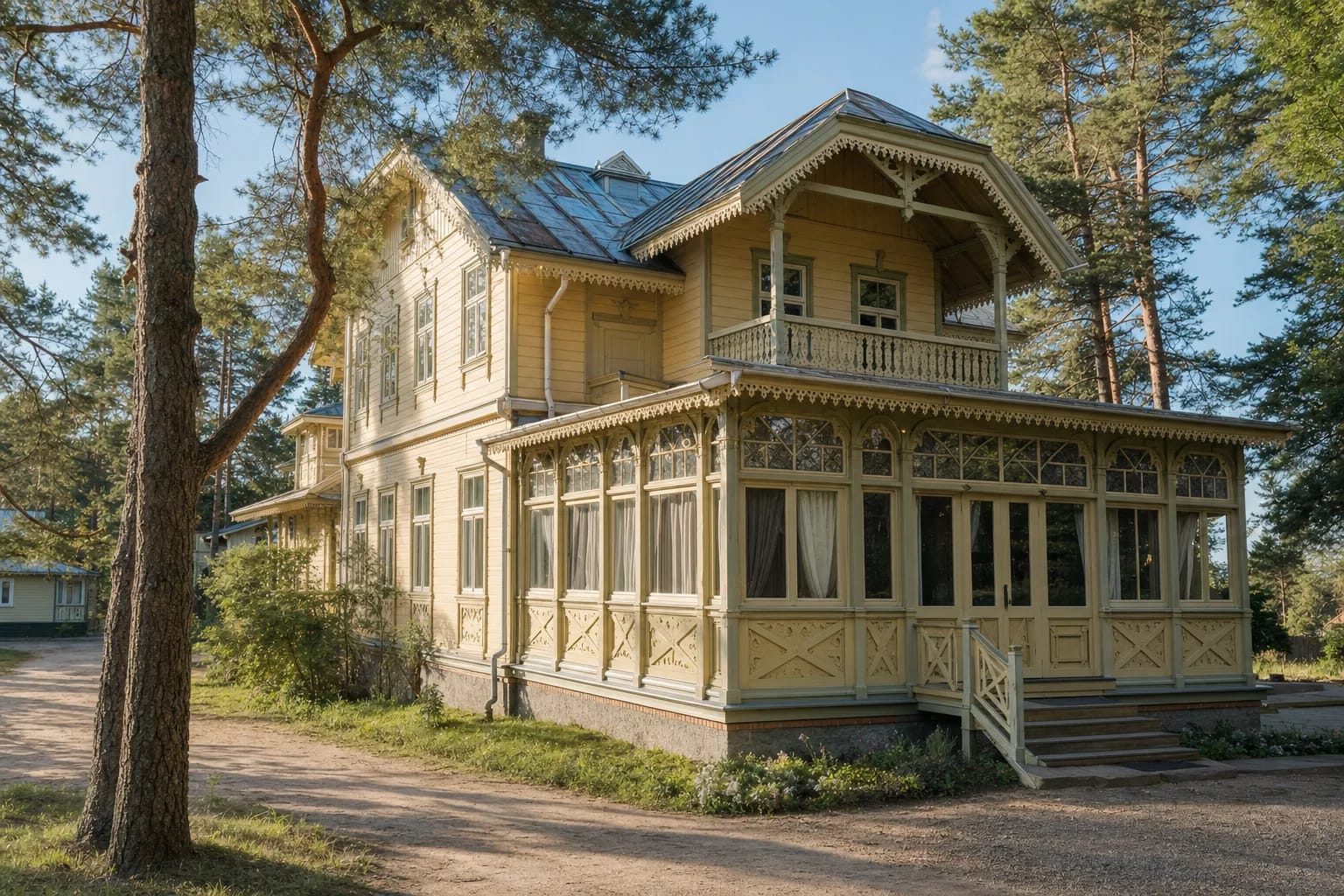
This decoration differs from that of a village pirkia: it is more demonstrative and meant to create a leisure atmosphere and resort image.
Heritage risks
Wooden resort architecture suffers especially from rebuilding, insulation, window replacement, enclosure of verandas, and enlargement of volumes.
Preservation has to keep lightness, wooden details, verandas, and the relationship with greenery, street, or park views.