- Place
- Palanga City Municipality
- Region
- Palanga
- Type
- museum in the Tiškevičiai Palace
- Address
- Vytauto g. 17, Palanga
- Coordinates
- 55.90687, 21.05604
Amber Museum, Palanga Tiškevičiai Palace
Palanga Amber Museum: why it is one of Palanga's key places
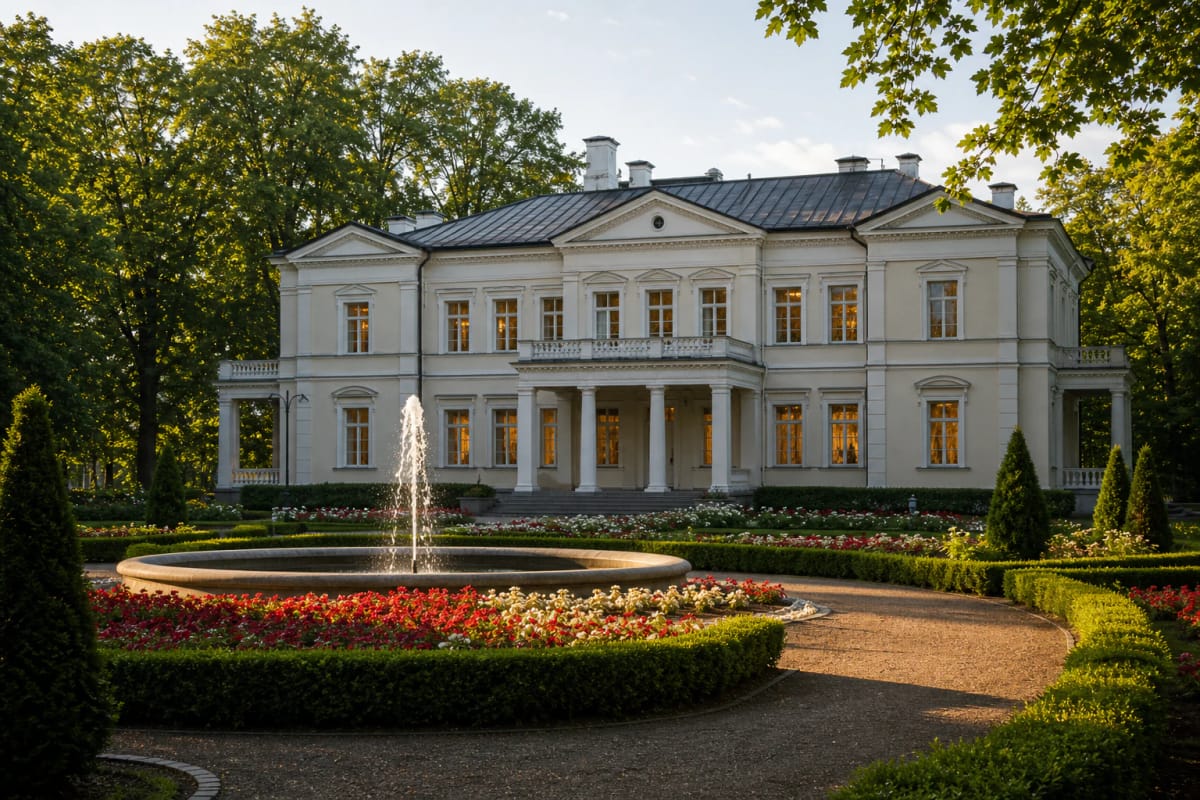
Palanga Amber Museum is not placed just anywhere: it operates in the Tiškevičiai Palace at the centre of Birutė Park. Lithuanian encyclopedic sources state that the Palanga manor palace of the Tiškevičiai was built in 1897-1902 to a design by architect Franz Heinrich Schwechten, while the surrounding Palanga Botanical Park was designed by landscape architect Édouard François André. A visit here is therefore a museum, palace, and park experience at once: you approach the exhibition through a representative setting and can leave it for the rose garden, parterre, or Birutė Park paths.
The same sources state that the museum was founded on August 3, 1963, in the Palanga manor palace and is a Palanga branch of the Lithuanian Art Museum, today the Lithuanian National Museum of Art. The first exhibition was prepared by P. Gudynas and consisted of 478 exhibits, 186 of them borrowed from other Lithuanian museums. Later, in 1965, 1969, and 1986, the exhibition was renewed and expanded.
The Tiškevičiai Palace setting
The palace matters as more than a beautiful background. In Palanga, the Tiškevičiai family not only collected amber but were also connected with amber extraction and archaeological amber collections, so the site itself fits the museum's theme naturally. Schwechten's palace and André's park are today both a cultural heritage object and a museum space.
That is why the museum connects place and subject so well: amber here is not only a seaside souvenir, but part of Palanga's history, Tiškevičiai cultural activity, Baltic nature, and archaeology.
What the exhibition preserves
Lithuanian encyclopedic sources state that the museum's collections contain more than 29,000 exhibits, while the permanent exhibition, From the Formation of Amber to Unique Contemporary Amber Works, shows about 5000 items. It introduces amber formation, unique pieces, archaeological finds, and the use of amber at different stages of cultural development.
The inclusion collection is especially important. The same sources describe it as one of the largest in Europe and give a figure of about 15,000 items. These are pieces of amber with traces of prehistoric insects, plants, or other small organisms, allowing amber to be seen as a natural archive. The sources also single out an important collection of unique pieces, about 4000 items.
The Sun Stone and unique pieces
One of the exhibits many visitors look for is the Sun Stone. Lithuanian encyclopedic sources state that it is the largest amber piece preserved in the museum, weighing 3524 g. Such numbers matter most when you see the scale in person: in the museum, amber ranges from tiny inclusions to a large, visually striking lump.
The sources also mention the significant unique-piece collection, amber artefacts found in the Neolithic settlements of Šventoji, and copies of items from the Juodkrantė Treasure. This lets the museum speak not only about a beautiful material but also about culture, trade, rituals, crafts, and contemporary art.
A centre for amber research and exhibitions
The museum is not only a display. Lithuanian encyclopedic sources state that individual and group exhibitions of amber masters and conferences about amber have been organized here since 1973, while travelling exhibitions of Lithuanian amber abroad began as early as 1968. The museum therefore also works as a centre for amber culture research, communication, and international presentation.
For visitors, this means the exhibition changes and grows over time. Alongside the permanent story of amber formation and archaeology, you may find temporary contemporary amber-art exhibitions, so the museum is worth visiting not only for the Sun Stone but also for its changing programme.