- Place
- Palanga City Municipality
- Region
- Palanga
- Type
- modern sculpture and artist's work museum
- Address
- S. Daukanto g. 16, Palanga
- Coordinates
- 55.91460, 21.05870
A. Mončys Museum, Antanas Mončys House-Museum
Antanas Mončys Art Museum: a quiet modernist stop in Palanga
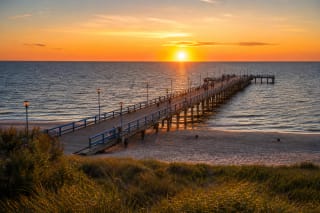
The Antanas Mončys Art Museum is small, but its focus is strong. In a town often associated with the beach, the pier, and summer rhythm, this museum introduces another tone: modern sculpture, the history of Lithuanian émigré art, and a very individual artistic language of form.
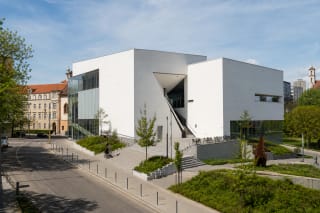
The museum is at S. Daukanto g. 16, close to central Palanga, so it is easy to include in a route with Birutė Park, the Palanga Amber Museum, or a seaside walk. It is a good choice when you want a quieter cultural stop rather than the mass-resort side of town.
Who was Antanas Mončys?
Antanas Mončys (June 8, 1921, Mončiai, Darbėnai volost - July 10, 1993, Paris; buried in Grūšlaukė) was one of the most important Lithuanian modernist sculptors of the twentieth century. In 1942-1943 he studied architecture at Vytautas Magnus University, left Lithuania for the West in 1944, and became interested in sculpture after meeting the sculptor V. Kašuba. In 1947-1950 he studied at the Freiburg School of Arts and Crafts under A. Marčiulionis.
In 1950 Mončys arrived in Paris and studied at the Académie de la Grande Chaumière with the famous Ossip Zadkine. From 1960 to 1992 he held about 30 solo exhibitions in France, Belgium, Germany, Monaco, the United States, Italy, and Lithuania, and led sculpture studios at the International Centre of the University of Paris, the European Academy of Art in Trier, and a UNESCO studio in Toulouse. During 45 years of emigration he returned to Lithuania only once, so the museum connects Samogitian origins, European modernism, and the émigré experience.
What the Antanas Mončys House-Museum preserves
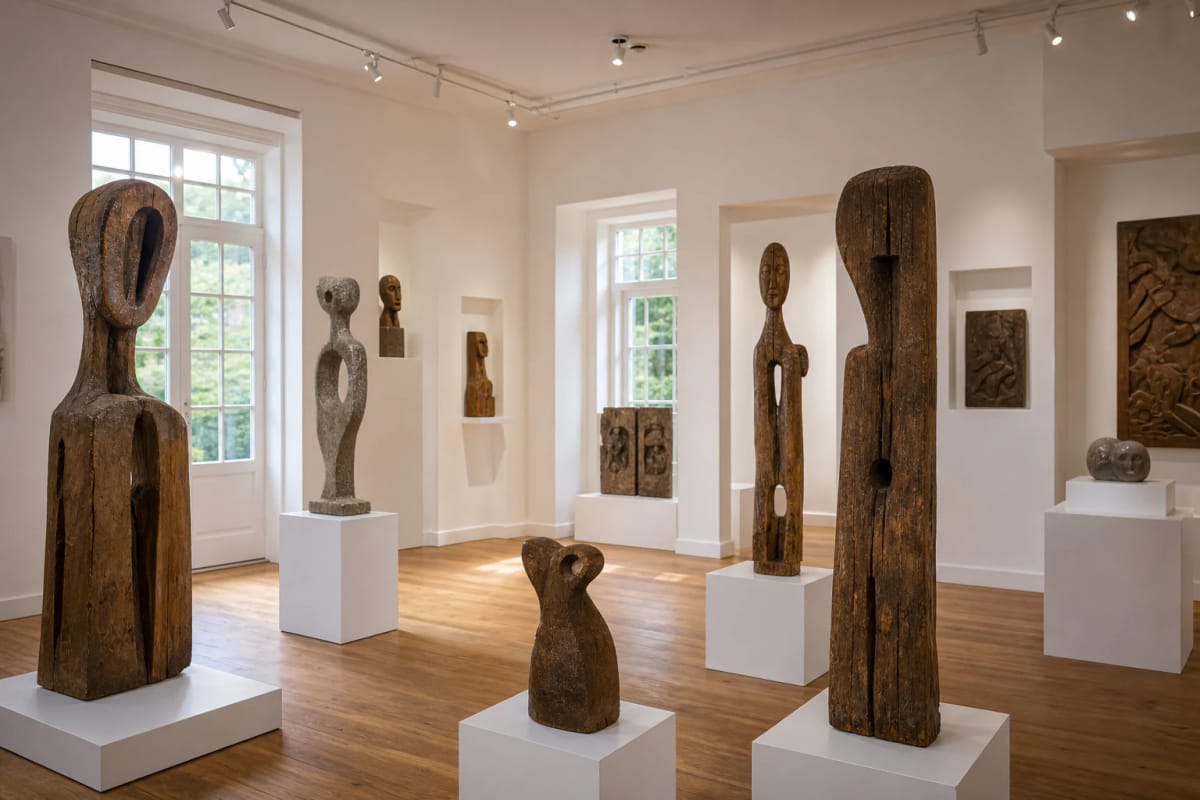
The museum was founded in 1999 and operates as the Antanas Mončys House-Museum, a public institution supported also by Palanga City Municipality. Its galleries show more than 200 works by the artist: sculptures, masks, whistles, drawings, collages, jewellery, and other pieces. That range lets visitors see Mončys not as a sculptor of one material only, but as an artist for whom form, sound, material, and sign were connected.
One of the museum's special qualities is that, by the artist's own wish, some sculptures may be touched. It is therefore one of the few art spaces in Lithuania where a work can be experienced by hand. Mončys used wood, stone, metal, clay, found objects, and even discarded materials; the whistles and masks are especially interesting because they bring sculpture close to the body, sound, and ritual.
The context of émigré modernism
The Mončys museum helps reveal a part of Lithuanian art history that long developed outside Lithuania. War and postwar migration meant that some artists worked abroad, engaged with other art schools, and later returned to Lithuanian cultural memory through exhibitions, archives, and museums. Mončys belonged to the circle of the semiotician Algirdas Julius Greimas and other émigré creators; among his works is the 1983 gravestone monument for Greimas's wife, Ona Greimienė (née Bagdonaitė, 1916-1982).
In 2021, the centenary of the sculptor's birth was marked by memorial exhibitions, and in 2022 a documentary film about him, Mončys. A Samogitian from Paris, was made by director Linas Mikuta. The Palanga museum is therefore more than a personal memorial: it joins Samogitian origin, the French creative environment, and Lithuanian viewers' chance to encounter émigré modernism in real works rather than reproductions.
How to look at Mončys's sculptures
Mončys's work rewards slow looking. Start with the material: the surface of wood, the mass of stone, cut marks, openings, voids, and proportions. Then watch how a face, body, or mask emerges from an abstract form.
If whistles or sound objects are on display, ask about their function. They show that sculpture for Mončys was not only an object to look at; at times it comes close to an instrument, a game, or a ritual object.
How to visit
About an hour is usually enough for the museum, but the time depends on temporary exhibitions and your own pace. This is not a place to rush through between the beach and a cafe; it is better approached with a slower mood.
Before visiting, check the official opening hours and event information. In Palanga, the museum combines well with the Amber Museum, Birutė Park, and the central seaside route.