- Place
- Palanga City Municipality
- Region
- Palanga
- Type
- historic Tiškevičiai manor landscape park by the sea
- Address
- Vytauto g. 15 (park), Palanga
- Coordinates
- 55.90500, 21.06100
Palanga Park, Tiškevičiai Park
Palanga Botanical Park: a manor by the sea
Palanga Botanical Park stretches between the town centre and the Baltic Sea dunes. It is one of Lithuania's most beautiful and best-preserved manor parks. Its area reaches about 100 ha, so the park is not only an ornament but also a large space for rest and walking in the middle of Palanga.
The park was founded at the end of the nineteenth century by Count Feliksas Tiškevičius. Its plan was created by the famous French landscape architect Édouard André, together with his son and a gardener; they spent several summers in Palanga supervising the work. In this way, a whole landscape park was created from coastal pinewood and dunes.
Palace, rose garden, and sculptures
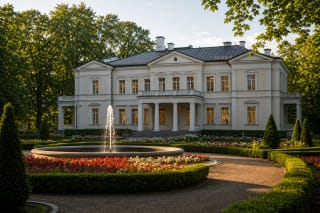
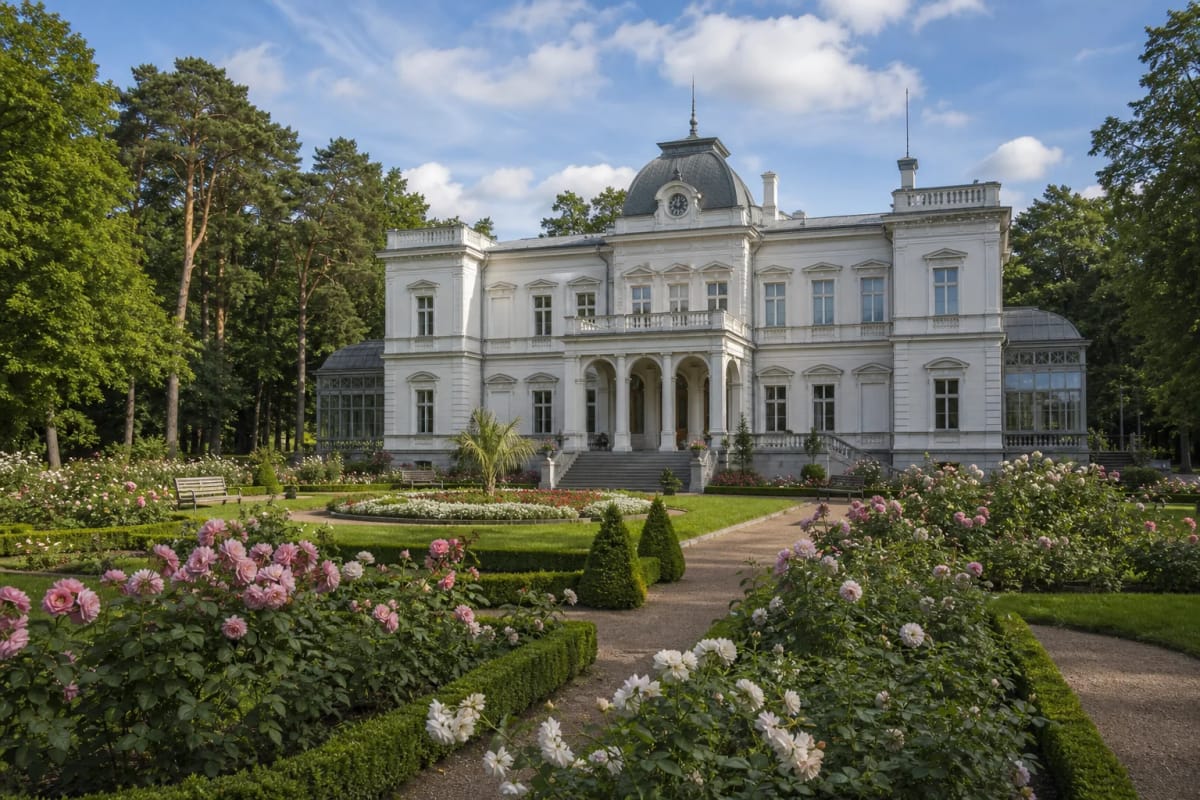
At the centre of the park stands the Neo-Renaissance palace of the Tiškevičiai counts, built in 1897 and since 1963 home to the Palanga Amber Museum. In front of the palace is a parterre with flowerbeds and a fountain, and on the southern side lies a semicircular rose garden, one of the park's most photographed places.
The park also has many artistic accents. One of the best known is sculptor Robertas Antinis's Eglė the Queen of Serpents, which has become a symbol of Palanga itself. Several hundred introduced tree and shrub species grow in the park, making it interesting from a botanical perspective as well.
Birutė Hill and the spirit of the park
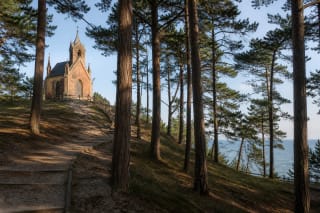
The core of the park is sacred Birutė Hill, a relic pine-covered dune with a chapel, rising about 21 m above sea level. Legends about the vaidilutė Birutė are connected with it, so the park has not only natural but also mythological depth.
The old Birutė pinewood became the base around which André planned the paths, lawns, and water bodies. Because of this history and composition, the park is protected as a cultural heritage site, the Palanga Manor Homestead.
How to visit
The park is an open public space, visited freely and without charge throughout the year. For a walk through the whole park, plan 1.5-3 hours; if you also visit the Amber Museum in the palace, allow more time. The most beautiful seasons are late spring and summer, when the rose garden blooms, and colourful autumn.
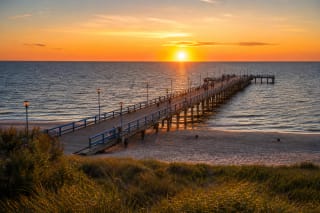
The Amber Museum inside the park is a separate paid visitor site with its own opening hours. A visit combines easily with Palanga Pier, the seashore, and the resort centre, so the park often becomes the heart of a trip to Palanga.