- Place
- Palanga City Municipality
- Region
- Palanga
- Type
- free sandy beach and officially monitored Baltic Sea bathing area
- Address
- Beach opposite 2A Žvejų Street, Palanga
- Coordinates
- 55.92619, 21.05519
Palangos paplūdimys, Central Palanga Beach, Žvejų Street Beach
Which part of Palanga's coast the map pin identifies
The Google Maps entry named Palanga Beach is pinned at 55.926188, 21.055188, on the sand west of 2A Žvejų Street and slightly south of the central lifeguard station. It does not identify Palanga's entire urban shoreline or the beach immediately beside the sea pier. This guide covers the pin's setting north of the Rąžė river mouth.
Officially, this location lies in the setting of Palanga Bathing Area No. 6. The municipality defines that area from a boundary sign 25 metres north of the Rąžė mouth to the Rugelis path, but excludes a 120-metre section at the central lifeguard station, 2A Žvejų Street, because rescue watercraft launch through it.
Choose a safe swimming position from the boundary signs, buoys, lifeguard posts, and the flag displayed that day, not from a single digital pin. Do not sit, park a pushchair, or enter the water in the rescue-vehicle corridor, even when the sea appears calm.
Sand, foredune, and a Baltic shoreline that keeps changing
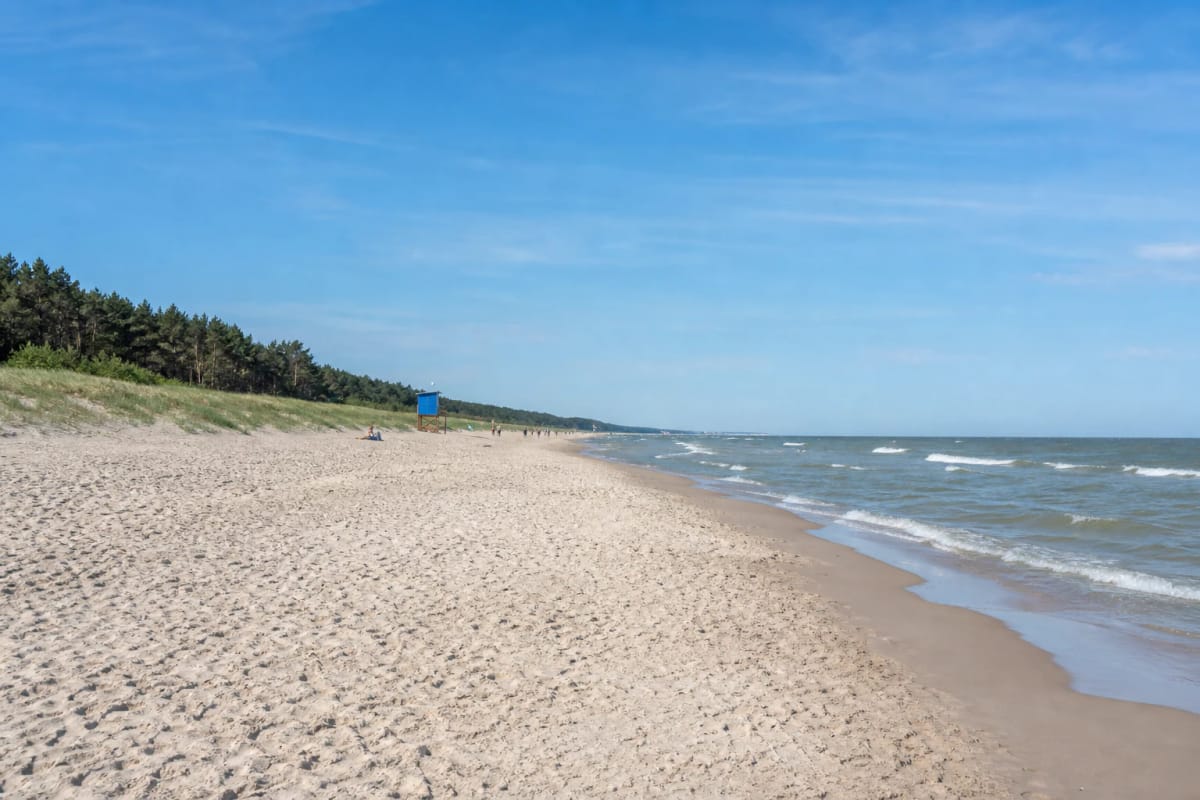
Palanga's natural coastal belt is more than the level sand by the water. The Universal Lithuanian Encyclopedia describes a strip approximately 200 metres wide that combines beach, dunes, and coastal pinewood. These elements unfold in sequence as you walk from town to sea, while boardwalks cross the vulnerable foredune without trampling it.
The coast is not fixed. After the storm of 3-4 January 2025, Lithuania's Environmental Protection Agency recorded an eroded foredune face up to 1.3 metres high along approximately 400 metres of the Palanga section it inspected. Specialists connected the damage with strong winds, elevated water, and a persistent shortage of nearshore sand.
Brushwood fences, branch coverings, and the grassed dune face are not needless barriers to the view. They trap wind-blown sand and help protect the town from storms. Use an established path, do not climb the dune face, and avoid digging at its foot. Beach width, stair condition, and the easiest approach after a storm can differ sharply from older photographs.
2026 water tests and swimming safely in the sea
The latest published Bathing Area No. 6 sample available while this guide was prepared was taken on 1 July 2026. It measured 47 intestinal enterococci and 210 E. coli colony-forming units per 100 millilitres, against table limits of 100 and 1,000 respectively. Both microbiological indicators were therefore below their limits on that sampling date.
A single laboratory sample does not guarantee unchanged conditions throughout the summer. Heavy rain, a wastewater incident, an algal bloom, or a later test can alter the advice. Check the municipality's newest table and notices posted at the beach before swimming. An unusual smell, discoloured water, or floating waste is reason to stay out and alert a lifeguard.
A red flag at a lifeguard post means swimming is prohibited. If a current carries you away from shore, the official rescue service advises against fighting it directly; swim parallel to the beach until clear of the narrower current. Shout and wave first. If you see another person in distress, call a lifeguard or 112 and do not risk an unassisted water rescue.
Getting there, physical access, and beach etiquette
The shore is a free, open natural space without a ticket office or locked gates. In summer it is easiest to arrive on foot or by bicycle via Žvejų Street and Meilės Avenue, because central Palanga parking fills and seasonal charges or traffic arrangements may change. Leave bicycles before the sand without blocking the rescue route.
The municipal GIS map marks lifeguard posts and a public toilet in this coastal section, but changing cabins, showers, hire concessions, and food outlets operate seasonally. Loose natural sand is not fully step-free. Ask the rescue service in advance about the current wheelchair approach and any assistance needed near the water.
Do not bring a pet to this general Palanga beach section. The municipality has designated and signed a separate pet beach at Nemirseta. Leave the dunes and sand free of cigarette ends, plastic, and food waste; follow lifeguard instructions and remain within arm's reach of a child at the waves, even when the child wears an inflatable aid.
From nineteenth-century sea baths to a public resort beach
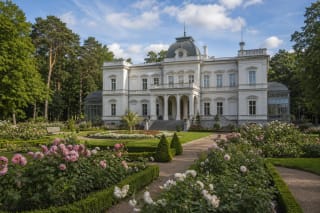
Palanga Resort Museum traces the origins of Palanga's sea-bathing culture to baths operating before 1824, after which the Tiškevičiai family developed the resort systematically. This marked a fundamental change in the shore's meaning. The sea had long represented work, danger, and restrictions, but in the nineteenth century it increasingly became a place for health treatments, walks, and leisure.
Early bathing looked little like today's open public beach. A Lithuanian Sea Museum history of coastal recreation says drumbeats announced separate swimming times for men and women in Palanga, while wheeled changing cabins protected privacy. Mixed beaches became widespread only in the early twentieth century.
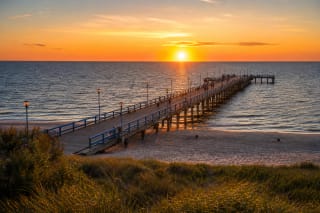
Today the attraction of this stretch lies not in one historic structure but in everyday resort life: a long horizon, fine pale sand, evening light, and room to walk north from the busier pier area. In July 2026, sources displaying Google data showed 4.6 out of 5 from 31 reviews. That modest review count belongs to this specific map pin, not to Palanga's whole coast.