- Place
- Biržai District Municipality
- Region
- Biržai District
- Type
- manor estate fragments
- Address
- Mantagailiškis village, Širvėna elderate, Biržai District
- Coordinates
- 56.21668, 24.68165
- Visit duration
- 1-2 hours; arrange entry and events in advance
- Best time
- the brighter months, after arranging a visit with the estate managers
Mantagailiškis Manor Estate Fragments, Mantagailiškis Manor House
Mantagailiškis Manor in the Biržai landscape
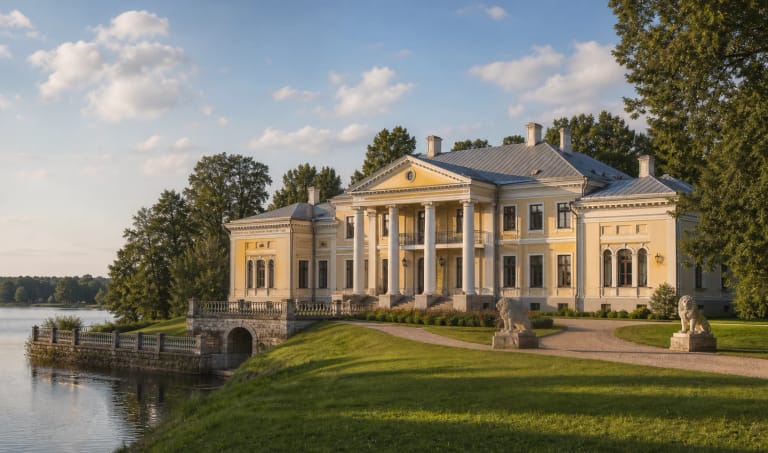
Mantagailiškis Manor stands in Mantagailiškis village, Širvėna elderate, Biržai District. This is not a newly built leisure venue but the surviving fragments of a manor estate: a nineteenth-century house-and-park complex whose history can be read in masonry, trees, ponds, and archaeological finds.
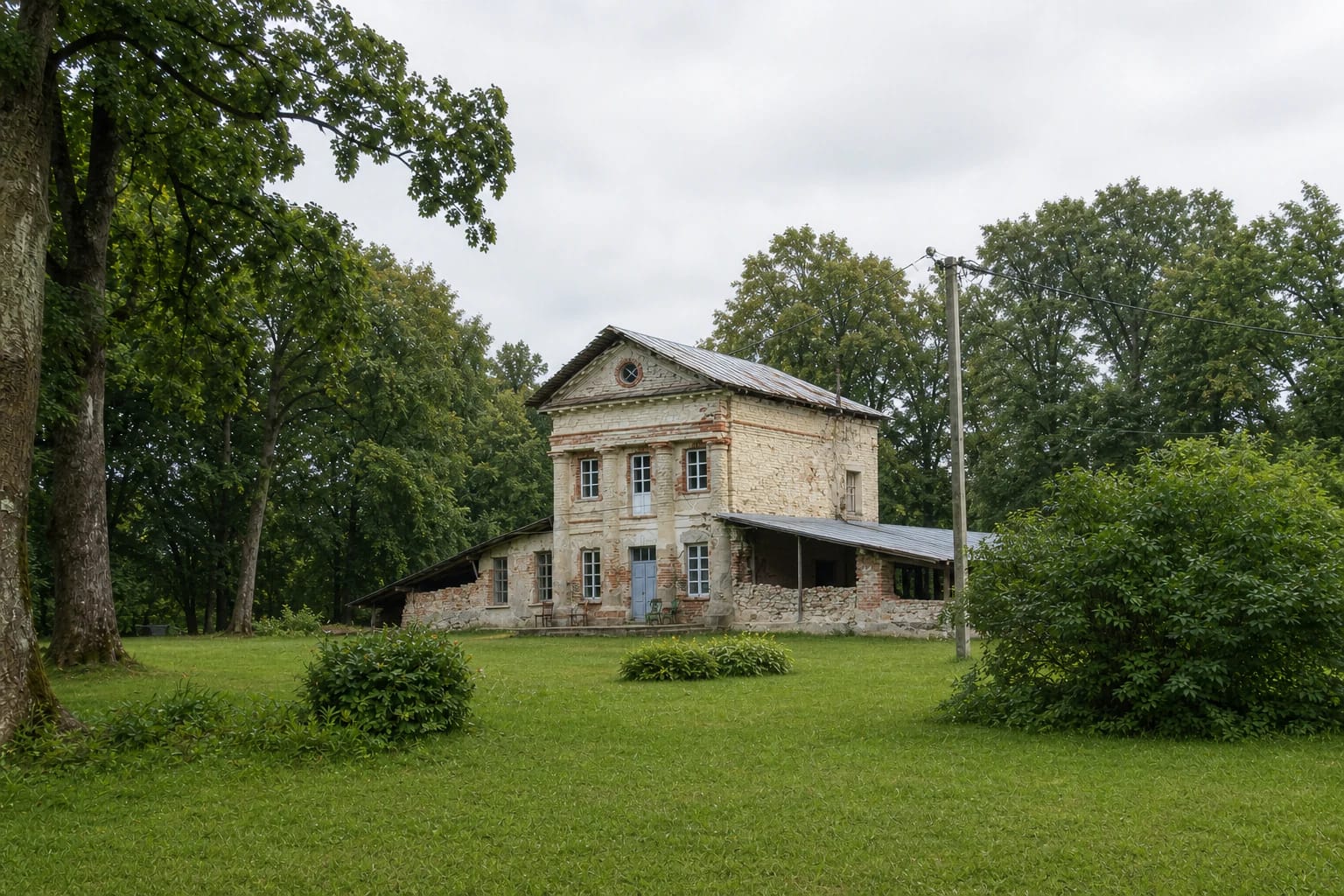
The estate is compelling because several time layers meet in one place. The weathered, partially restored Classical building is visible above ground, while the cultural layer studied around it tells more about the earlier estate and everyday life in north-eastern Lithuania.
From the Montigailai to the Holštein family
The name Mantagailiškis is linked to the Montigailai family, known in the Biržai region from the sixteenth century. Biržai Regional Museum places the estate among the holdings formed in the sixteenth century, while the 1645 map of the Duchy of Biržai by Juozapas Narunavičius-Naronskis provides a wider context for the period's manor network.
In the second half of the eighteenth century the estate belonged to Kušelevskis. In 1828 Karolis Holštein, owner of Padaičiai Manor, married Konstancija Kušelevska of Mantagailiškis; after Ignacas Kušelevskis died in 1837, the estate passed to the Holštein family, and records from 1840 identify the Holšteins as owners.
Nineteenth-century house and park structure
The manor estate was reorganised in the mid-nineteenth century. A new Classical manor house, other estate buildings, a brick fence, and a landscape park with a system of ponds were created. This is why the site is best understood as a whole estate plan rather than as one isolated building.
Around 1890 Josef Holštein built a separate wooden residence for his son Henrik and Henrik's wife Michalina. The central house block and low side additions now survive in uneven condition, so visitors should notice differences in masonry, plaster, and rooflines rather than expect an intact representative façade.
The archaeological story of Mantagailiškis
Archaeological research at Mantagailiškis has revealed traces from the middle and second half of the sixteenth century. Finds include tile fragments, one with a rider moving east, late-seventeenth-century heraldic fragments associated with Ludwika Karolina Radziwiłł, and pieces marked with the date “1645”.
Biržai Regional Museum describes Mantagailiškis as one of the best archaeologically studied manors in north-eastern Lithuania. The research speaks not only to the buildings but also to daily life from the sixteenth to the early nineteenth century and to cultural and trading connections with Courland and other Lithuanian regions.
Restoration, events, and responsible visiting
The manor fragments were returned to Dučinskas descendants in 1994. From 2007, new owners led by Sigitas Kalkys initiated archaeological and architectural research, work on the house's structures, and park maintenance. Restoration is ongoing, so the appearance and accessibility of the estate can change.
Mantagailiškis is also associated with monteball, which was first tested in the manor park in 2010, but that does not mean the estate operates as a public museum every day. Contact the managers before travelling about entry, events, or tours, keep to permitted areas, and do not touch masonry or archaeological remains.