- Place
- Liškiava, Varėna District Municipality
- Region
- Dzūkija National Park
- Type
- late Baroque church and Dominican monastery ensemble
- Address
- Bažnyčios g. 7, Liškiava
- Coordinates
- 54.08056, 24.05492
Liškiava Holy Trinity Church and Dominican Monastery Ensemble, Liškiava church ensemble
An ensemble above the Nemunas
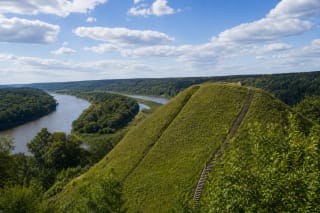
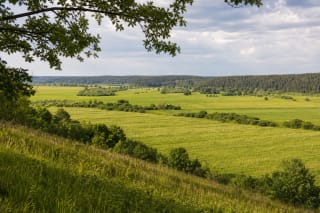
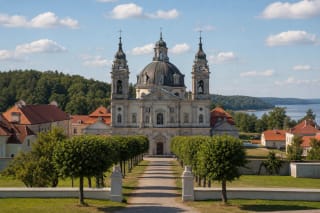
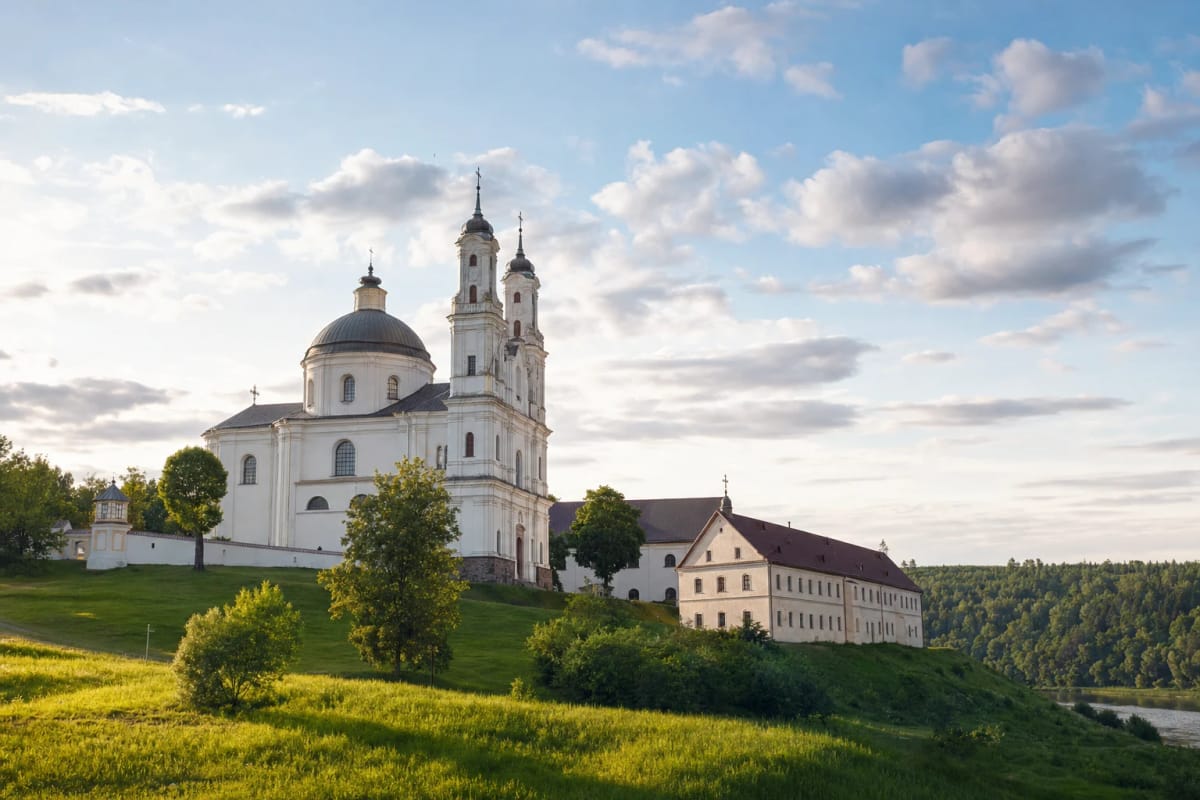
Liškiava Monastery Ensemble stands in the valley of the left bank of the Nemunas, in Dzūkija National Park, beside Liškiava Hillfort and sacred hill. The place works on two levels: as a monument of sacred architecture and as a landscape node where pre-Christian, defensive, and monastic history are all visible. VLE also notes Liškiava Outcrop, a natural monument on the village's southwestern edge, so geology, archaeology, and Baroque architecture gather in one place.
VLE presents Liškiava as a village in Varėna District, 14 km southwest of Merkinė, known for its hillfort and the Holy Trinity Church and former Dominican monastery ensemble. A visit should include not only the interior but also time outdoors, because the church silhouette and Nemunas valley are part of the same experience. A boat pier also operates nearby, so Liškiava can even be reached by the Nemunas waterway.
Late Baroque Holy Trinity Church
VLE states that Liškiava Holy Trinity Church was built in 1704-1741. It is a central-plan, domed, Greek-cross-plan late Baroque church, distinctive in Lithuanian sacred heritage for its compact, clear volume and integrated interior. According to VLE, the ensemble includes not only the church but also the monastery residence from the first decade of the eighteenth century and a granary from the first quarter of the eighteenth century.
VLE mentions seven Rococo altars and a pulpit in the church, all from the early eighteenth century, three confessionals and ten kneelers, all eighteenth century, and wall painting on the dome vaults and organ-loft arch, thought to be from the eighteenth or nineteenth century. In the churchyard stand a nineteenth-century bell tower and a memorial column with a sculpture of St Agatha. These details matter: the interior is not just decoration, but a surviving liturgical and artistic programme.
Altarpieces, frescoes, and the 1761 bell
VLE lists important works of church art: paintings of St Mary Magdalene and the Blessed Virgin Mary with Child, both thought to be eighteenth century, the latter venerated for graces experienced by believers; the 14 Stations of the Cross from the second half of the nineteenth century; and Our Lady of the Rosary. In 1914 Antanas Žmuidzinavičius painted St Bartholomew, so the interior joins eighteenth-century Baroque with early twentieth-century Lithuanian art.
A separate treasure is the brass bell mentioned by VLE, cast in 1761 and surviving to this day. Such precisely dated liturgical objects help visitors understand that the Liškiava ensemble is not a reconstruction but authentic Baroque heritage whose details still belong together.
Dominican monastery history
VLE notes that Liškiava village formed in the fifteenth century; in its second half a manor was established and a church built, which belonged to the Evangelical Reformed community from the second half of the sixteenth century to 1624. The parish was founded in 1644. From the late seventeenth to late eighteenth century Liškiava was held by the Dominicans: in the first half of the eighteenth century they built the masonry church and monastery buildings, and in the second half of the century they invited a Jewish community in an attempt to turn Liškiava into a town.
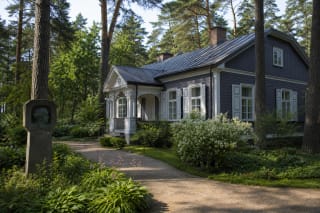
VLE also notes a less familiar episode: in 1836-1852, the monastery housed a correctional home for offending priests. Today a cultural centre operates in the former monastery buildings, and the official Liškiava ensemble site presents exhibitions in the church crypts and liturgical-heritage spaces. Such places are especially valuable with a guide, because without explanation the meaning of the crypts and liturgical objects can remain only visual.
Čiurlionis, hillfort, and local memory
VLE notes that Mikalojus Konstantinas Čiurlionis played the organ in Liškiava church. This gives the ensemble an additional cultural-history layer: sacred architecture meets Lithuanian music and art memory, and the musical theme naturally continues in M. K. Čiurlionis museums in Druskininkai and Kaunas.
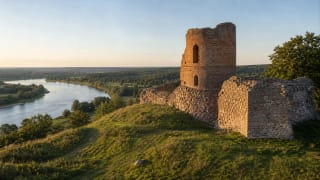
The nearby Liškiava Hillfort, with remains of an unfinished late fourteenth or early fifteenth-century castle tower and the name Perkūnas Sanctuary, reminds visitors that Liškiava's sacred landscape did not form in an empty place. Read the church ensemble together with older landscape sanctity, the sacred hill, and the history of the Nemunas route; the hillfort and ensemble are best visited as one whole.
Opening hours, tickets, and planning
During research, the official Liškiava ensemble page listed visits to the church crypts and liturgical exhibition Wednesday through Sunday, 12:00-18:00, and at other times by prior arrangement. Prices at that time were about 3 EUR for adults, 1.50 EUR concession, free for children under 7; guide services cost extra.
Because opening hours, ticket prices, and guide arrangements can change, check the official Liškiava ensemble page before travelling. If you want only the exterior and panorama, you need less time, but for the interior, exhibitions, hillfort, and a walk, plan at least 1-2 hours.