- Place
- Kukuliškiai, Klaipėda District Municipality
- Region
- Seaside Regional Park
- Type
- hillfort with a settlement and seaside archaeological site
- Address
- Kukuliškiai village, Kretingalė Eldership, Klaipėda District
- Coordinates
- 55.78300, 21.07600
Kukuliškiai Hillfort with settlement, Hillfort of the Kukuliškiai Hillfort with settlement
A recently discovered Bronze Age hillfort
Kukuliškiai Hillfort stands out because of a paradox: it was found only in 2016 near Kukuliškiai village, yet it is dated to the Bronze Age. In 2017 the object was entered in the Cultural Heritage Register, where the complex is named Kukuliškiai Hillfort with settlement (code 44153).
Such a late discovery shows that very old landscape layers can still be hidden in the forests and slopes of Seaside Regional Park. Saugoma.lt gives the coordinates as 55.783, 21.076 and presents the site as an object of Seaside Regional Park near Klaipėda.
Litorina Sea terrace and seaside relief
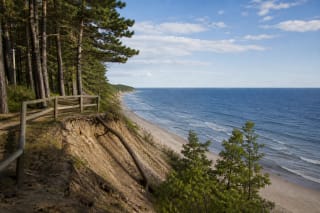
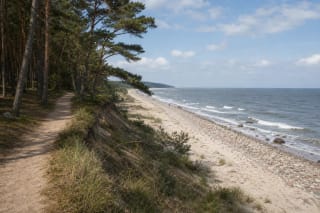
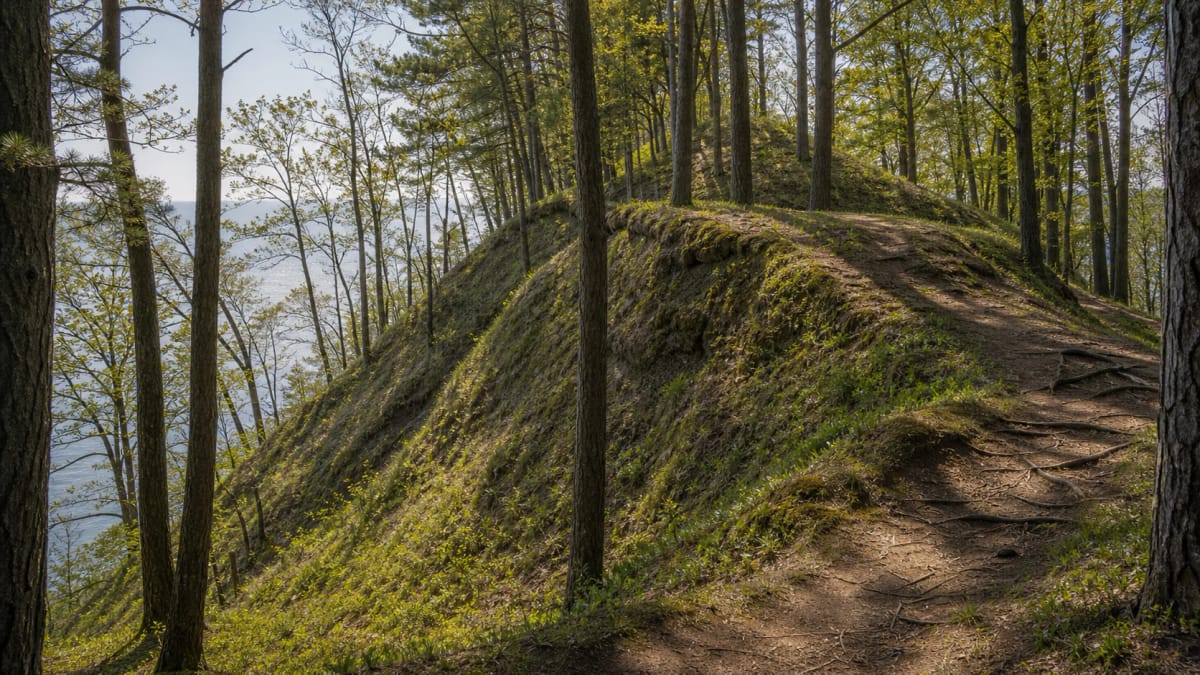
The fortifications were built on a strikingly scenic terrace, formed during the Litorina Sea period and cut in places by stream ravines. It was this high seaside terrace that gave the site its natural defensive position, and today the Litorina Sea educational trail runs past the hillfort.
The hillfort platform is small - about 38 x 20 m, oriented north-west to south-east, ringed by ramparts up to 1 m high and ditches about 0.5 m deep. On site, look not only at the trees but also at the terrace edge, the slope directions, and the defensive logic.
Dating: eighth to sixth or eighth to fifth centuries BC
The dating should be presented cautiously: saugoma.lt dates the hillfort to the eighth to sixth centuries BC, while the Cultural Heritage Register gives the eighth to fifth centuries BC. The difference is small, and both sources agree that this is one of the earliest known seaside fortifications.
This dating places Kukuliškiai Hillfort in a rare group of Bronze Age hillforts in western Lithuania. Prehistoric coastal fortifications have survived very rarely, so every new site matters for the picture of the region's prehistory.
Research and finds
Archaeological research took place in 2017, 2018, and 2020. In 2017 a small trial trench (about 10 sq. m) was excavated on the platform along with a line of boreholes, and in 2018 ground-penetrating radar showed that the community lived not only on the hillfort platform but across a much wider area to the south.
The research uncovered remains of fortifications, a hearth, many bones, various food seeds, and a good deal of amber. These finds matter because the hillfort is not just a scenic rise: it provides information about early coastal communities, their food, defence, and connections with the sea and with amber.
Litorina Trail and visiting
The hillfort is conveniently reached by routes in Seaside Regional Park, and the Litorina Trail crosses its surroundings. Use existing paths and protect the slopes, because the seaside terrace relief is sensitive to erosion.
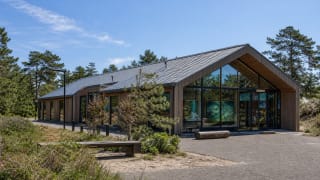
At the time of the source review, no separate ticket or opening hours were found - it is an outdoor heritage site. It is best to visit in dry weather, wear comfortable footwear, and stop first at the Seaside Regional Park Visitor Centre in Karklė before a longer walk.