- Place
- Klaipėda City Municipality
- Region
- Klaipėda
- Type
- historic narrow-gauge railway station complex
- Address
- S. Nėries g. 16 and 16A, Klaipėda
- Coordinates
- 55.71958, 21.13590
- Visit duration
- 15-30 minutes for the exterior; 1-2 hours with a restaurant visit
- Best time
- daylight for the architecture; restaurant opening hours if you want to go inside
Klaipėda narrow-gauge railway station building complex, Memeler Kleinbahn station
What exactly survives at Klaipėda's narrow-gauge station
The protected site at S. Nėries g. 16 and 16A is not a single station house but the Klaipėda narrow-gauge railway station building complex. It is entered in the Cultural Heritage Register under code 2480, is state-protected at regional significance level, and occupies a listed area of 1,408 sq m in Klaipėda City Municipality's heritage records.
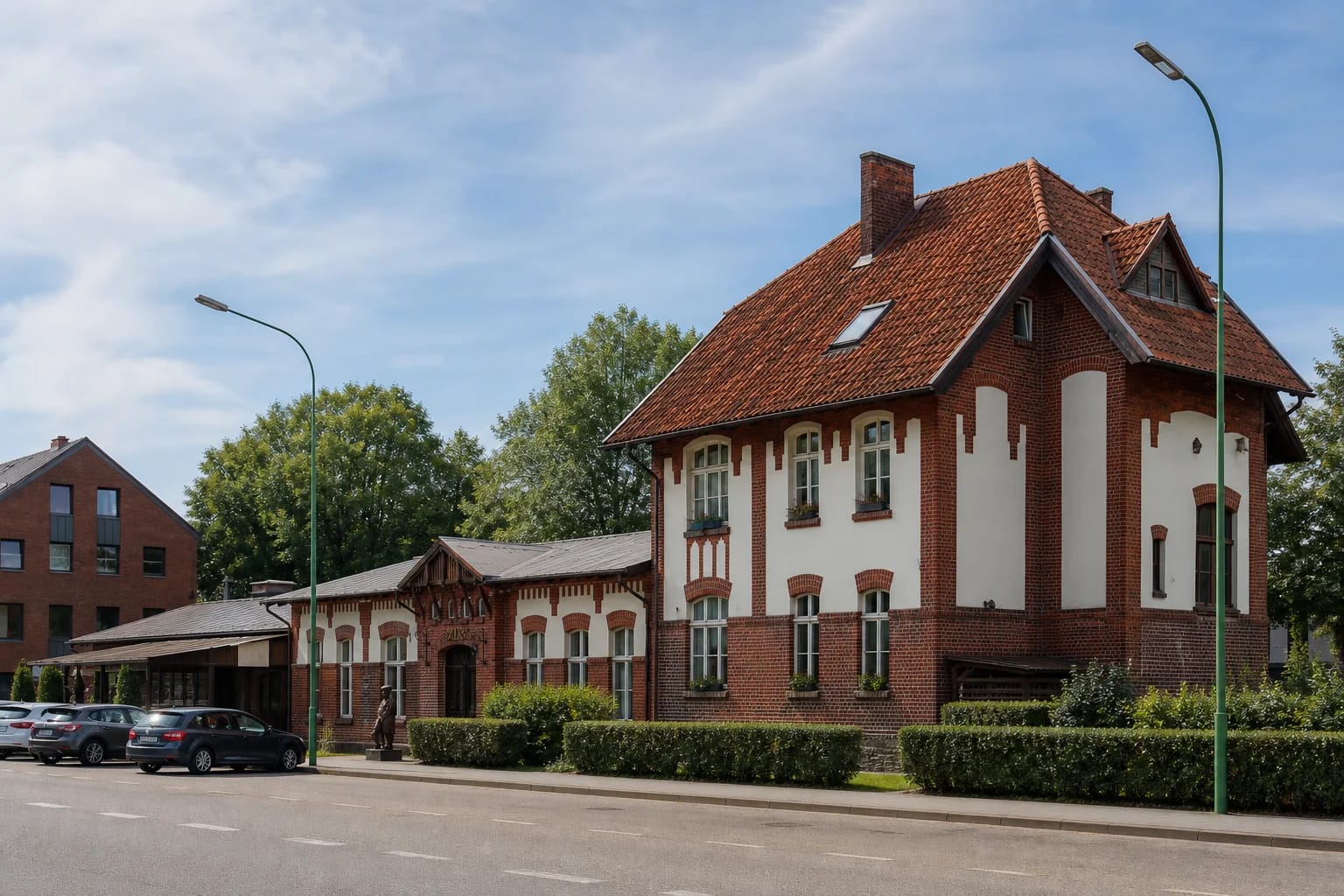
The complex consists of three joined structures: the former staff residence at S. Nėries g. 16 (code 23535), the station building (code 23536), and the goods shed (code 23537) at number 16A. The map marker identifies the former station at 16A, but the taller house at number 16 belongs to the protected whole as well.
This is not the current Klaipėda passenger station at Priestočio g. 1. The two sites stand close together, but the historic complex served a different, 1,000 mm gauge railway and no longer performs any railway function.
Why Klaipėda needed a metre-gauge railway
The standard-gauge Klaipėda-Tilsit railway, completed in 1875, connected the port with the main East Prussian network, but surrounding manors and villages remained less accessible. A Klaipėda narrow-gauge railway company was formed in 1900 to bring milk, meat, vegetables, and other farm goods into the city more efficiently while also carrying passengers. Construction began in 1904, supported by the district administration and local landowners who donated or sold land.
Traffic began on 22 October 1906 over three 1,000 mm gauge sections: Klaipėda-Klemiškė-Dovilai-Pėžaičiai (34.8 km), Klemiškė-Plikiai (10.1 km), and Dovilai-Laugaliai (4.6 km). The Register dates construction of the station complex to 1904-1907. Passenger and freight services shared the railway, and urban sidings reached the gasworks and slaughterhouse.
The same company also operated Klaipėda's electric tramway, but the rural narrow-gauge line was a separate steam railway. It is also important to separate built routes from proposals: lines from Smiltynė to Juodkrantė and from Giruliai to Palanga were considered but never constructed.
Three buildings shaped by East Prussian railway architecture
The three structures form a clear west-east sequence and reveal the station's different functions. The tallest is a two-storey staff house with a roomy attic; beside it stands the single-storey passenger station, followed by the lower goods shed. Their stepped volumes let visitors read where employees lived, passengers waited, and freight was handled.
Dark-red brick frames broad areas of pale render, with a stone base below. The design blends late historicism, Neo-Gothic references, and Materialstil, which emphasized the expressive use of building materials, but it is not pure Neo-Gothic architecture. A small triangular gable marks the centre of the single-storey station, decorated with a stylised horse-head roof-finial motif.
The goods shed was originally timber-framed and had a wooden loading platform. It was altered in the 1920s and 1930s with a red-brick eastern extension and a small porch. These changes are not random defects: they document how a working station adapted to changing freight needs.
From wartime damage to adaptive reuse
During the First World War, traffic declined after the bridge over the Minija was blown up. The narrow-gauge railway later operated until 1944, and bombing during the Second World War damaged the station, particularly its middle section. After the war the line closed, the rails were removed, and its rolling stock did not survive as an operating system.
Once their railway role had ended, the buildings passed to railway services and were converted into flats. The complex was restored in 1991 and received further conservation work in 2008-2011. The XIX amžius restaurant opened in the single-storey station wing in 2011, giving the building a new use while leaving its railway architecture as the central story.
Near the entrance stands sculptor Klaudijus Pūdymas's figure of a bearded pointsman in an old East Prussian railway uniform. It is a modern memorial feature rather than an original piece of station equipment, but it recalls the people who once worked here and helps visitors identify the site.
What visitors can see today
The exterior is the most reliably accessible part of the complex and can be viewed from S. Nėries Street and public approaches. Step far enough back to see the sequence of the tall residence, low passenger station, and goods shed together, then look more closely at the brick surrounds, pale rendered panels, central gable, and pointsman sculpture.
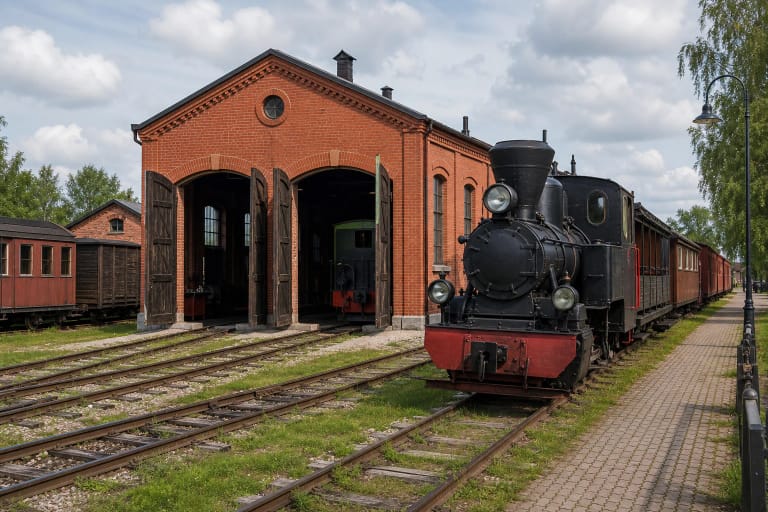
There is no railway museum, surviving track, or operating narrow-gauge train here. The station and shed at number 16A contain a restaurant, so interior access follows the venue's arrangements, normally as a diner or event guest. The former staff residence at number 16 is used for accommodation and is not an open museum interior.
Opening hours, admission, and practical planning
No heritage admission ticket is needed to view the exterior from the public street. On 20 July 2026, the restaurant's official website listed these hours: Monday 11:00-18:00, Tuesday 11:00-20:00, Wednesday and Thursday 11:00-22:00, Friday 11:00-23:00, Saturday 12:00-23:00, and Sunday 12:00-18:00. Hours, events, and menu prices can change, so check the official site before travelling and reserve a table if you want to go inside.
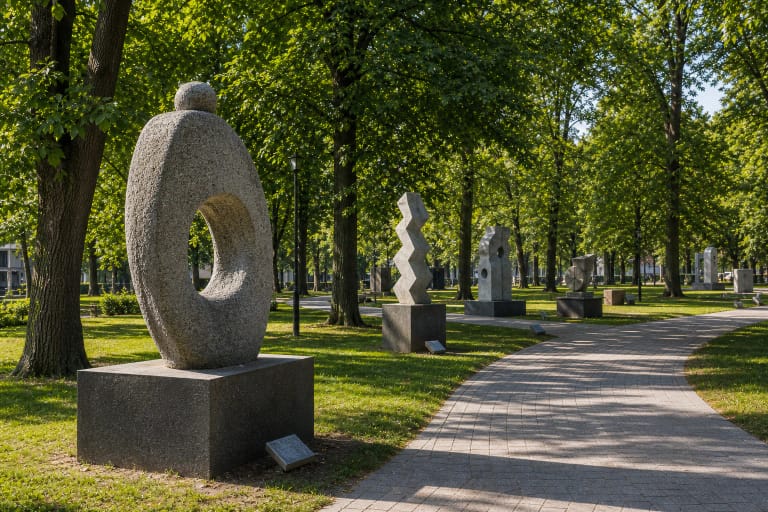
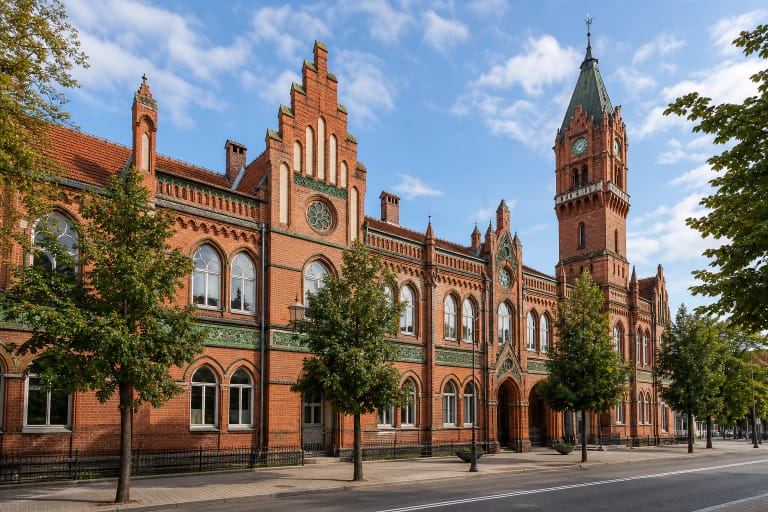
The restaurant states that it offers free parking and is adapted for disabled visitors, but this page has not independently audited the step-free route, door widths, or accessible toilets. Allow 15-30 minutes for the exterior alone, or roughly 1-2 hours with a meal. The nearby Klaipėda Sculpture Park and the architecture of Liepų Street combine naturally with the station.