- Place
- Kaišiadorys District Municipality
- Region
- Kaišiadorys District
- Type
- railway heritage water tower
- Address
- Geležinkeliečių Lane 2A, Kaišiadorys, Kaišiadorys District Municipality
- Coordinates
- 54.86366, 24.45907
- Visit duration
- 20-40 minutes for the tower exterior and railway setting
- Best time
- during the day, when the brickwork and timber upper volume are easiest to see
Kaišiadorys station water tower
A tower beside the historic railway station
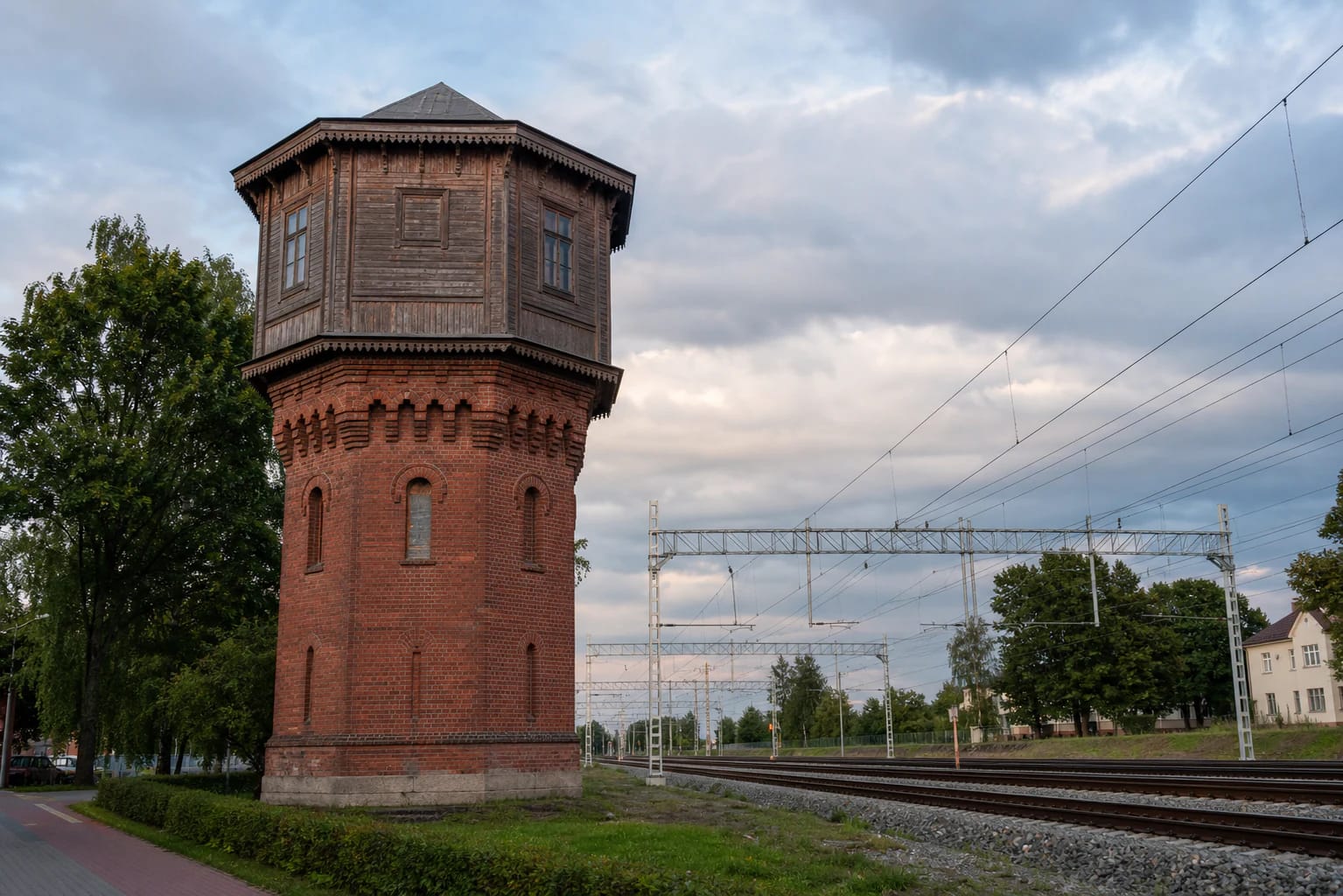
Kaišiadorys Railway Station Water Tower stands at Geležinkeliečių Lane 2A beside the working railway line in Kaišiadorys. It is a separate heritage landmark in the station setting, so it should not be confused with the station building itself or with the later municipal water tower at another point in Kaišiadorys.
The coordinates 54.863657, 24.459071 mark the tower's location, not permission to enter railway property. View it from a legally accessible public space, stay off tracks, embankments, and fenced areas, and follow railway staff instructions and safety signs.
An 1883 function in the steam era
The railway-station water tower was built in 1883. During the steam era, stored water was needed by locomotives, while the supply system also served the station and railway workers' homes.
The setting explains why the tower mattered: water was essential steam-traction infrastructure rather than a decorative addition. As steam locomotives disappeared from everyday railway work, this kind of water-supply structure lost its original technical role, but its volume remained as evidence of the town's railway development.
Red brick below, timber above
The exterior is distinguished by a contrasting material composition. The lower volume is red brick with projecting masonry details and cornices, while the upper part is a large timber form that reads as octagonal. Its silhouette is easy to recognise from the station approaches and shows that the building was designed for more than an anonymous utility role.
Railway development helped the settlement grow: two railways met here in 1871, and the station complex contained almost forty structures, including water towers. This tower lets visitors understand that large complex through one surviving piece of technical infrastructure.
A safe exterior visit to Kaišiadorys Railway Station Water Tower
The tower is intended for exterior viewing; there is no separate visitor ticket, interior exhibition, or regular tour timetable. Plan a short exterior visit, as the tank and upper level are not open to visitors.
The safest photographs come from a public path at a distance from the tracks and railway equipment. Do not climb the structure, cross tracks for a better angle, or ignore signals. Wet weather can make paths slippery, and maintenance work or temporary restrictions may change the usual approach.
Plan a safe exterior visit to the station tower
Allow about 20-40 minutes for the tower exterior and its immediate setting. Daylight makes the red brick and timber upper volume easiest to see, and the stop can be combined with Kaišiadorys Cathedral, Algirdas Brazauskas Park, or another town-centre destination. This is a technical-heritage pause, not a multi-hour indoor exhibition.
Photograph from the public path, keep away from the tracks and railway equipment, and check municipal information and the safety signs on site before travelling.