- Place
- Neringa Municipality
- Region
- Neringa
- Type
- 19th-century neo-Gothic Evangelical Lutheran church
- Address
- L. Rėzos g. 56, Juodkrantė, Neringa
- Coordinates
- 55.53179, 21.11715
- Visit duration
- 20-40 minutes; longer for a service, concert, or visit to the old cemetery
- Best time
- a quiet morning for the architecture, or the time of a service or concert announced in advance
Juodkrantė Lutheran Church, Juodkrantė Church of St Francis of Assisi
How to read the church from outside
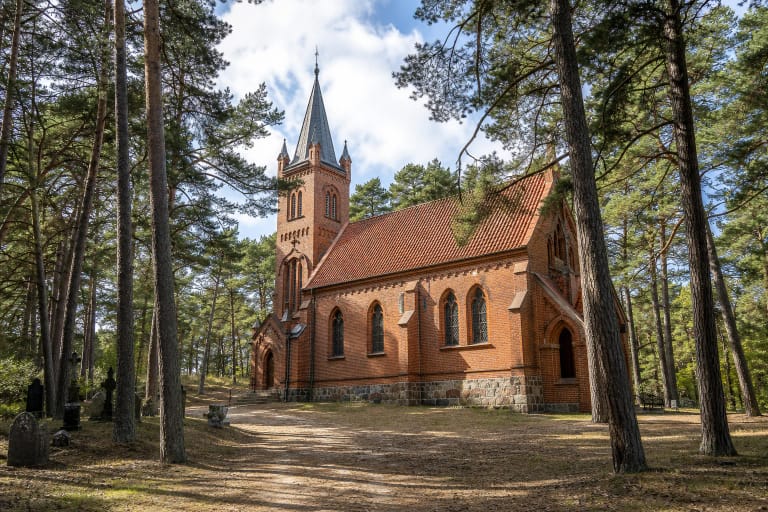
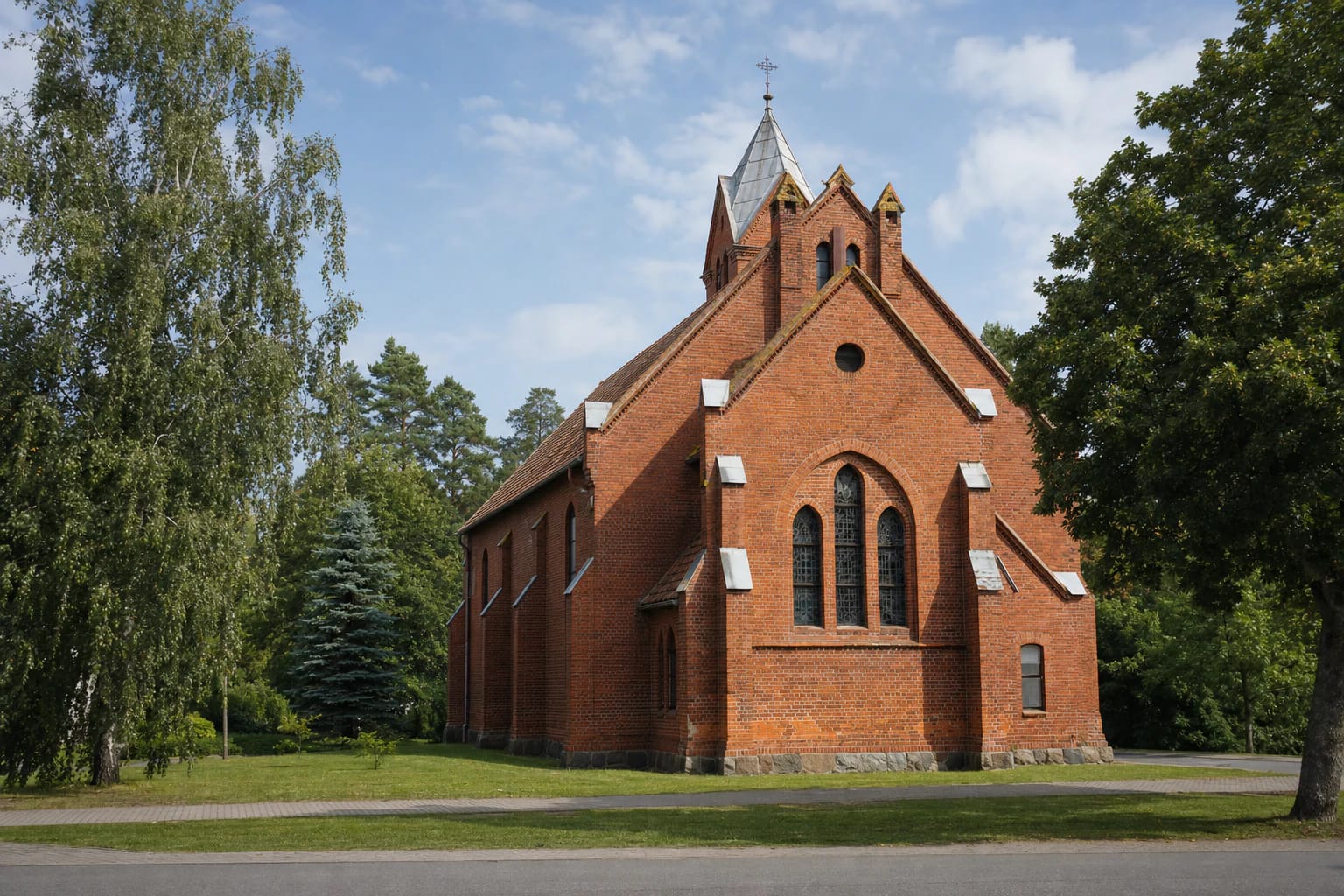
The church stands on L. Rėza Street, the spine of historic Juodkrantė, close to the Curonian Lagoon promenade. Red-brick masonry, pointed-arch windows, and a modest metal spire distinguish it from the surrounding fishermen's houses and villas, yet its scale remains restrained and suited to a small coastal community.
The church is protected in Lithuania's Register of Cultural Property under code 16009. Its listed features include the rectangular single-nave volume with one tower, a lower apse and sacristy, the facade design, tower and metal-cross spire, as well as the organ-loft balcony, wall decoration, and paintings inside.
From sand-buried Karvaičiai to the church of 1885
The origins of the Juodkrantė sanctuary lie in Karvaičiai. After the village was finally buried by sand during the winter of 1791, some residents moved to Juodkrantė and carried their former parish tradition with them. A small reed-roofed wooden church, built partly with timber from the old Karvaičiai church, was consecrated on 28 July 1795.
That wooden building burned on 23 June 1878. Pastor Edwin Richter sought funds for its replacement, and the new masonry church, built to a design by prominent Prussian architect Friedrich August Stüler, was consecrated on 2 August 1885. The present building therefore also marks the community's recovery from both moving sand and fire.
Neo-Gothic architecture for a fishing parish
This is not a large city cathedral. One nave, a front tower, lower apse, and sacristy form the composition, while pointed openings, patterned brickwork, and steep roofs establish its architectural rhythm. The simple structure matched the scale of a fishing village, and the tower became an important part of Juodkrantė's silhouette as seen from the lagoon.
Curonian and Prussian Lithuanian fishermen made up most of the 19th-century parish, and services were also held in Lithuanian. The church is therefore more than a Prussian neo-Gothic example: it was a meeting place for Curonian, Lithuanian, German, and later Roman Catholic communities.
Warehouse, Museum of Miniatures, and restored sacred use
After the Second World War emptied much of the old parish, the church was nationalised and used as a warehouse. The refurbished building became the Museum of Miniatures in 1976, which helped it survive but gave it a secular purpose for several decades.
The church was returned to the Evangelical Lutheran community in 1988, and Juodkrantė's Roman Catholics have also used it since 1989. An organ donated by the Dällikon-Dänikon Reformed parish in Switzerland was installed in 2009. Services, classical concerts, commemorations, and other cultural events take place here today.
Access, opening hours, and respect for an active church
The exterior can be viewed from L. Rėza Street at any reasonable time, but the interior does not operate as a continuously open tourist museum. Official sources publish no fixed daily visitor timetable or admission price, so anyone wishing to go inside should check parish services and Neringa cultural-event notices or contact the parish in advance.
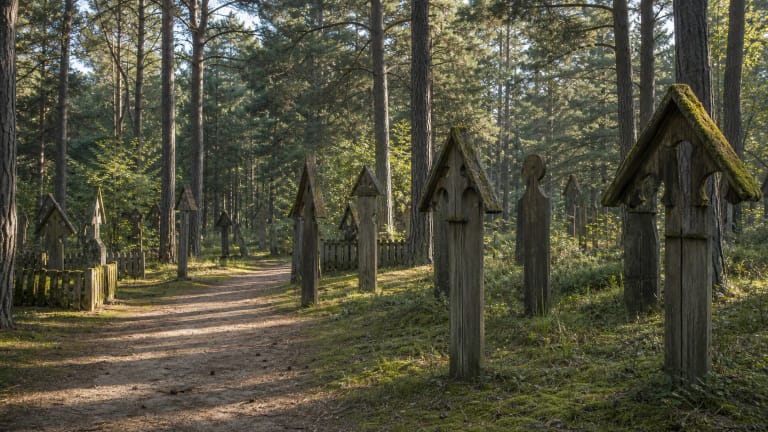
During a service or event, avoid disturbing the congregation, do not photograph people without permission, and dress with appropriate restraint. Allow 20-40 minutes for the architecture; for a fuller route, combine the church with the Liudvikas Rėza Cultural Centre, lagoon promenade, and Juodkrantė's old cemetery.