- Place
- Klaipėda City Municipality
- Region
- Klaipėda
- Type
- bastion-fortification complex and city park
- Address
- Bastionų g., Pylimo g., Klaipėda
- Coordinates
- 55.70932, 21.13803
Jonų Kalnelis, Klaipėda Bastion Complex, Geldern and Purmark bastions
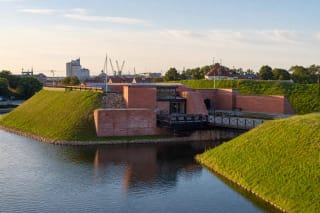
Jono Kalnelis - a fragment of Klaipėda's bastions
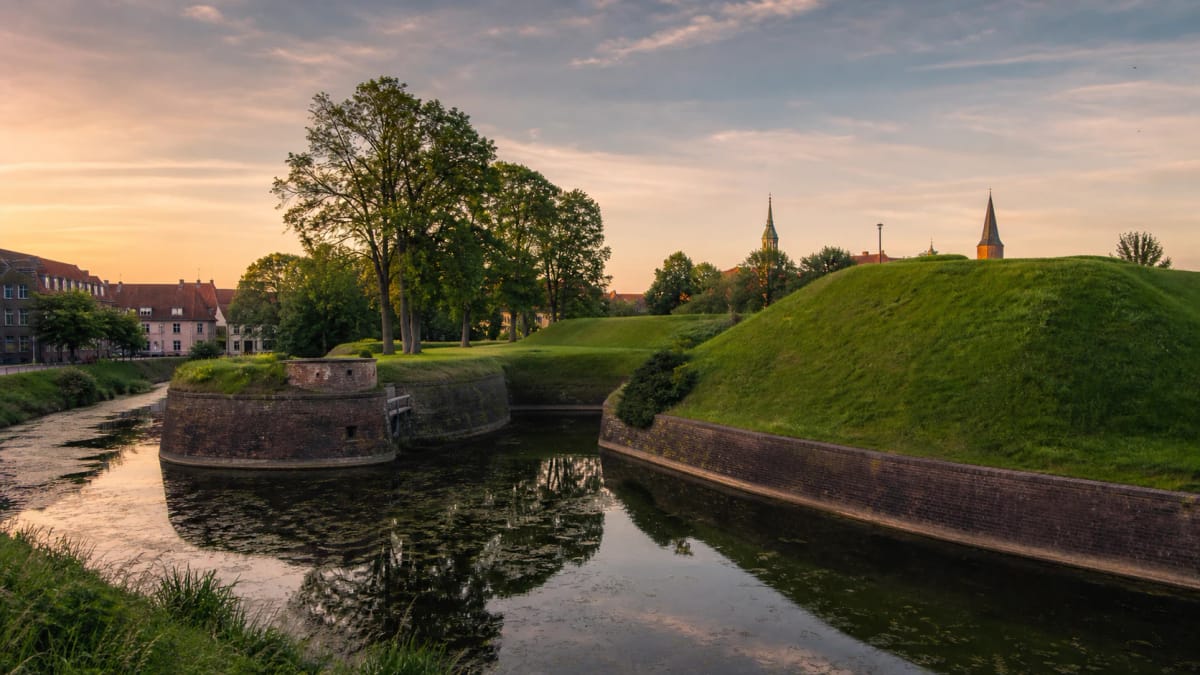
To many visitors Jono Kalnelis looks like a pleasant old-town green space with water, paths, and an event atmosphere. Under that image, however, lies the history of Klaipėda's ring of town bastions: according to the Encyclopedia of Lithuania Minor, Jono Kalnelis is the only well-preserved fragment of that bastion ring.
In the Cultural Heritage Register the site is listed as the Bastion Complex (code 10457), with historical, technological, and architectural value. For that reason Jono Kalnelis is best visited not as a separate park, but as a surviving piece of the city's defensive relief.
From castle bastions to a ring around the town
The Encyclopedia of Lithuania Minor distinguishes two layers of Klaipėda's bastions: a bastion was built at Klaipėda Castle in the sixteenth-seventeenth centuries, while in the seventeenth-eighteenth centuries a ring of bastions encircled the town itself. The castle bastions (Prince Friedrich and Prince Karl) grew into a separate Klaipėda castle and bastion complex, whereas the remnant of the town ring is Jono Kalnelis.
Fortifications protected the town from the east and south, while the Danė covered it from the north, so the town could be entered only through gates. The relief of Jono Kalnelis, its water lines and slopes, is today one of the best ways to read this Dutch-type fortress logic.
Geldern and Purmark bastions, ravelin, and moat
The Bastion Complex is made up of the Geldern Bastion (code 23542), the eastern curtain with posterns, the Purmark Bastion, the old ravelin, the moat, and the remains of the Prussian and Mill bastions. The Jono Kalnelis territory covers the Geldern and Purmark bastions, the curtain, the old ravelin, and the moat - the part a visitor sees as a green island surrounded by water.
According to the register, the Dutch-type bastion system was designed by Captain Engineer René Carraccioli de Niastre. The pentagonal bastion form allowed defenders to fire along their own fortress walls, so the bastions were not abstract earth banks but concrete parts of a defensive system with names and functions.
St. John's Church and the place name
The place name is linked with the St. John's Evangelical Lutheran Church that once stood here, built in 1706 and destroyed after the Second World War. From it the hill took the name Jono (often Jonų) Kalnelis, so the site joins Klaipėda's defensive and sacred memory.
The church is gone today, but the name recalls that the bastion landscape was woven into the living fabric of the city. This page uses Jono Kalnelis as the canonical form, with Jonų Kalnelis given as an equal alternative name.
War history and the restoration of the bastions
In the seventeenth and eighteenth centuries Klaipėda was taken more than once by Swedish and Russian armies. The town fortress is also linked with the story that, during the Seven Years' War, when the Russians occupied Klaipėda, its commandant was the later-famous general Alexander Suvorov - an episode best treated as tradition rather than closely documented local history.
The bastion remains were conserved and adapted for visitors in the late twentieth century (1994-1997), and the Jono Kalnelis surroundings were tidied later. So the site shows not the original fortress but a conserved defensive relief turned into a city park.
Public space and visiting
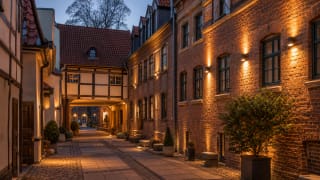
Jono Kalnelis is an open outdoor space, so there is no standard ticket. In summer events take place here, and in the evening it becomes one of the most atmospheric old-town walks; when visiting, protect the slopes and avoid restricted areas.
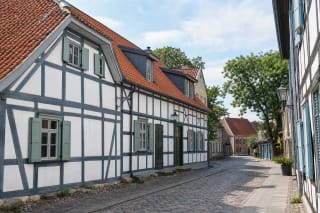
On site, look at the bastion slopes, the water line, and the island shape, and read the history through the terrain. Jono Kalnelis is best combined with the Klaipėda castle site, the Castle Museum, Friedrich's Passage, and old-town streets, so that castle and town defence appear as one system.