- Place
- Imbarė area, Kretinga District Municipality
- Region
- Samogitia
- Type
- Curonian hillfort at the confluence of the Salantas and Pilsupis
- Coordinates
- 56.02600, 21.55600
Pilalė, Imbarė Pilalė
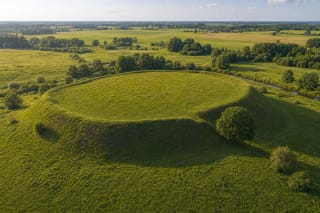
A Curonian hillfort by the Salantas
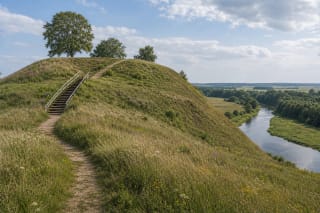
Imbarė Hillfort stands at the confluence of the Salantas and Pilsupis. VLE presents it as a hillfort in Kretinga District, while Saugoma.lt emphasizes its landscape and archaeological value.
The hillfort's other name is Pilalė. In Samogitian hillfort names this word often means a small castle or castle hill, but in Imbarė's case the place is not small in historical significance.
From early fortifications to a Curonian castle
VLE states that Imbarė Hillfort was already fortified in the first half of the first millennium BC and remained in use until the twelfth to thirteenth centuries. This long span saw changes in inhabitants, defence needs, and material culture.
In the tenth to thirteenth centuries Imbarė is considered an important Curonian castle. It was not set on a random hill but in a strategic place where water valleys and higher ground gave a defensive advantage.
The 1253 mention
Imbarė is mentioned in written sources in 1253. This date places it within the history of Curonian lands and the political processes of the Teutonic Order period, when Baltic tribal territories were described, divided, and controlled through written documents.
Local stories sometimes emphasize legends and castle power, but it is important to separate the documented mention from the legendary layer. The year 1253 is a historical reference point; legends are a later form of local memory.
Uprising and abandonment context
The fate of Imbarė Castle is associated with the thirteenth-century Curonian uprisings and crusader pressure. Research notes suggest that the site was probably abandoned after the circumstances of the 1260-1263 Curonian uprising.
That helps explain why the hillfort is now a quiet landscape while its history contains an intense political and military period. The relief becomes an archive, retaining traces of ramparts, slopes, and settlement.
How to visit
Imbarė Hillfort is an outdoor heritage site without a regular ticket or opening hours. Keep to existing paths, protect the slopes, and do not disturb the ground.
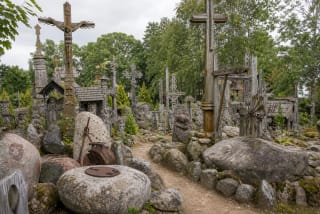
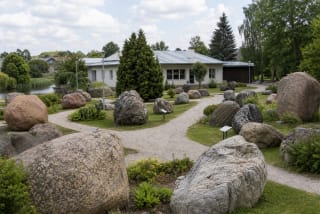
It is best combined with a Salantai-area route: Orvidai Homestead, Kartena Hillfort, Mosėdis Stone Museum, or other north-western Samogitian sites. After rain, grassy slopes can be slippery.