- Place
- Kaunas District Municipality
- Region
- Aukštaitija
- Type
- restored manor estate and event venue
- Address
- Žemaitkiemio g. 10, Žemaitkiemis village, Babtai eldership, Kaunas District
- Coordinates
- 55.06560, 23.79130
Babtynas Manor, Žemaitkiemis Manor
Babtynas-Žemaitkiemis Manor by the Nevėžis
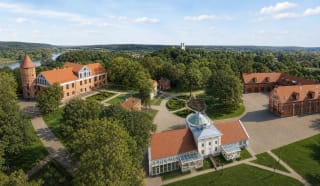
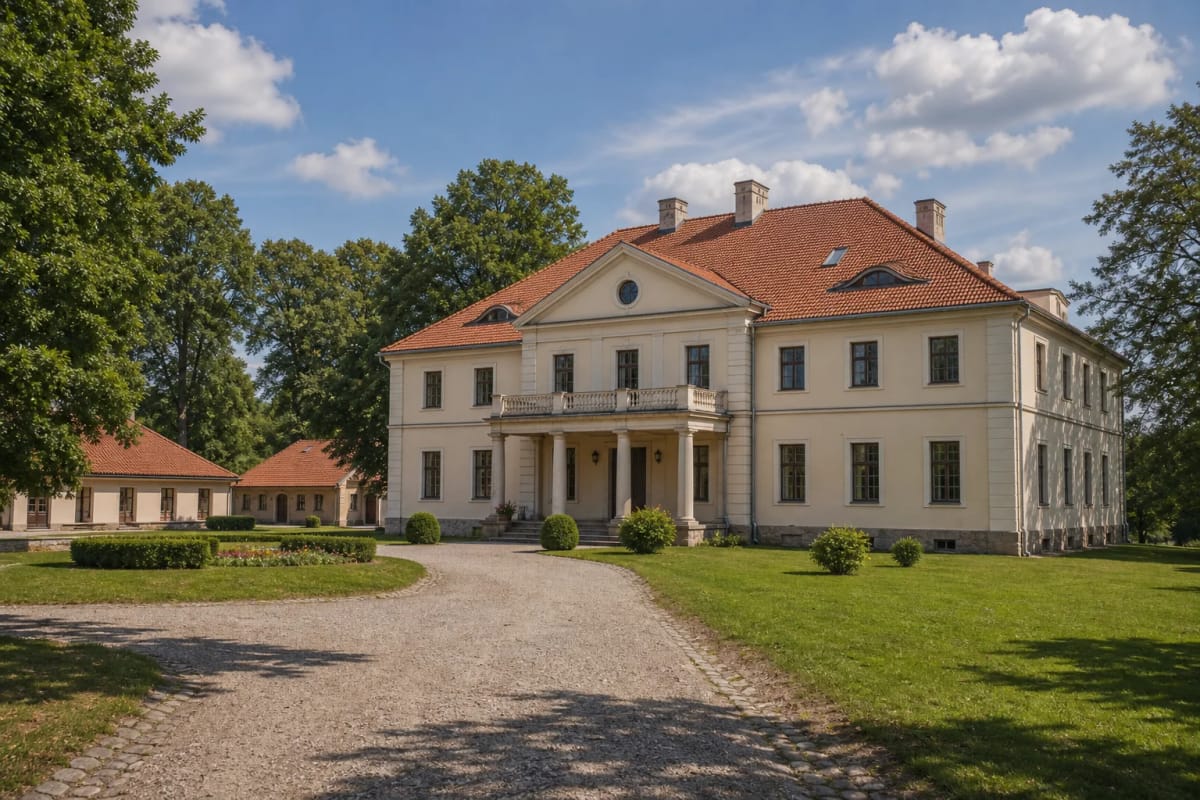
Babtynas-Žemaitkiemis Manor stands on the right bank of the Nevėžis, about 2 km southwest of Babtai in Kaunas District. It is an old manor site reaching back to the sixteenth century; after Soviet-period decline it was rebuilt by a private owner and now functions as a heritage and event venue.
Do not confuse this Žemaitkiemis with the separate Žemaitkiemis in Ukmergė District. This estate is in Kaunas District, formerly Babtynas, set apart from Babtai town on the other side of the Nevėžis.
From the Šiukštos to the Tiškevičiai
The manor near Babtynas was founded in the sixteenth century by the Šiukšta family; cellars of the palace and treasury may survive from that time. In the late seventeenth and eighteenth centuries the Prozorai owned it for about a century, a flourishing period when masonry construction began around 1730.
In 1797 the Prozorai sold Babtynas to Major Burchard von Korff; soon it passed to the Giedraičiai princes, and in 1830 to Count Benediktas Tiškevičius. The Tiškevičiai owned it until the First World War, built eclectic palace buildings, and supported the 1863 uprising.
General Vladas Nagevičius and Žemaitkiemis
After the 1922 land reform the manor centre was granted to Lithuanian army volunteer General Vladas Nagevičius (1881-1954), who lived here in 1922-1944. On his initiative the locality was named Žemaitkiemis. Nagevičius created a model farm with spacious stables, and the manor became known for Midsummer celebrations attended by Kaunas intellectuals and state officials.
Nagevičius was a physician and archaeologist who founded the War Museum in Kaunas and researched the Apuolė and Įpiltis hillforts. He withdrew to the West in 1944, and in 1995 his remains were reburied in Kretinga.
Estate and collections today
During the Soviet period the palace housed a collective-farm office and cultural centre, while only a few buildings survived from the once large estate. In 1999 Mindaugas Šventoraitis acquired the manor, restored it, and began hosting concerts, performances, and creative evenings. Algimantas Puipa's film Miegančių drugelių tvirtovė (Fortress of Sleeping Butterflies) was filmed here in 2011.
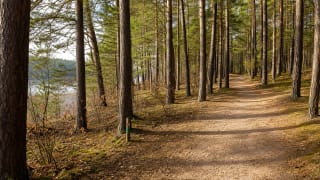
The protected estate includes buildings in different styles: the eclectic palace, Romantic granary, treasury with Classicist features, and barn. The granary holds a motorcycle collection, the barn is adapted as a summer concert hall, and the estate is surrounded by a park with linden avenues and ponds.
Visiting
The manor is a private heritage and event space, so visits, guided tours with collections, and celebrations must be arranged in advance. During research, listed hours were only indicative and prices were not published, so contact the manor directly before going.
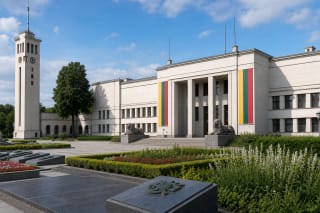
Pažaislis Music Festival concerts take place here every year, making the warm season the most attractive time to visit. The trip combines well with Raudondvaris Manor, the Tiškevičiai residence, or the Vytautas the Great War Museum in Kaunas, founded by Nagevičius.