- Place
- Vandžiogala, Kaunas District Municipality
- Region
- Kaunas District
- Type
- Wooden folk-architecture church with bell tower
- Address
- Parko g. 4, Vandžiogala, Kaunas district
- Coordinates
- 55.11710, 23.96010
Vandžiogalos Švenčiausiosios Trejybės bažnyčia
Vandžiogala Church in a Multicultural Town
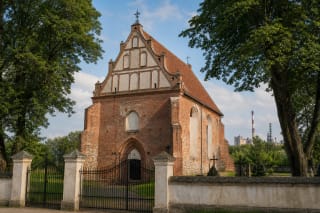
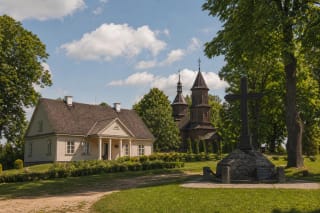
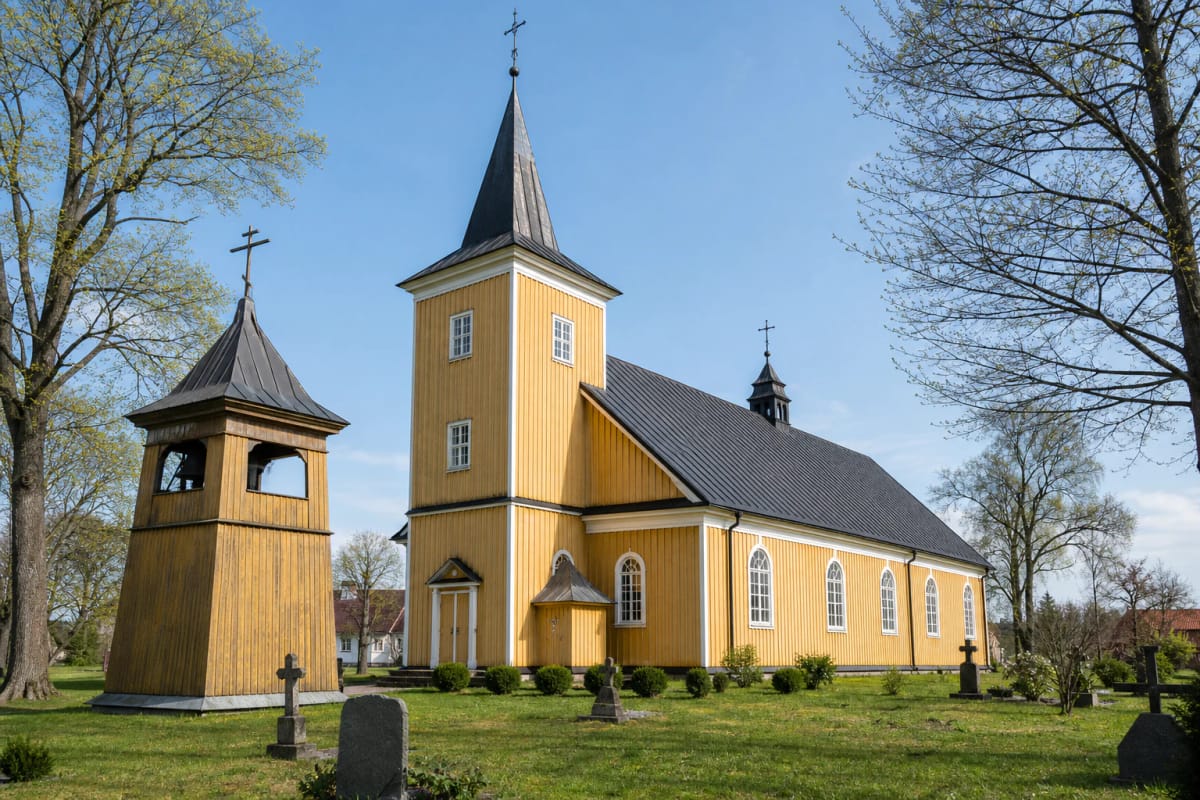
Vandžiogala Holy Trinity Church stands in Vandžiogala, about 29 km north of Kaunas. It is a modest but warm wooden folk-architecture church on the bank of the Urka stream. Its importance comes not only from architecture but also from the town's multicultural history.
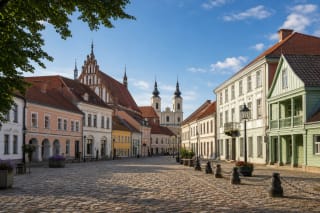
Vandžiogala has long been inhabited by Lithuanians, Poles, Jews, and Russian Old Believers. Traces of this diversity include Polish-language Mass in the church and the old Jewish cemetery nearby, where a Holocaust memorial was unveiled in 2018.
Construction in 1830
The first church in Vandžiogala was built in the seventeenth century; sources mention 1646 or 1655. In 1817 the whole town burned, and the church burned with it. The present wooden folk-architecture church was built in 1830 through the efforts of the pastor and parishioners, and in 1880 the tower and bell tower were added.
The church preserves an old bell cast in 1721, listed among cultural valuables. The church itself was entered in the Register of Cultural Property in 1993.
Multicultural Region and Polish-Language Mass
Vandžiogala is one of the few places in central Lithuania where a Polish community still lives, and Sunday Masses are celebrated in both Polish and Lithuanian. This is a living witness to the region's multicultural history.
A famous family name is also linked with the town: ancestors of Nobel Prize-winning poet Czesław Miłosz are buried in the old cemetery. Participants of the 1831 and 1863 uprisings are buried there as well.
Interior and Valuables
The church has a rectangular plan, an apse, a high tower, and three naves; the churchyard is enclosed by a picket fence with post gates, and two small masonry chapels stand nearby. This kind of wooden folk architecture is typical of nineteenth-century rural Lithuanian churches.
One altar contains a grace-famous cross with a sculpture of the Crucified Christ, hung with silver votive offerings, while near the high altar stands a valuable Pietà sculpture. Some valuables are believed to have survived the 1817 fire.
How to Visit Vandžiogala Church
The church fits well into a Kaunas-region route. The church itself usually takes 30-45 minutes; with the old cemetery and Jewish cemetery, allow about an hour. The most interesting time is Sunday, when Mass is held in Polish at 9:00 and Lithuanian at 10:00.
This is an active parish church, so entry is usually free, and visiting is best aligned with Mass time. During research, the recommendation was to check the exact Mass schedule on the official Kaunas Archdiocese or parish page.