
Winter
The Šyvis white-horse custom in Gražiškiai
Between Christmas and Epiphany; performance dates vary
Despite its name, this custom does not involve making a real horse dance. A performer wears a horse-shaped disguise and becomes the central character of a group of mummers. In Gražiškiai, a town in Vilkaviškis district, the custom belongs to the period between Christmas and Epiphany. The whole encounter with the household explains it better than the spectacular leap alone.
Tradition context
- When
- Between Christmas and Epiphany; performance dates vary
- Season
- Winter
- Themes
- Gražiškiai, Sūduva, Christmas season, white horse, mummers, visiting households, community
The Šyvis custom maintained in Gražiškiai brings together household visits, good wishes, music and masked performance. A person wears the horse disguise; the community keeps the custom alive by teaching and renewing its roles.
What makes the Gražiškiai example distinctive?
In the inventory account, the horse demonstrates its agility by jumping over a bench, chair or another raised object. The accompanying performers prepare this moment: the space is swept, and the soldiers honour the hosts and sing. The leap thus belongs to a shared performance that depends on the other participants too. The custom requires physical preparation and the ability to enter the sequence at the right moment.
The white horse figure alone does not define Šyvis. The custom combines an agreed visit, separate tasks for the characters and wishes addressed to the hosts. When describing a performance, begin by recording its location and occasion. A visiting group and a festival stage show may use similar masks, yet their relationships with hosts and spectators differ. A costume by itself cannot tell us which form of the custom we are watching.
Evidence and interpretation
The inventory mentions written evidence from the eighteenth century and a possible route from Prussia. “Possible” matters: this is not an undisputed date of origin. The catalogue entry for Arūnas Vaicekauskas and Rimantas Balsys’s 2025 book introduces research on the characters, visiting households and horse symbolism. These themes invite broader comparisons; they do not establish every present-day gesture as a direct survival of an ancient ritual.
A living tradition also has a history of change
The Gražiškiai community is identified as the custom’s custodian. The book abstract in the Lituanistika database dates its inclusion in the inventory to 2023. That date concerns heritage recognition, not the custom’s beginning. Likewise, saying that a practice survives does not prove that it was performed every year without interruption. Questions of continuity include who remembered earlier performances, who assembled a new group and how the setting changed. Revival and deliberate teaching belong to the history of the tradition.
Its vitality depends on people passing on a role. A mask can survive in a museum, but voice, movement, interaction and improvisation have to be learned through performance. This helps explain why community members matter more than an allegedly unchanging “authentic” script. A new performer inherits local knowledge while necessarily performing in different circumstances.
How to explore the custom without reconstructing it from fragments
When watching a recording, notice its opening: does it show the approach to the hosts, or begin with the leap? Record who sings, when the accompanying characters join in and how they interact with bystanders. A short clip can reveal movement without showing the full visit. In a classroom presentation, distinguish elements visible in the source from those merely described by the narrator.
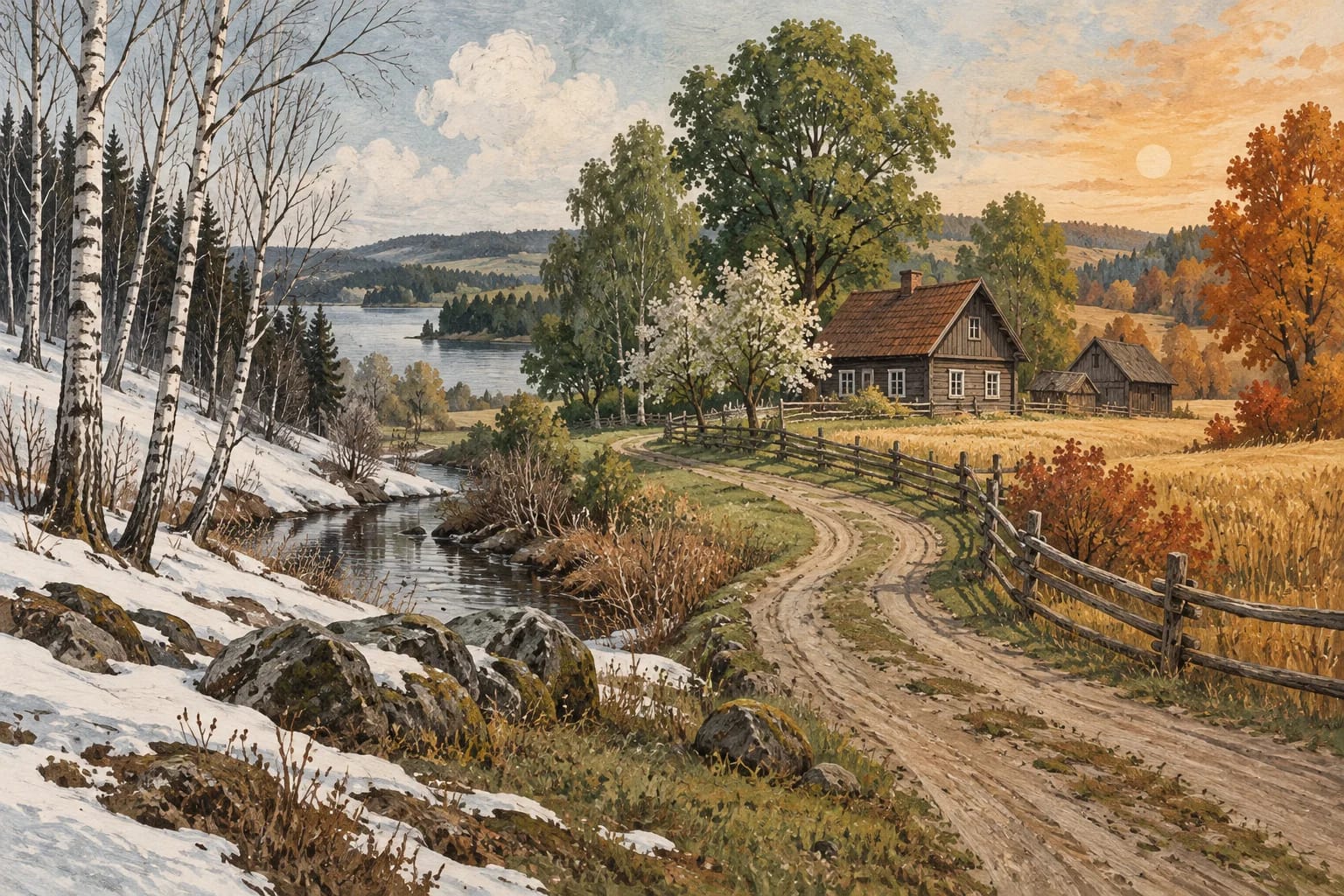
To see a performance, check the community’s or cultural institution’s announcement for the relevant year. The customary season is not an events timetable. This page does not republish archival sound or video: the source links lead to descriptions and book metadata. The thematic illustration locates the subject in the seasonal cycle; it does not replace a dated photograph from Gražiškiai.
Main The Šyvis custom customs and meanings
The national intangible cultural heritage inventory describes a sequence with distinct roles. It is a local example, rather than a compulsory script for every Lithuanian group of mummers.
Asking to enter. The leader addresses the household; the visit begins with the hosts’ agreement.
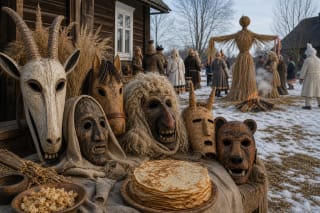
Sharing the roles. A sweeper prepares the space, soldiers take their places and the horse displays its agility; a bear and a devil also appear in the group.
Learning together. Masks and clothes are prepared, the group rehearses and younger participants learn from experienced performers.
The Šyvis custom: songs, sutartines, and related pages
Christmas and Epiphany explain the boundaries of this winter visiting season. Shrovetide offers a comparison with masked visitors at a different point in the calendar.

The Šyvis custom sources and useful pages
The Šyvis custom: frequently asked questions
Is Šyvis a real horse?
No. A person plays the horse using a horse-shaped disguise.
Is this a Shrovetide custom?
The Gražiškiai custom belongs to the period between Christmas and Epiphany. Similar masked figures do not make the two festivals identical.