
Lithuanian traditional foods
Juoda ruginė duona
Juoda ruginė duona, Lithuanian black rye bread, is one of Lithuania's most important food symbols: fermented from rye flour, often scalded, flavored with caraway seeds, and eaten daily, on holidays, and with many traditional dishes.
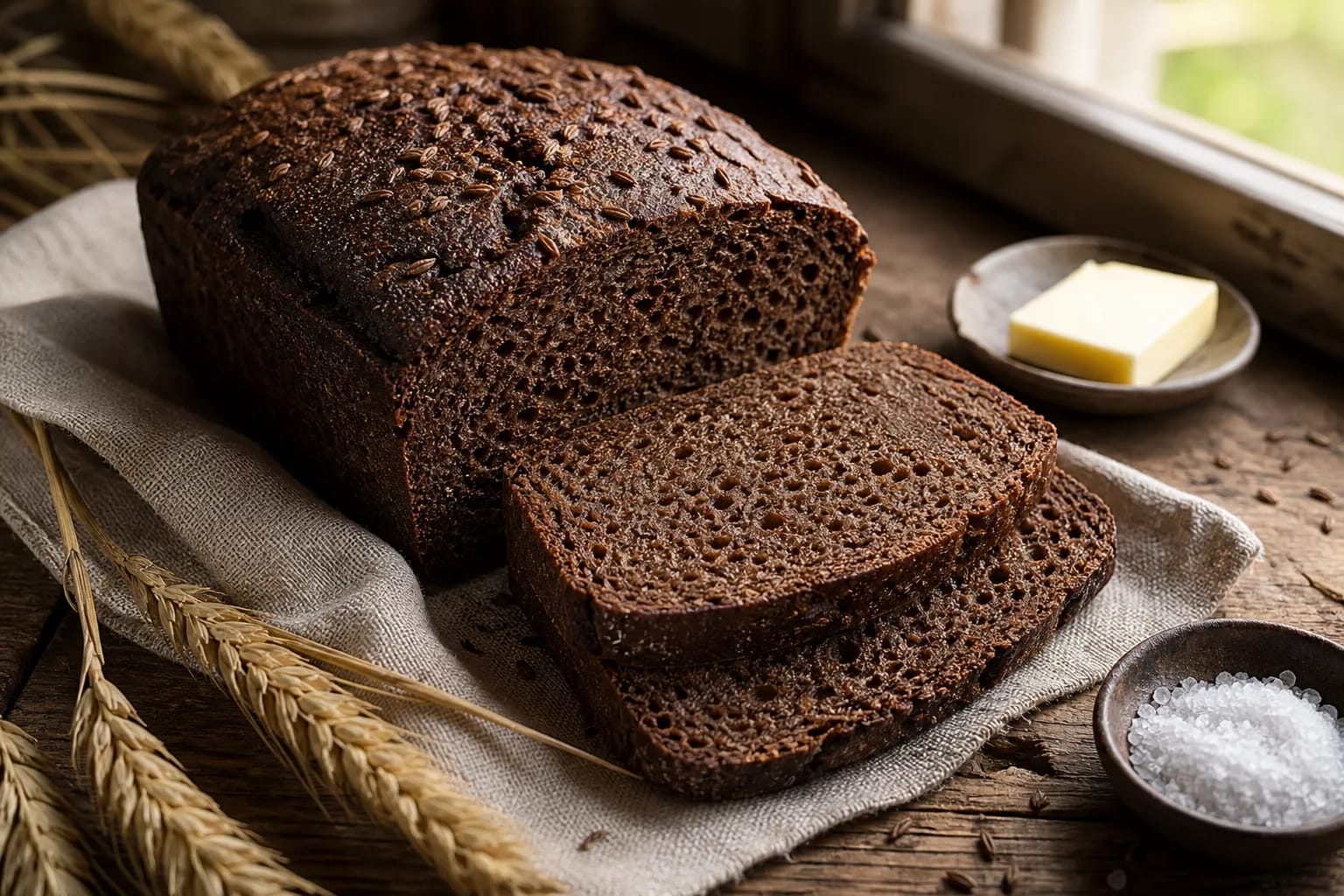
Food and heritage context
- Category
- Bread and grain dishes
- Type
- fermented rye bread
- Heritage status
- living tradition
- Context
- Rye, sourdough starter, scald, caraway seeds, bread oven, respect for bread, everyday table
Names and variants
Rye bread, Black bread, Homemade rye bread
Why is rye bread so important?
Black rye bread was long the foundation of everyday food in Lithuania. It accompanied field work, family meals, travel, receiving guests, and the festive table. According to the Universal Lithuanian Encyclopedia, in the countryside it remained the main food until the mid-twentieth century; during serfdom, everyday bread was bėralinė bread made from unsifted grain flour, while pure rye bread was baked only for holidays.
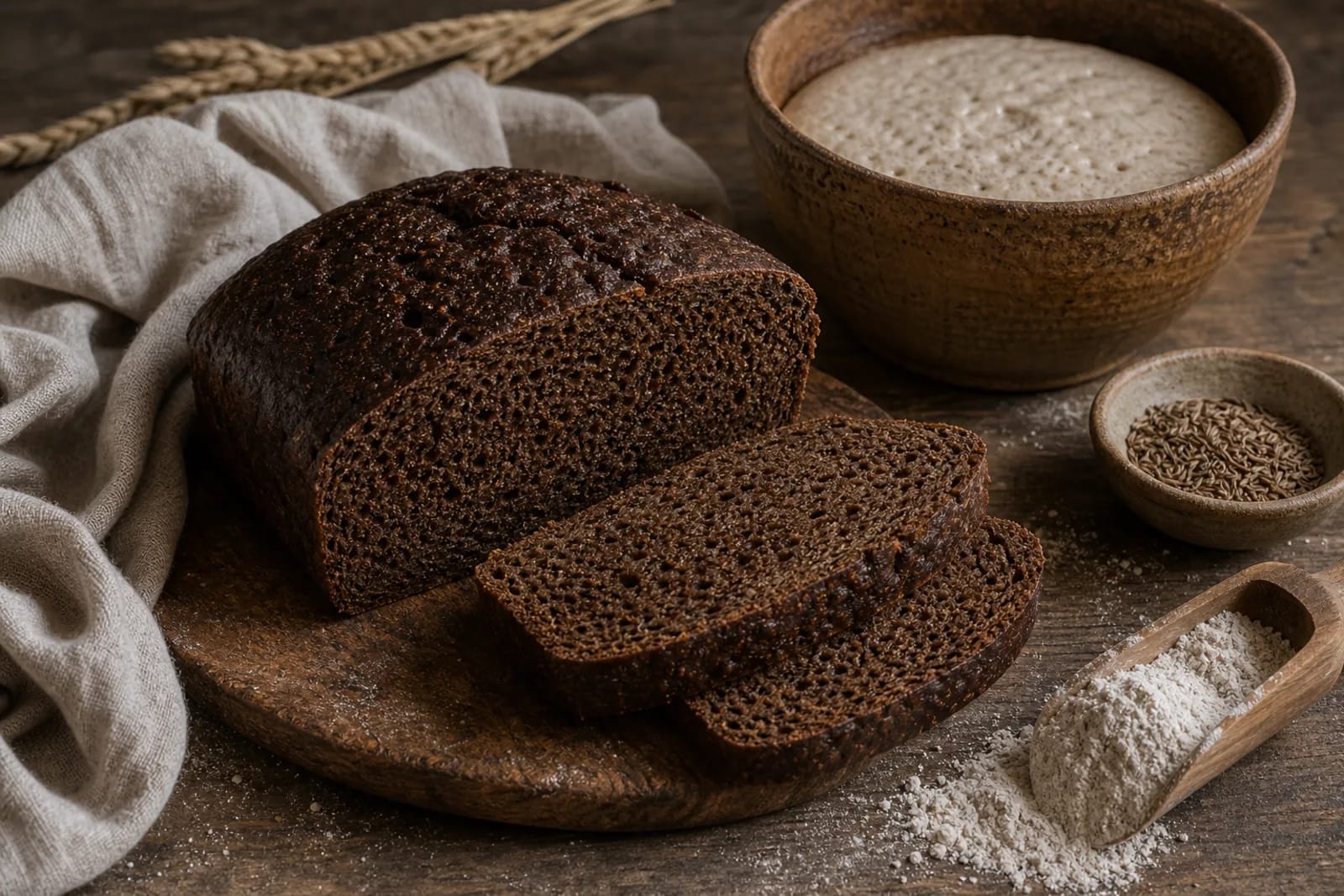
Bread was understood not only as a product but as a sign of work, land, home, and blessing. That is why bread-related customs have a strong element of respect.
Starter and scald
Sourdough starter gives rye bread acidity, aroma, moisture, and longer keeping quality. Unlike yeasted white bread, rye bread relies on fermentation.
A scald, in which part of the flour is mixed with hot water, is characteristic of many Lithuanian bread traditions. It gives the bread sweetness, depth, and a moister crumb.
Caraway and bread flavor
Caraway seeds are one of the most recognizable seasonings for rye bread. They pair especially well with sourdough acidity, butter, cheese, lašiniai, and fermented vegetables.
Even so, not all Lithuanian bread has to include caraway. More important is the balance of rye, starter, crust, and proper baking.
Respect for bread
In Lithuanian custom, bread was to be respected: a dropped piece was picked up, bread was not wasted, it was shared with a guest, and a cross was made on the loaf.
Today these customs can be read as food ethics. Bread reminds us that food is work and fellowship, not only a commodity.
The Daujėnai bread example
Daujėnų naminė duona is a good example of how the general rye-bread tradition can take a concrete regional form. Its protected geographical indication is connected with local baking practice, sourdough, scald, and a specific product specification.
This does not mean that all black rye bread is Daujėnai bread. Rather the opposite: a protected name helps show how broad and locally varied Lithuanian rye-bread culture is.
Recipe
How is Lithuanian black rye bread made?
At home, black rye bread needs an active starter, patience, and an understanding of wet rye dough. This version is adapted for an oven but keeps the logic of sourdough, caraway, and slow maturation.
Ingredients
Method
- Mix the starter with water, salt, honey or malt, and caraway seeds.
- Stir in the rye flour. The dough should be sticky and thick, but not kneaded like wheat dough.
- Transfer to a greased loaf pan, smooth the surface with wet hands, and leave in a warm place until it rises and the surface begins to crack.
- Bake at 230 °C for 10 minutes, then reduce to 190 °C and bake for another 45-60 minutes.
- Wrap the baked bread in a clean towel and leave it to cool completely. Rye bread is sliced only after it has cooled.
Notes
Rye dough is always stickier than wheat dough. Too much flour makes the loaf heavy.
The flavor improves the next day, when the crumb stabilizes.
Juoda ruginė duona: frequently asked questions
How is black rye bread different from wheat bread?
It is baked from rye flour, usually with sourdough, so it is darker, more sour, moister, and denser than wheat bread.
Is sourdough starter necessary?
For traditional rye bread, starter is essential. Bread raised only with yeast can be tasty, but it will not have the same sour flavor and texture.
What is scalded bread?
It is bread in which part of the rye flour is scalded with hot water. The scald gives sweetness, moisture, and a deeper flavor.
Why is rye dough so sticky?
Rye flour behaves differently from wheat flour, so the dough is less elastic and more sticky. It does not need to be kneaded like wheat dough.
When is the best time to slice black rye bread?
Only after it has cooled completely. Hot rye bread is still stabilizing and may be gummy if cut too early.
Are caraway seeds required in black rye bread?
No, but they are very characteristic of Lithuanian flavor and are often used to season rye bread.
How should black rye bread be stored?
It is best kept wrapped in a linen towel or paper, in a cool, dry place. Airtight plastic can encourage mold.
What is Daujėnų naminė duona?
It is a specific North Lithuanian rye-bread tradition with protected geographical indication status, not a generic name for all Lithuanian bread.