
- Genre
- Wonder tale
- Source status
- variant tradition
- Motifs
- speaking tree, bread, growing wishes, king, transformation into dogs
The tale: an editorial retelling
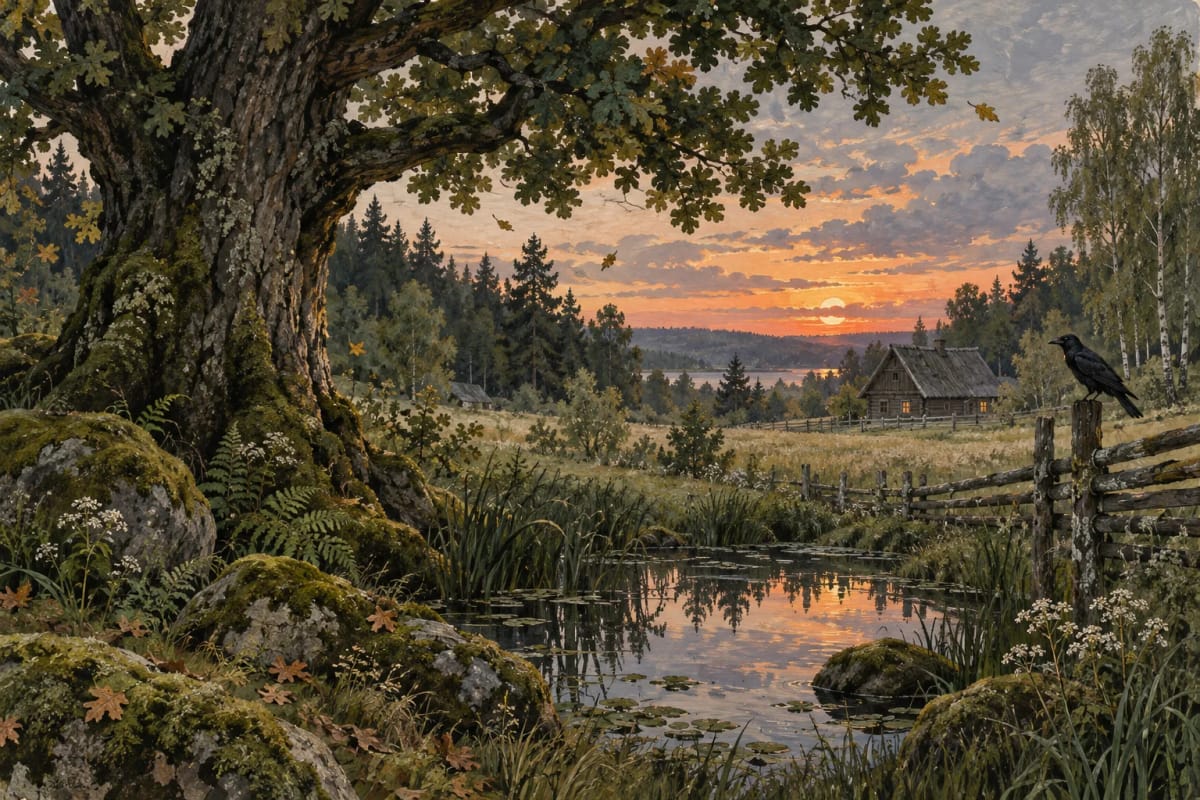
A man went into the forest to cut down a little apple tree. The tree spoke and begged him to spare it. When he replied that he had no bread, it promised that he would have enough at home if he left it standing.
He returned home and found all the bread he needed. Before long, however, he wanted more. After consulting his wife, he went back into the forest, intending once again to cut down the tree.
The apple tree asked what he lacked now that he had bread. The man said that he wanted to be a lord. The tree sent him home with the promise that his wish would come true, and he became a lord.
He enjoyed this life for a while, then consulted his wife again and returned with another demand. This time he wished to be a king. The apple tree granted that wish too.
He became a king, but eventually grew tired even of ruling. He and his wife decided it would be better still to become gods. Carriages set out for the forest carrying the king, queen, their children, and a great company of nobles and servants.
The royal family approached the apple tree intending to cut it down. Again the tree asked what they wanted. The king demanded divine power for himself, his wife and their children.
The apple tree answered that they had better become dogs instead. At once the king, queen and royal children turned into dogs. The nobles and servants who had accompanied them chased and caught them, then began stroking and fondling them.
And that, the tale concludes, is why the nobility are still so fond of dogs.
About this version
This original retelling follows tale No. 195, pp. 560–561, in Lietuvių tautosaka (Lithuanian Folklore), volume III (1965). The note on p. 674 gives A-Th 555A and an earlier publication: Jonas Basanavičius’s Lietuviškos pasakos, book I, p. 10. The text of the 1965 edition and its bibliographic note were consulted.
The wishes in this version follow a clear order: bread, the position of a lord, kingship and divinity. The family does not simply return to poverty at the end; it becomes dogs. The final explanation of noble people’s affection for dogs is also retained. It is the teller’s playful origin story, not a historical explanation of the custom.
Telling and discussing the tale
You can begin each return to the apple tree with the same vocal pattern, then make the new wish clear. Ask listeners when meeting a basic need becomes a pursuit of power. Notice the family’s involvement too: the king voices the final demand, but everyone in his family bears its consequence.