
Lithuanian traditional foods
Skabaputrė
Skabaputrė, also called skabaputra, is a sour dish associated with the Lithuanian–Latvian borderland. Research records both grain and flour versions, challenging the idea of one formula for every Lithuanian or Latvian household.
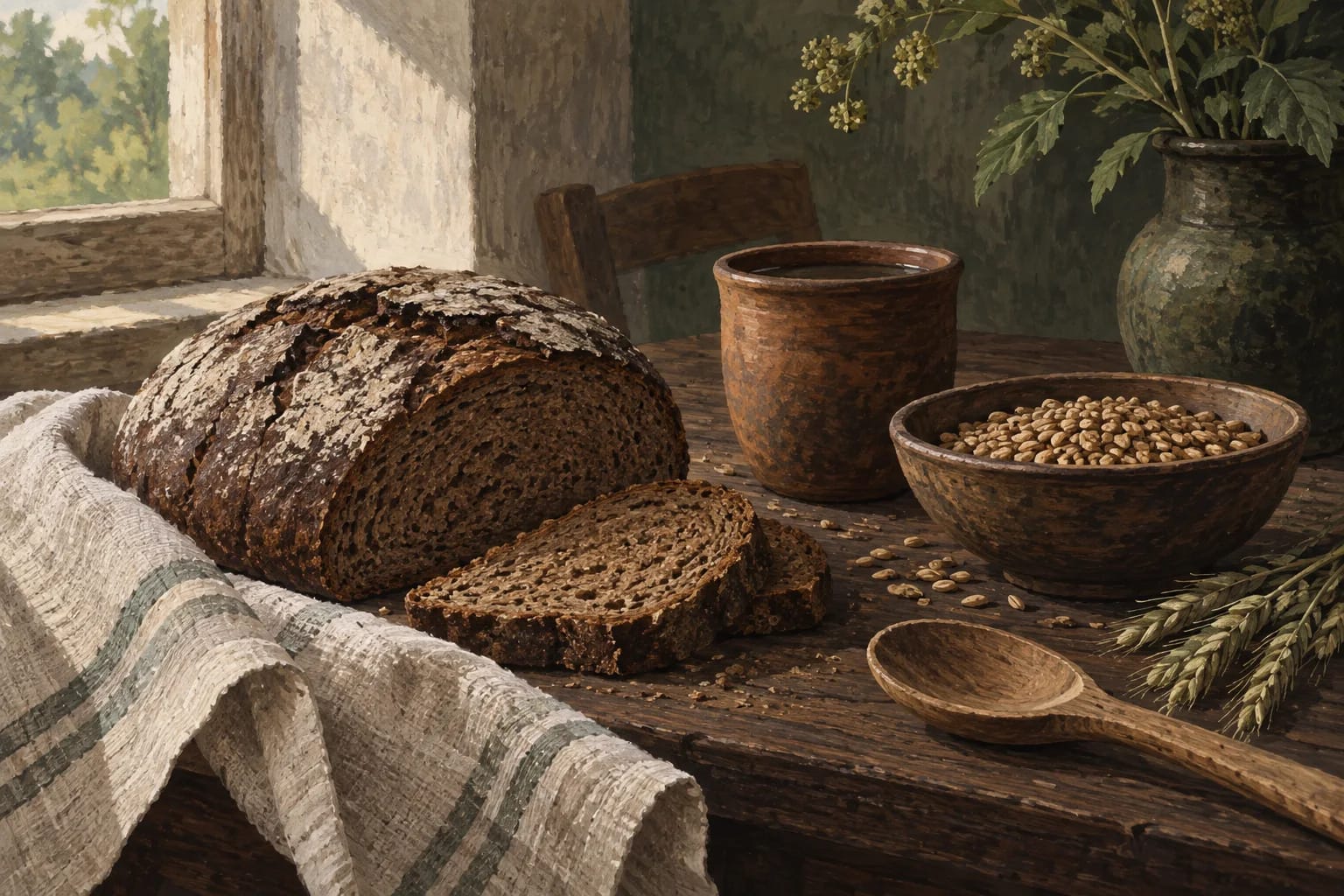
Food and heritage context
- Category
- Soups
- Type
- sour soup with grain or flour and dairy products
- Heritage status
- variants examined in ethnological research by Auksė Noreikaitė
- Context
- Lithuanian–Latvian borderland, Žeimelis, Žagarė, skabaputra, grain, soured milk
Names and variants
Skabaputra, Skaba putra
Food across a border
Ethnologist Auksė Noreikaitė examines the dish in her study of skabaputra’s significance in the Lithuanian–Latvian borderland. Comparing written sources and ethnographic material allows local versions to be separated from broad claims about national cuisine.
The name does not belong exclusively to one present-day municipality. Its history should not be assigned entirely to Žeimelis, Žagarė or another single locality mentioned in the research.
Grain or flour?
Noreikaitė discusses Juozas Šliavas’s record of a flour-based Žeimelis version and questions a strict division between Lithuanian and Latvian recipes. Her research also finds Lithuanians making skabaputra with groats. The ingredient therefore cannot reliably identify the ethnicity of its cook.
That distinction matters when reading family recipes: a flour-based testimony does not invalidate a grain-based one. Preserve the place, person and period attached to each account.
Taste and identity
The study also considers differing attitudes towards the food. An affectionate, dismissive or indifferent family memory does not represent everyone in a community. A present-day introduction can accommodate several experiences without repeating historical mockery as its own judgement. Asking who enjoyed the dish, and under what circumstances, produces a more informative answer than labelling an entire region by a single taste.
Preparation overview
Comparing recorded versions
Historical accounts help identify the dish; they are not presented as modern fermentation or storage instructions. This guide compares their distinguishing features.
Ingredients
Method
- Record the locality and source spelling; a spelling difference alone does not prove a separate dish.
- Check whether the base is grain or flour and which dairy products are specified.
- Distinguish the informant’s memory from a later author’s explanation and a present-day restaurant interpretation.
Notes
A storage practice recalled in an old account is not a tested recommendation for a modern kitchen.
Related pages about Skabaputrė
Skabaputrė: frequently asked questions
Are skabaputrė and skabaputra different foods?
They are related recorded forms of the name; ingredients need to be checked against each local account.
Does it always contain groats?
No. The research discusses grain and flour versions.
Is it exclusively Latvian?
The study examines a shared borderland history and both Lithuanian and Latvian experiences; a single ethnic label is insufficient.