
Lithuanian traditional foods
Pasukos
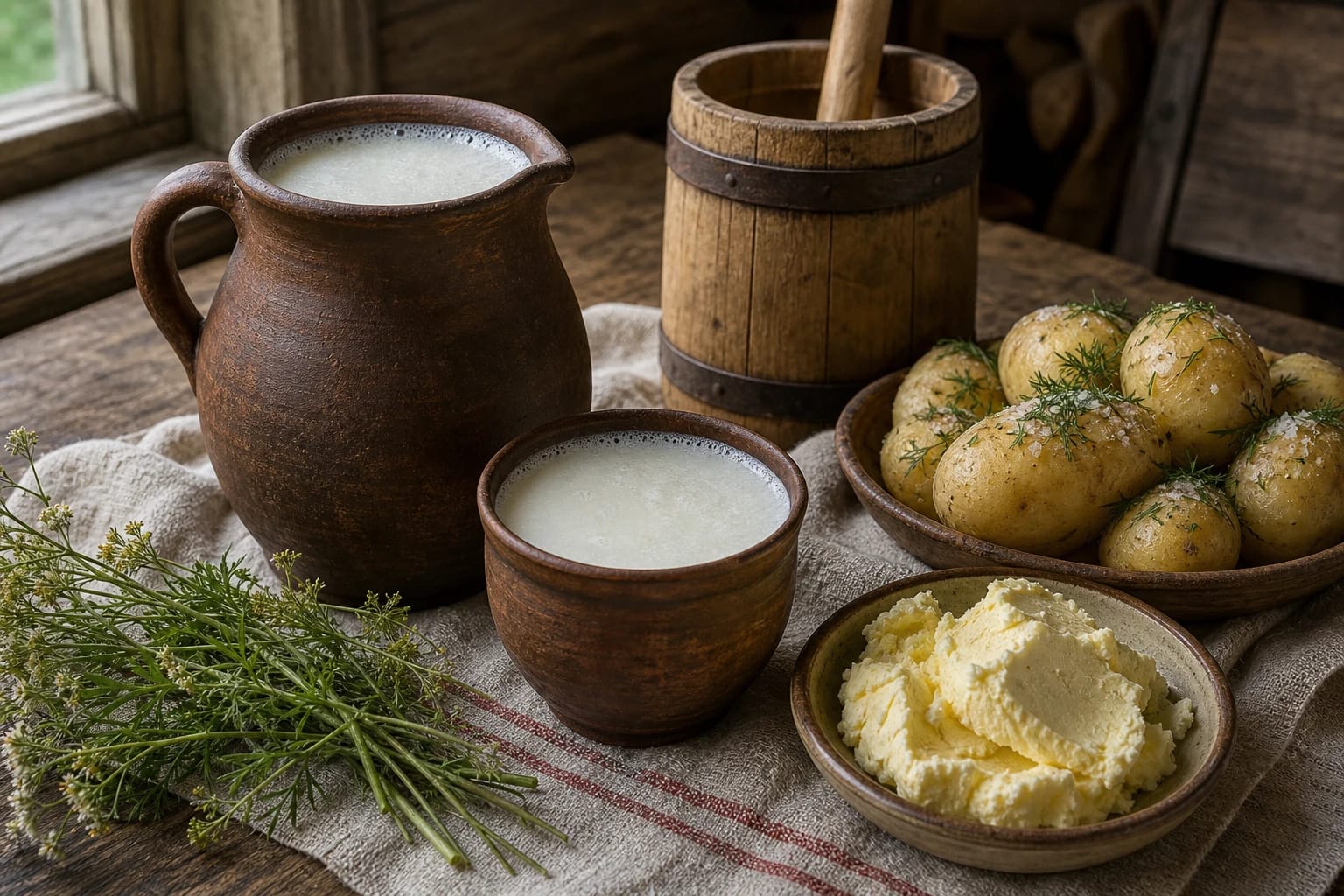
Pasukos are the dairy by-product left after butter is churned from cream: a lean, biologically valuable, lightly sour liquid that in Lithuania was drunk, used to whiten potatoes and soups, and made into a curd called bužė.
Food and heritage context
- Category
- Dairy products
- Type
- butter-churning by-product and village drink
- Heritage status
- well attested
- Context
- Milk, cream, butter churning, sour dairy product, bužė, potato soup, šaltibarščiai, village drink
Names and variants
Pasukas, Butter-churn buttermilk
What are pasukos?
Pasukos are a dairy-processing by-product obtained when butter is churned from cream. When the fat in cream or sour cream gathers into butter, a lean, sourish, whitish liquid remains: that is pasukos. Without butter churning, there are no pasukos, so they always go together with butter.
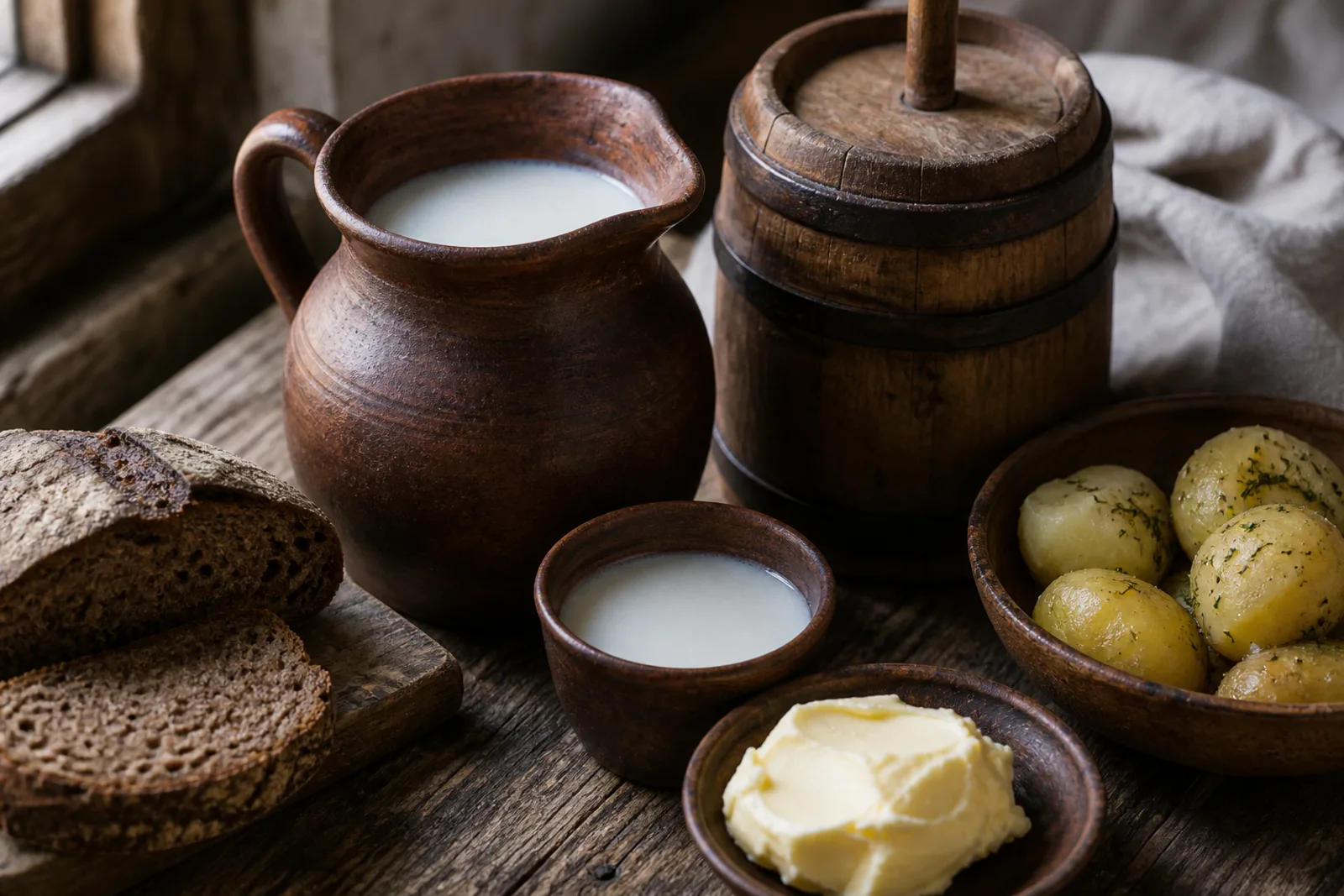
Although pasukos may look like waste, they are biologically valuable. According to the Universal Lithuanian Encyclopedia, they contain about 8.3-9.5% dry matter, including 2.9-3.2% protein and 4.7-4.8% lactose, while little fat remains, only 0.4-0.7%. Pasukos are therefore lean but nourishing.
In Lithuania, pasukos were neither luxury nor ceremonial food. They were an everyday village drink and kitchen helper: used to quench thirst, whiten dishes, and sour soups. As farming intensified, some pasukos were fed to animals.
How pasukos differ from whey, rūgpienis, and kastinys
Pasukos are easy to confuse with other sour or lean dairy liquids, but their origins differ. Pasukos remain after butter is churned from cream. Whey remains when curd or cheese is made, after the liquid is drained from curdled milk. These are two separate lean dairy products from different processing steps.
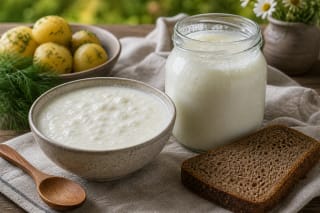
Rūgpienis is soured milk whose sweetness has turned to acid; it is thick and eaten as a dish in its own right. Pasukos, by contrast, are fluid and lightly sour, so they are more often drunk or used for whitening than eaten with a spoon. Interestingly, in some places Aukštaitians poured fresh pasukos into milk being soured, so pasukos could also enter rūgpienis making.
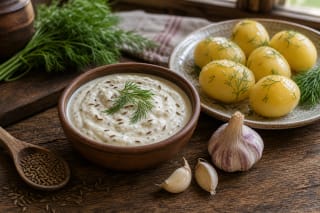
Kastinys belongs to the same sour-cream and butter kitchen but is a rich, worked, unified product. Pasukos are precisely what 'falls out' of that kitchen after the fat: the lean, sourish liquid part. The same pail of sour cream can therefore give butter, kastinys, and pasukos, but in completely different textures.
Composition and nutritional value
The chemical composition of pasukos depends on how the butter was made, whether churned from sweet or sour cream. This also changes acidity, which is usually 20-40 T. Pasukos from sweet cream are milder, while those from matured sour cream are more sour and aromatic.
The fat in pasukos contains biologically valuable fatty acids, linoleic and linolenic, to which anti-sclerotic properties are attributed. The proteins contain essential amino acids such as cystine, lysine, and methionine. Despite their low fat content, pasukos are therefore considered a valuable food product.
Beyond direct consumption, pasukos were also raw material: curd, curd products, lean cheese, and other sour-milk products were made from them. Industrially, an acidophilic product fermented with acid bacteria was also made from pasukos.
Pasukos in Lithuanian peasant cuisine
Food use of pasukos is recorded already in the second half of the 18th century: Kristijonas Donelaitis mentioned people eating them in Lithuania Minor. This is one of the oldest written testimonies of Lithuanian dairy cuisine and shows that pasukos were ordinary everyday food before modern dairying.
In the 19th and early 20th centuries, pasukos were an important part of lean dairy cuisine. In Aukštaitija peasants made bužė, or curd, from pasukos alone, while in Samogitia they made it from pasukos with milk; lean cheese was also made. This shows that pasukos were not only drunk but turned into a firm, keepable product.
As dairy farming intensified and butter production increased, more pasukos were fed to livestock, especially pigs. Pasukos thus gradually shifted from an everyday village drink into a farm by-product, though their value in the home kitchen remained.
Regional ways of using pasukos
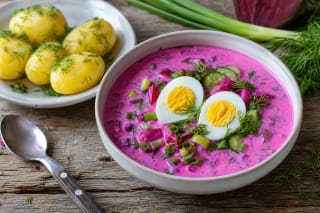
The use of pasukos had a clear regional color. Aukštaitians ate fresh pasukos with dry-boiled potatoes and mashed potatoes, whitened beet soup with them, poured them into šaltibarščiai, drank them instead of water, and sometimes poured them into milk being soured. Here pasukos were an everyday table liquid: both drink and sauce.
Samogitians used pasukos to sour potato soup and other soups, giving the soup pleasant acidity and body without requiring sour cream. It was a practical way to use what remained after butter churning while flavoring an everyday dish.
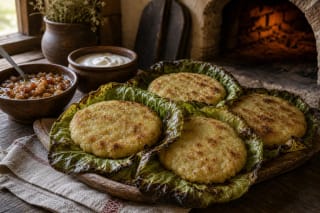
Dzūkians mixed flour bandos with pasukos, preparing dough for bandos, including potato bandos. This role in dough ties pasukos to Dzūkija's baked-goods tradition, where a sourish liquid helps lift and soften the texture.
How pasukos whiten and sour foods
The main everyday function of pasukos in the kitchen was whitening and souring. When poured into hot dry-boiled potatoes or mashed potatoes, the dish gained a white tint and gentle acidity, much like sour cream today, but leaner and cheaper.
In soups, especially potato soup, pasukos acted as a souring agent. They should be stirred in at the end and over low heat, because if heated too strongly the dairy proteins can curdle. The same curdling that is a flaw in soup is exactly the goal when making bužė.
In cold dishes such as šaltibarščiai, pasukos served as part of the sour dairy base. In this way they belong to the Lithuanian family of white, sour dishes where fresh acidity matters more than richness.
Bužė: curd from pasukos
Bužė is curd made not from milk but from pasukos. In Aukštaitija it was made from pasukos alone, and in Samogitia from pasukos with milk. This shows that even the lean liquid from butter churning was not discarded but transformed into a firm protein food.
To make bužė, pasukos are warmed until the proteins curdle, and the curds are poured into a cheesecloth bag to drain, much like ordinary curd. The result is lean, sourish curd suitable for spreading on bread or eating with potatoes.
Bužė clearly shows the thrift of Lithuanian dairy cuisine: from the same milk come sour cream, butter, pasukos, and finally bužė. This stepwise processing is one of the most distinctive traits of the traditional village household.
Pasukos today and how to recognize them
Today home butter churning is rare, so true fresh pasukos must either be made at home or sought from farmers. Commercial 'buttermilk' may be industrially cultured, so its taste and composition do not necessarily match traditional butter pasukos.
True fresh pasukos are recognized by their lean, whitish, lightly sour consistency and gentle butter aroma. They are thinner than rūgpienis and less sharp than kefir. A good smell is fresh acidity; bitterness or a moldy note means the product must not be consumed.
Using pasukos in a modern kitchen is simple: drink them chilled, whiten potatoes or beet soup with them, sour soups, or mix them into pancake or bandos batter. It is a cheap, lean, and very Lithuanian way to turn the 'remainder' of butter churning into full food.
Recipe
How are pasukos obtained and used?
Pasukos are not made separately; they remain after butter is churned from cream or sour cream. This description explains how to collect them and how they were traditionally used: drunk chilled, used to whiten potatoes and soups, to sour potato soup, or to make bužė.
Ingredients
Method
- Pour matured or fresh cream into a churn or beating vessel and churn until the fat gathers into butter grains.
- When a lump of butter forms, separate it; the lean, lightly sour liquid left behind is pasukos. The butter can be washed several times with cold water.
- Strain fresh pasukos and keep them cold. Chilled, they are drunk instead of water or lightly salted.
- To whiten a dish, pour pasukos over hot dry-boiled potatoes, mashed potatoes, or beet soup; they give a gentle acidity and a white tint.
- Sour potato soup or another soup by stirring in pasukos at the end over low heat so the mixture does not separate.
- For bužė, curd made from pasukos, warm the pasukos until the proteins curdle; in the Aukštaitian way use only pasukos, and in the Samogitian way use pasukos with milk. Pour the curds into a cheesecloth bag to drain.
Notes
Pasukos churned from sweet cream are sweeter, while those from sour cream are more sour, with acidity around 20-40 T.
Pasukos spoil quickly, so keep them cold and use them soon; do not drink stale or unpleasant-smelling pasukos.
Related pages about Pasukos
Butter
Pasukos are the direct by-product of butter churning, so they do not exist without butter.
Sour cream
Butter is churned from sour cream or cream, and what remains is pasukos.
Rūgpienis
Both are sour dairy products, but pasukos remain after butter churning rather than milk souring.
Kastinys
A relative from the same sour-cream and butter kitchen: kastinys is worked into a spread, while pasukos are what remains.
Šaltibarščiai
Aukštaitians whitened beet soup with pasukos and poured them into šaltibarščiai.
Potato bandos
Dzūkians mixed flour bandos with pasukos, tying them to the bandos tradition.
Pasukos: frequently asked questions
How do pasukos differ from whey?
Pasukos remain after butter is churned from cream, while whey remains when curd or cheese is made and liquid is drained from curdled milk. They are different lean dairy products from different processing steps.
How do pasukos differ from rūgpienis?
Rūgpienis is soured, thick milk eaten as a dish in its own right. Pasukos are a liquid, lean butter-churning product, more often drunk or used to whiten and sour foods.
Are pasukos healthy?
Yes. Although they contain little fat, about 0.4-0.7%, pasukos contain valuable proteins with essential amino acids and biologically valuable fatty acids such as linoleic and linolenic.
How can bužė be made from pasukos?
Warm the pasukos until the proteins curdle, then pour the curds into a cheesecloth bag to drain. In Aukštaitija bužė was made from pasukos alone; in Samogitia, from pasukos with milk.
What did Lithuanians eat pasukos with?
Aukštaitians ate them with dry-boiled potatoes and mashed potatoes, whitened beet soup with them, poured them into šaltibarščiai, and drank them instead of water. Samogitians soured potato soup with them, and Dzūkians mixed flour bandos with them.
Why does soup sometimes separate when soured with pasukos?
If heated too strongly, pasukos curdle. The same proteins are intentionally curdled when making bužė. Add pasukos at the end over low heat and do not boil hard.
Is store-bought buttermilk the same?
Not always. Commercial buttermilk is often industrially cultured, while traditional pasukos remain after mechanical butter churning. The taste and composition can differ even when both are called buttermilk.
How long can pasukos be kept?
Pasukos spoil quickly, so keep them cold and use them within a few days. Fresh acidity means they are good; bitterness or a moldy smell means they should not be used.
Since when is eating pasukos known in Lithuania?
Kristijonas Donelaitis wrote about pasukos being eaten in Lithuania Minor in the second half of the 18th century, making this one of the oldest written testimonies of Lithuanian dairy cuisine.