
Lithuanian traditional foods
Rūgpienis
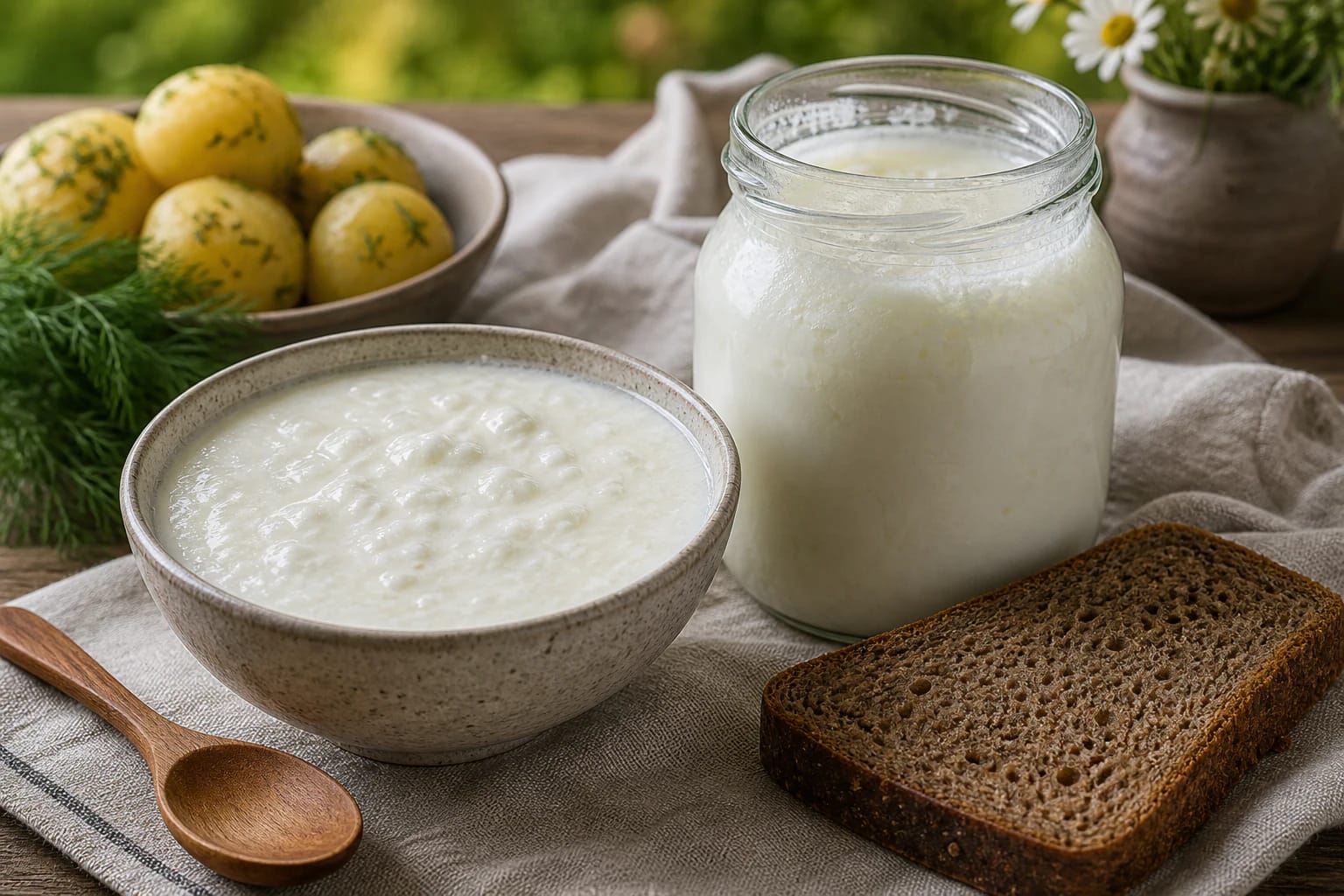
Rūgpienis is one of the simplest and most important products in Lithuanian dairy cooking: soured milk eaten with potatoes, porridges, and bread, and used for šaltibarščiai, curd, and cheeses.
Food and heritage context
- Category
- Dairy products
- Type
- naturally soured milk or cultured soured milk
- Heritage status
- old peasant tradition
- Context
- Milk, fermentation, whey, potatoes, porridges, šaltibarščiai, curd, cheeses
Names and variants
Soured milk, Cultured sour milk
What is rūgpienis?
Rūgpienis is soured milk whose sweet milk flavor turns into mild acidity and a thicker texture. In Lithuania it was long an everyday peasant food.
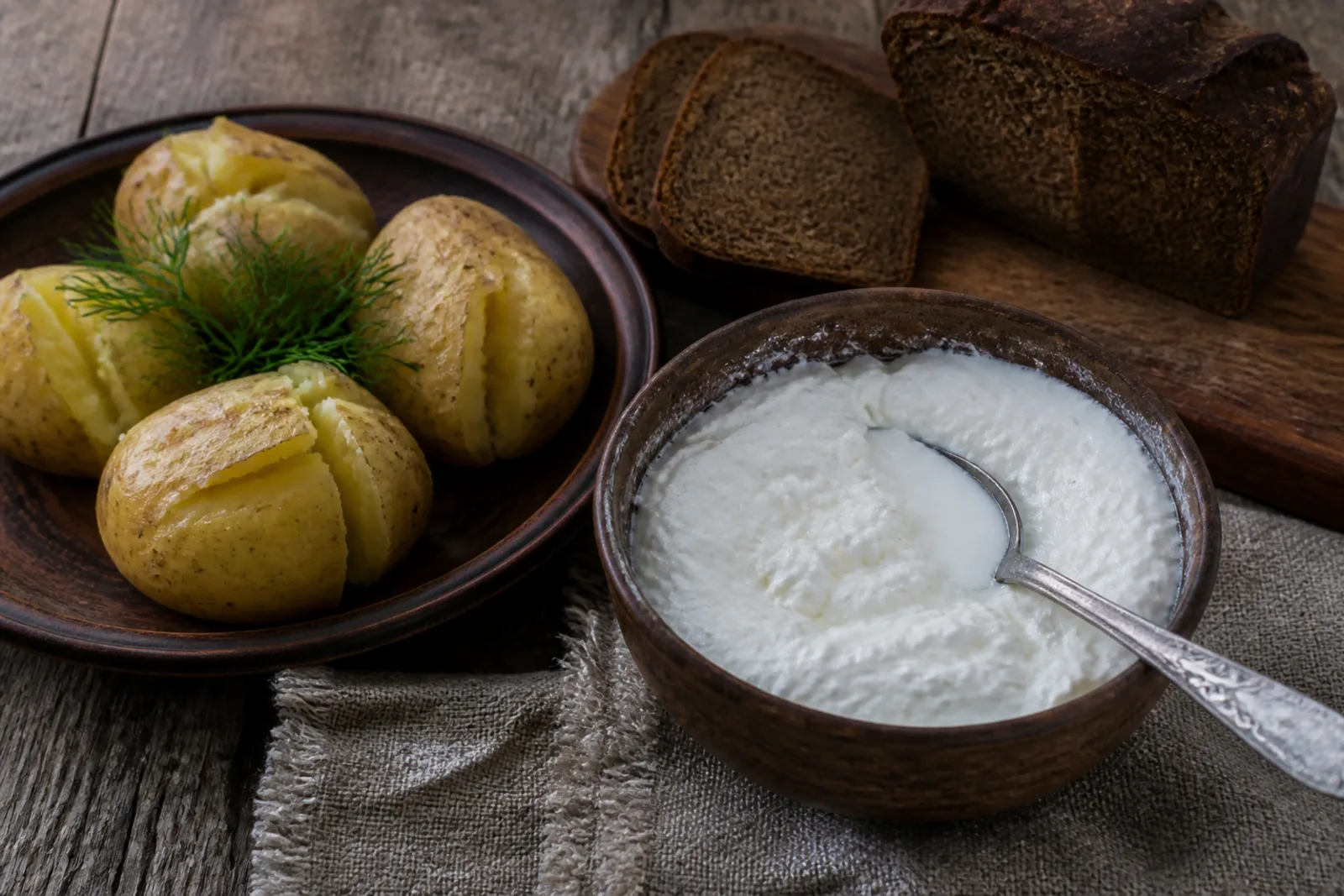
It was eaten with porridges, bread, boiled or fried potatoes, and used for šaltibarščiai, pancakes, curd, and cheeses.
Rūgpienis and kefir
Rūgpienis and kefir are both fermented dairy products, but kefir is usually cultured with a specific kefir culture and is thinner, with a sharper flavor.
The rūgpienis tradition is simpler: milk sours from a starter or from natural lactic acid bacteria, and the texture is often firmer.
Place on the Lithuanian table
Rūgpienis goes especially well with hot potatoes. This pairing shows the simplicity of Lithuanian dairy-and-potato cooking: few ingredients, but a complete, filling meal. Curd was also made from soured milk from old times: in eastern Aukštaitija, pots of soured milk were placed in a warm oven overnight, and in the morning the risen curds were tipped into a cheese bag to drain.
The acidity of rūgpienis is useful in batter as well: pancakes and sklindžiai made with rūgpienis are lighter and gentler.
Safety and cleanliness
In the past, milk soured more naturally, but in a modern kitchen it is worth using clean vessels and a reliable starter. Milk spoils quickly.
Good rūgpienis smells fresh and pleasantly sour. An unpleasant, bitter, or moldy smell is a clear sign not to eat it.
Recipe
How to make rūgpienis
Homemade rūgpienis needs milk and a spoonful of living starter: rūgpienis, sour cream, kefir, or whey. Cleanliness, warmth, and patience matter most.
Ingredients
Method
- Warm the milk until pleasantly warm but not hot.
- Stir in the starter, pour into a clean jar or clay vessel, and cover.
- Keep at room temperature until the milk thickens and develops gentle acidity.
- Move the thickened rūgpienis to the refrigerator to slow fermentation.
- Serve with boiled potatoes, porridge, or bread, or use for šaltibarščiai.
Notes
If the smell is unpleasant, bitter, or moldy, do not eat the product.
UHT milk ferments less reliably because it has been heavily heat-treated.


Rūgpienis: frequently asked questions
How is rūgpienis different from kefir?
Kefir is cultured with a kefir culture and is often thinner and sharper. Rūgpienis is a simpler soured milk product.
Can store-bought milk be soured?
Yes, if it is not UHT milk and you use a living starter. Warm the milk and stir in a spoonful of rūgpienis, kefir, or sour cream.
How long does rūgpienis take to ferment?
Usually 8-16 hours, depending on the milk, starter, and room temperature.
Why does whey separate?
That is natural during longer fermentation. Rūgpienis can be stirred, or the whey can be used in dough if the smell is good.
Can rūgpienis be used for šaltibarščiai?
Yes. It can be used for šaltibarščiai, especially if you like a thicker and more acidic soup.
How long should rūgpienis be kept in the refrigerator?
It is best eaten within a few days. With longer storage the acidity increases, and quality should be judged by smell and appearance.
Can it be made without a starter?
It is possible with raw milk, but in a modern kitchen it is safer to use a reliable living starter.